
📅 Last updated: 17.07.2026
- The Classical Sources and Their Contradictions
- The Archaeological Silence at Babylon
- The Theory of the Nineveh Gardens
- The Evidence: A Comparative Table
- Why the Story Endured for Babylon
- What Survives of the Real Gardens
- The Modern Quest for Proof
- The Legacy of a Lost Wonder
- Conclusion: The Wonder That Wasn't There
The Hanging Gardens of Babylon may be the most famous wonder of the ancient world that never actually existed in the way we imagine it—or, more provocatively, that never existed at all. For centuries, the image of lush, terraced greenery cascading down the walls of Nebuchadnezzar II’s palace has captivated poets, painters, and historians. Yet the true fate of the Hanging Gardens of Babylon is not a story of a single ruin, but a detective story spanning empires, misread texts, and a stubborn archaeological silence. This article will strip away the romantic veneer to examine the hard evidence, the competing theories, and the startling possibility that the gardens were real, but in the wrong city.
The Classical Sources and Their Contradictions
Almost everything we know—or think we know—about the Hanging Gardens of Babylon comes from a handful of Greek and Roman writers who lived centuries after the gardens were supposedly built. The earliest and most detailed account comes from Berossus, a Babylonian priest who wrote in Greek around 290 BCE. His original text is lost, but it was quoted extensively by the Jewish historian Josephus in the first century CE. According to Berossus, King Nebuchadnezzar II (r. 605–562 BCE) constructed the gardens to please his homesick wife, Amytis of Media, who missed the green hills of her homeland.
Later writers added layers of spectacular detail. Diodorus Siculus (first century BCE) described a square garden, each side four plethra long (about 400 feet), built on tiers that rose like a theater. He wrote of stone beams, layers of bitumen and reeds, and a complex irrigation system drawing water directly from the Euphrates River. Strabo (first century CE) and Philo of Byzantium (third century BCE) echoed and embellished these descriptions, emphasizing the vaulted ceilings, the lead-lined chambers, and the screw pumps that lifted water to the highest terraces.
Yet these accounts are riddled with problems. None of the Greek historians ever visited Babylon. Diodorus and Strabo wrote 400 to 500 years after Nebuchadnezzar’s reign. Their descriptions, while vivid, are second-hand and third-hand, filtered through lost intermediaries. More damningly, the details they provide are often contradictory. Diodorus says the gardens were built by a Syrian king, not Nebuchadnezzar. Others attribute them to Queen Semiramis, a legendary figure from Assyrian lore. This confusion suggests that the classical authors were compiling myths and hearsay, not eyewitness reports.
The Archaeological Silence at Babylon
If the Hanging Gardens of Babylon stood in the city of Babylon, we would expect to find some trace of them. The site of Babylon, located about 85 kilometers south of modern Baghdad, Iraq, has been excavated extensively since the mid-nineteenth century. German archaeologist Robert Koldewey led the most famous expedition between 1899 and 1917, uncovering the Ishtar Gate, the Processional Way, the palace of Nebuchadnezzar, and the foundation of the Etemenanki ziggurat (often associated with the Tower of Babel). Koldewey’s team found a massive, vaulted structure with thick walls and a well in the northeastern corner of the palace complex. He confidently declared this the foundation of the Hanging Gardens.
But his identification has been rejected by nearly every subsequent scholar. The structure Koldewey found is now understood to be a storehouse or an armory, not a garden. It lacks any evidence of waterproofing, drainage, or soil deposits. No seeds, pollen, or root systems have ever been recovered from the site. The palace grounds themselves are flat and arid; there is no trace of the tiered terraces described by the Greeks. After more than a century of excavation, the Hanging Gardens of Babylon remain archaeologically invisible.
This absence is not due to a lack of looking. Modern Iraqi and international teams have used ground-penetrating radar and satellite imagery to scan the ancient city. The results are consistent: Babylon was a magnificent city of mudbrick and glazed tile, but it had no monumental terraced garden complex. The conclusion is stark: either the gardens were destroyed so completely that no trace remains—which is unlikely for a structure of such scale—or they were never there.
The Theory of the Nineveh Gardens
The most compelling alternative to the traditional story emerged in the 1990s, championed by Oxford scholar Stephanie Dalley. Dalley argued that the Hanging Gardens of Babylon were actually built by the Assyrian king Sennacherib (r. 704–681 BCE) in his capital, Nineveh, not Babylon. Her evidence is meticulous and persuasive.
The Textual Evidence
Sennacherib left detailed inscriptions describing his construction of a “palace without rival” at Nineveh (modern Mosul, Iraq). In these texts, he boasts of creating a vast park filled with exotic plants, including cypress, cedar, myrrh, and “all kinds of aromatic trees.” More critically, he describes a revolutionary water-lifting system: “I raised the water of the river by means of bronze chains, 5,000 in number, to water the gardens.” This is a clear description of a chain pump, a technology that predates the Archimedes screw by several centuries. The Greek writers who described the Hanging Gardens—specifically Strabo and Philo—mention a screw pump for lifting water. But the screw was a Greek invention of the third century BCE, long after Nebuchadnezzar. The Assyrian chain pump fits the timeline and the technological description far better.
The Waterworks of Nineveh
Sennacherib’s water engineering at Nineveh was legendary. He built a 50-kilometer canal system, including the Khosr River aqueduct at Jerwan, which carried water across a valley on limestone arches. This system fed the king’s gardens and parks. In 2010, a team of British and Iraqi archaeologists used satellite imagery and ground surveys to map the “Jervan aqueduct” and the extensive canal network. They found evidence of massive stone channels, sluice gates, and reservoirs—exactly the infrastructure needed to support a terraced garden complex. The scale is staggering: the aqueduct alone is 280 meters long and 22 meters wide, built with cut stone blocks weighing up to 25 tons each. No such water system exists at Babylon.
The Name Confusion
Dalley also pointed to a linguistic error. After the fall of Nineveh in 612 BCE, the Assyrian Empire collapsed, and Babylon rose to prominence. Later Greek historians, writing centuries after the events, may have confused the two great Mesopotamian cities. The word “Babylon” was sometimes used generically to mean any great eastern city, much as “Persia” was used for the entire Achaemenid Empire. The Hanging Gardens, originally built at Nineveh by Sennacherib, became misattributed to Nebuchadnezzar’s Babylon—a simple but consequential error that survived for two millennia.
The Evidence: A Comparative Table
The case for Nineveh rests on a series of specific, testable claims. The following table summarizes the key points of comparison between the two cities and their rulers.
| Feature | Babylon (Nebuchadnezzar II) | Nineveh (Sennacherib) |
|---|---|---|
| Water source | Euphrates River (flat terrain, difficult to lift water to height) | Khosr River and mountain-fed canals (gravity-fed, high elevation) |
| Water-lifting technology | No evidence of chain pumps or screws from this period | Inscribed chain pumps of bronze, 5,000 in number |
| Archaeological evidence | No terraced garden foundations, no irrigation system, no pollen | Extensive canal network, aqueducts, sluices, and park inscriptions |
| Textual description | Greek accounts only, 400+ years later, contradictory | Contemporary Assyrian royal inscriptions, detailed and specific |
| Plant life | Vague mentions of “trees” and “vines” | Named species: cypress, cedar, myrrh, fruit trees, aromatic plants |
| Historical context | Nebuchadnezzar built temples and walls, not major waterworks | Sennacherib was a noted hydraulic engineer and builder |
The table makes clear that Nineveh fits the profile of a monumental terraced garden far better than Babylon does. The textual, archaeological, and technological evidence aligns with Sennacherib, while the evidence for Nebuchadnezzar is almost entirely absent.
Why the Story Endured for Babylon
If the Hanging Gardens of Babylon were actually in Nineveh, why did the classical world—and later Western civilization—cling to the Babylonian attribution? The answer lies in the symbolic power of Babylon itself.
The Biblical Connection
Babylon looms large in the Hebrew Bible as the city of exile, the place where the Jews were taken captive in 586 BCE. The Book of Daniel and the Book of Revelation paint Babylon as a symbol of pride, luxury, and ultimate destruction. A hanging garden—a man-made paradise—fit perfectly into this narrative of hubris and splendor. Nebuchadnezzar, as the king who destroyed Solomon’s Temple, became the archetypal pagan ruler. Attributing the gardens to him made theological and moral sense.
The Greek Travel Tradition
The Seven Wonders of the Ancient World were first compiled by Hellenistic writers in the third and second centuries BCE, a time when Greek culture was spreading across the Near East. Babylon, though in decline, was still a living city and a tourist destination. The Greek historian Herodotus visited Babylon around 450 BCE and described its walls and temples in detail—but he never mentioned the Hanging Gardens. This is a glaring omission if the gardens existed in his time. The fact that the gardens appear only in later Greek sources, long after Babylon’s political power had waned, suggests they were a literary invention or a misattribution.
The Romantic Imagination
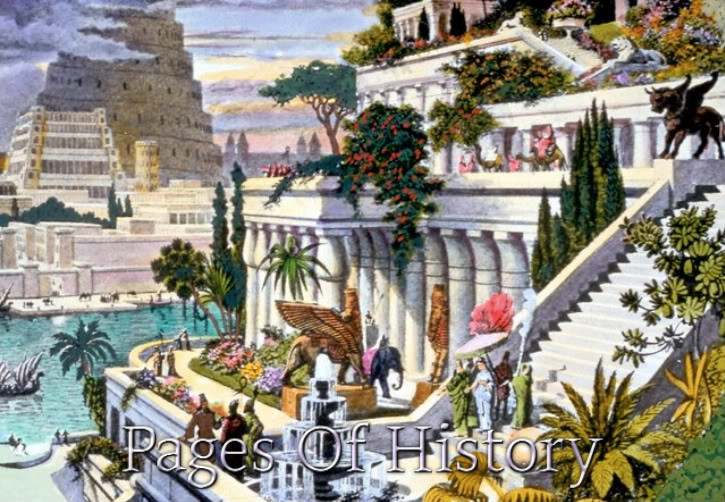
In the European Renaissance and Enlightenment, the Hanging Gardens of Babylon became a favorite subject for painters and poets. They symbolized the lost wonders of the East, the exotic and the impossible. Artists from Pieter Bruegel the Elder to Ferdinand Knab depicted them as cascading terraces of flowers and trees, often with no regard for historical accuracy. This visual tradition cemented the gardens in the popular imagination as a Babylonian marvel. The truth—that they might have been Assyrian—was less dramatic and less familiar.
What Survives of the Real Gardens
If the Hanging Gardens were at Nineveh, what remains of them today? The site of Nineveh, on the outskirts of modern Mosul, has suffered greatly from war and neglect. In 2015, ISIS militants systematically destroyed the ancient city’s gates, palaces, and temples. The famous Lamassu statues (winged bulls with human heads) were smashed with sledgehammers and jackhammers. The site is now a grim landscape of ruins and rubble.
Yet the waterworks that fed the gardens are still visible in places. The Jerwan aqueduct, about 40 kilometers north of Nineveh, remains one of the most impressive pre-Roman engineering structures in the world. Built from massive limestone blocks, it carried water across a valley on 14 arches. It was not a garden itself, but it was the lifeline that made the gardens possible. In the palace grounds of Nineveh, archaeologists have found the foundations of what may have been the terraces: massive stone platforms with drainage channels, designed to support deep soil and heavy trees. The British Museum holds reliefs from Sennacherib’s palace that depict lush gardens being watered by aqueducts and channels. One relief shows a watercourse flowing through a park with vines, date palms, and cypress trees. It is the closest we have to a contemporary picture of the Hanging Gardens.
The Fate of the Gardens
The gardens of Nineveh were destroyed when the city fell in 612 BCE to a coalition of Medes, Babylonians, and Scythians. The Assyrian Empire collapsed in a matter of months. Nineveh was sacked, burned, and abandoned. The gardens, built on terraces of mudbrick and stone, would have collapsed or been deliberately demolished. The irrigation channels were broken, and the soil washed away. Within a generation, the site was a ruin. Unlike the Great Pyramid or the Colossus of Rhodes, the Hanging Gardens left no visible monument. They survived only in memory—and in the mistaken memory of a different city.
The Modern Quest for Proof
The debate over the Hanging Gardens of Babylon is far from settled. While Dalley’s theory is now widely accepted among specialists, it is not yet proven beyond doubt. Several key questions remain unanswered.
Was There a Garden at Babylon?
Some scholars argue that Nebuchadnezzar did build some kind of garden, but on a much smaller scale than the Greek accounts suggest. The palace at Babylon had a large courtyard that might have been planted with trees and flowers. A small, terraced garden is plausible, even if it was not one of the Seven Wonders. The Greek writers may have exaggerated a modest feature into a colossal marvel. This is a common pattern in ancient literature: travelers saw something impressive, and their accounts grew in the retelling.
The Need for Excavation at Nineveh
The archaeological work at Nineveh has been limited by war and instability. The site was heavily damaged by ISIS, and reconstruction efforts have focused on rebuilding the gates and walls, not on excavating the palace grounds. New excavations could uncover the foundations of the gardens, including the stone terraces, the drainage system, and perhaps even preserved pollen or seeds. Such evidence would settle the debate definitively. Until then, the theory of Assyrian origins remains the best hypothesis, but it is not a proven fact.
The Role of Climate Change
One factor that complicates all archaeological work in Mesopotamia is the dramatic change in climate and hydrology over the past 2,500 years. The region was significantly wetter in Nebuchadnezzar’s time than it is today. The Euphrates River has shifted its course several times. The water table has dropped. What was once a lush, irrigated plain is now a desert. The gardens could have been destroyed not just by war, but by the slow desiccation of the land. Their physical remains might have been buried under layers of silt and sand, invisible to modern surveys.
The Legacy of a Lost Wonder
The true fate of the Hanging Gardens of Babylon is not a simple story of destruction, but of transformation. The gardens began as a real place—likely in Nineveh, built by Sennacherib—and were transformed by history into a myth. That myth was then attached to Babylon, the city that had captured the Western imagination as the ultimate symbol of ancient greatness and decadence. The gardens became a literary and artistic trope, a shorthand for human ambition and the fragility of beauty.
This process of myth-making is itself a historical phenomenon worth studying. It tells us how the ancient world was remembered, how stories traveled and changed, and how a single error could persist for two thousand years. The Hanging Gardens of Babylon, whether real or imagined, represent something deeper: the human desire to create paradise on earth, and the inevitable loss of that paradise to time, war, and forgetfulness.
“The hanging garden is a marvel of the world, not because of its size, but because of its art.” — Philo of Byzantium
Philo’s words capture the essence of the wonder. It was not the scale of the gardens that made them famous, but the ingenuity of their design. That ingenuity, we now believe, belonged to the Assyrians, not the Babylonians. But the credit—and the fame—went to Nebuchadnezzar. The gardens themselves are gone, reduced to dust and rubble. Their true fate is to be a mystery, a puzzle that historians may never fully solve, but that continues to inspire wonder and curiosity.
Conclusion: The Wonder That Wasn’t There
The story of the Hanging Gardens of Babylon is ultimately a cautionary tale about the reliability of ancient sources and the power of cultural memory. For centuries, we accepted the Greek accounts as fact, even when the archaeological evidence contradicted them. We wanted to believe that the gardens existed because they fit our image of Babylon: a city of unimaginable wealth, cruelty, and beauty. The reality—that the gardens were built by a different king, in a different city, for different reasons—is less romantic but more historically honest.
The fate of the gardens is not a single event, but a process: the construction at Nineveh, the destruction in 612 BCE, the misattribution to Babylon, the elaboration by Greek writers, the rediscovery by modern scholars, and the ongoing debate. The gardens live on not as a physical monument, but as an idea. They remind us that the ancient world was more complex than we often assume, that our sources are fallible, and that the truth is often stranger—and more interesting—than the myth. The Hanging Gardens of Babylon may never have hung in Babylon, but they have hung in our minds for two thousand years, and that is a wonder in itself.