
📅 Last updated: 16.10.2026
The invention of the telescope is one of history’s great attribution puzzles: a device that transformed humanity’s view of the cosmos emerged not from a single genius’s workshop but from the competitive, mercantile world of the early 1600s Dutch Republic, and it was refined into a scientific instrument by an Italian mathematician who never claimed to have built the first one. The story spans spectacle-makers in Middelburg, a Spanish diplomat’s letter, an English mathematician’s manuscript, and a Venetian professor who pointed the new device at the night sky and changed astronomy forever.
The telescope was not invented by a single person. The first documented patent request came from Hans Lipperhey, a spectacle-maker in Middelburg, Zeeland, on 25 September 1608, but Jacob Metius and Sacharias Janssen filed competing claims within weeks. Galileo Galilei did not invent the telescope; in 1609 he built his own improved version and was the first to use it systematically for astronomical observation.
- Why the Invention of the Telescope Was Not a Single Eureka Moment
- Hans Lipperhey and the First Patent Request of 1608
- Who Really Invented the Telescope? The Competing Claims Examined
- How Galileo Galilei Transformed the Invention of the Telescope into an Astronomical Revolution
- From Dutch Spectacle to Scientific Instrument: The Technical Evolution
- Why the Telescope Mattered Beyond Astronomy
- Common Myths and Misconceptions About the Invention of the Telescope
- The Lasting Legacy of the Invention of the Telescope
Why the Invention of the Telescope Was Not a Single Eureka Moment
Modern audiences often imagine the telescope arriving fully formed in the mind of one inventor. The historical record tells a messier story. By the late sixteenth century, the optical ingredients needed for a refracting telescope—convex and concave lenses of sufficient quality—were already being produced in the lens-grinding workshops of the Netherlands and Germany. What was missing was the insight that combining two lenses at the right distance would magnify distant objects. Once that insight circulated, several people raced to claim it.
The Dutch Republic in 1608 was an ideal incubator. Its cities, particularly Middelburg in Zeeland, were hubs of glassmaking, lens grinding, and instrument manufacture tied to navigation, surveying, and mapmaking. The Dutch Revolt against Spain had created a wealthy, urbanized, and technically sophisticated society with strong demand for precision instruments. Spectacles had been invented in Italy in the late thirteenth century, and by 1600 Dutch craftsmen were grinding lenses for reading glasses, microscopes, and navigational tools. The telescope was, in a sense, an accidental byproduct of the spectacle trade.
This context matters because it explains why the invention of the telescope was contested from day one. There was money, prestige, and military advantage at stake. A device that could magnify a distant sail or army could decide a siege. The States-General of the Netherlands, then fighting Spain in the long Dutch Revolt, took the claims seriously enough to convene a committee.
Hans Lipperhey and the First Patent Request of 1608
On 25 September 1608, Hans Lipperhey (also spelled Lippershey), a German-born spectacle-maker living in Middelburg, submitted a request to the States-General for a patent on “a certain instrument for seeing far.” His device used a convex objective lens and a concave eyepiece—the arrangement still known as a Galilean telescope. Lipperhey demonstrated it to Prince Maurice of Nassau, stadtholder of the Dutch Republic, and to the States-General. According to contemporary accounts, the instrument magnified distant objects roughly three to four times.
The States-General did not grant an exclusive patent. Instead, they paid Lipperhey for several pairs of lenses and commissioned him to build binocular versions. The reason for refusal is revealing: within weeks, other claimants appeared. Jacob Metius of Alkmaar submitted a similar petition in October 1608, and Sacharias Janssen, another Middelburg spectacle-maker, was later credited by some contemporaries with an earlier device, though the evidence for his priority is thin and contested.
The Diplomatic Leak That Spread the Secret
The telescope’s existence became international news almost immediately. In late 1608, the Spanish ambassador to the Dutch Republic, the Marquis of Fuentes, reported the invention to Madrid. The papal nuncio Guido Bentivoglio also wrote to Rome. By early 1609, the device had been demonstrated in Paris, and English mathematician Thomas Harriot had built one and used it to sketch the Moon. The secret, such as it was, was out. This rapid diffusion is central to understanding the invention of the telescope: the optical principle was simple enough that once the concept was known, skilled craftsmen across Europe could replicate it within months.
Who Really Invented the Telescope? The Competing Claims Examined
The question of priority has never been fully settled, and historians treat it with appropriate caution. The three main Dutch claimants each present problems.
- Hans Lipperhey (c. 1570–1619): The strongest documentary case. His 1608 patent request is the earliest surviving record of a telescope, and he demonstrated it to Dutch authorities. He was a respected spectacle-maker, not a charlatan.
- Jacob Metius (c. 1571–1628): Filed a competing claim in October 1608. He came from a family of instrument-makers in Alkmaar and may have developed the idea independently. His claim was taken seriously enough that the States-General paid him as well.
- Sacharias Janssen (c. 1585–1632): Later credited by some writers, including his son, with inventing both the telescope and the compound microscope around 1590. Most historians regard these claims as exaggerated, partly because Janssen was young in 1590 and the supporting evidence emerged decades later.
There is also an intriguing English pre-claim. In a manuscript written around 1570–1571, the mathematician and astrologer Leonard Digges, or possibly his son Thomas Digges, described a device using a concave mirror and a convex lens that could “see” distant objects. The passage in Pantometria (published 1571) is ambiguous, and no working instrument survives. It suggests the optical principles were being pondered earlier, but it does not establish a working telescope before 1608.
The balanced conclusion: the telescope was a Dutch invention of 1608, with Lipperhey as the best-documented originator, but it emerged from a competitive milieu rather than a single mind. The refusal of an exclusive patent by the States-General is itself evidence that contemporaries recognized multiple independent claims.
How Galileo Galilei Transformed the Invention of the Telescope into an Astronomical Revolution
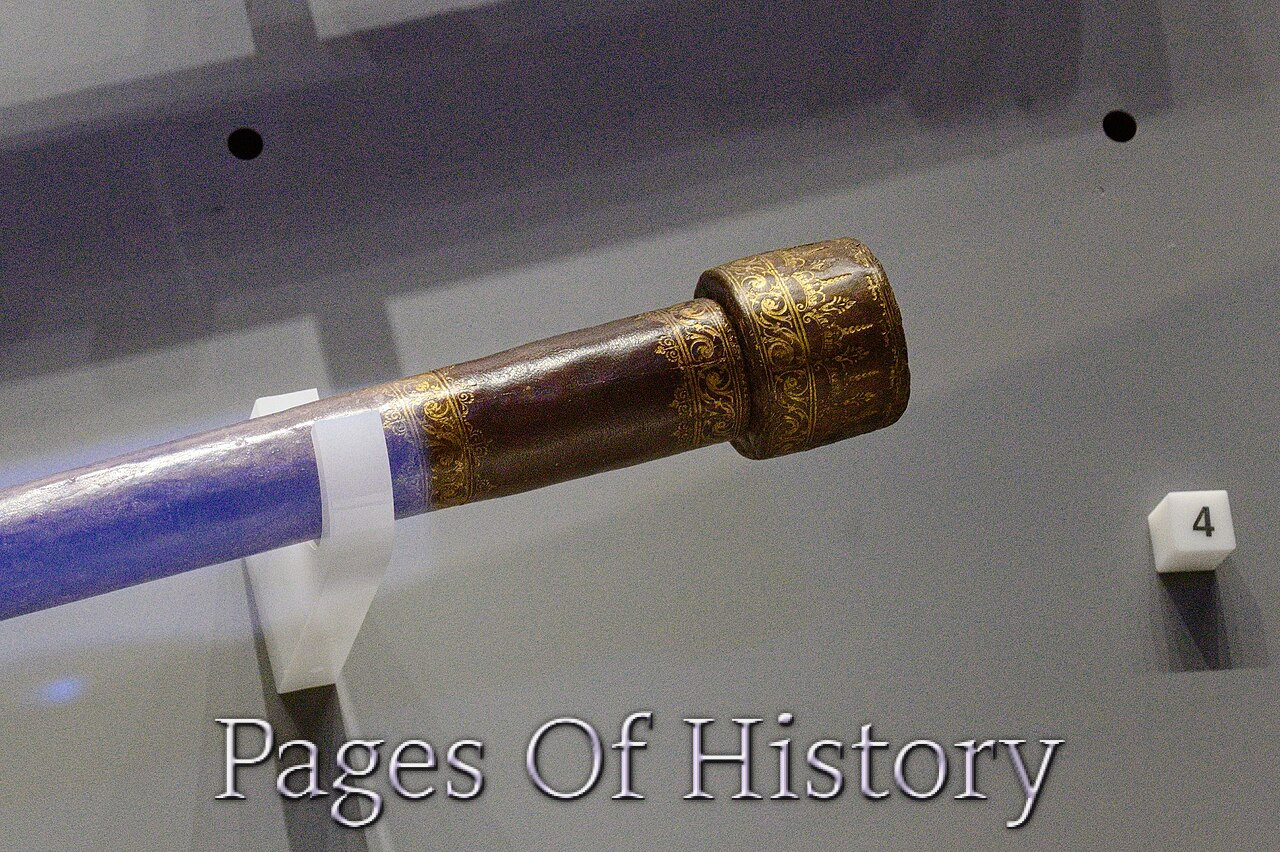
Galileo Galilei, then a professor of mathematics at the University of Padua, heard about the Dutch device in the spring of 1609. He had not seen one. Working from the description alone, he ground his own lenses and assembled a telescope that magnified about three times, then improved it to eight or nine times, and eventually to around twenty times. He presented the instrument to the Venetian Senate on 25 August 1609, and in return received a lifetime appointment and a salary increase at Padua.
Galileo’s decisive contribution was not the device but its application. Beginning in late 1609 and continuing through 1610, he turned his telescope on the night sky and recorded what he saw with unprecedented care. His observations, published in Sidereus Nuncius (“The Starry Messenger”) in March 1610, shattered Aristotelian cosmology.
What Galileo Saw—and Why It Mattered
- The Moon: Galileo observed mountains, craters, and a rough, uneven surface—contradicting the doctrine that celestial bodies were perfect and unchanging.
- Jupiter’s moons: He discovered four large satellites orbiting Jupiter in January 1610. This showed that not everything revolved around Earth, undermining the geocentric model.
- Venus’s phases: He observed that Venus goes through phases like the Moon, which is only possible if Venus orbits the Sun, supporting Copernican heliocentrism.
- The Milky Way: What appeared as a cloudy band resolved into countless individual stars, revealing the universe’s vastness.
- Saturn’s “ears”: His telescope could not resolve Saturn’s rings, but he noted the planet looked tripartite, a puzzle later solved by Christiaan Huygens in 1655.
These findings placed Galileo in direct conflict with the Catholic Church and with Aristotelian philosophers. In 1616, the Inquisition placed Copernicus’s De revolutionibus on the Index of Forbidden Books and warned Galileo. His Dialogue Concerning the Two Chief World Systems (1632) led to his trial in 1633, house arrest, and the banning of the book. The telescope had become a weapon in the most consequential intellectual battle of the era.
From Dutch Spectacle to Scientific Instrument: The Technical Evolution
The early refracting telescope had a fundamental flaw: chromatic aberration. Because different wavelengths of light bend differently through a lens, images were blurred and fringed with color. This limited magnification. The problem drove two centuries of optical innovation.
| Year | Inventor / Developer | Contribution | Significance |
|---|---|---|---|
| 1608 | Hans Lipperhey (Middelburg) | First documented telescope; 3–4× magnification | Earliest patent request; demonstrated to Dutch States-General |
| 1609 | Galileo Galilei (Padua) | Improved refractor to ~20×; first astronomical use | Discovered Jupiter’s moons, lunar mountains, Venus phases |
| 1611 | Johannes Kepler (Prague) | Proposed convex eyepiece design | Wider field of view; basis for later astronomical telescopes |
| 1668 | Isaac Newton (Cambridge) | First practical reflecting telescope | Eliminated chromatic aberration using a mirror |
| 1672 | Laurent Cassegrain (France) | Designed the Cassegrain reflector | Compact design still used in modern telescopes |
| 1758 | John Dollond (London) | Patented achromatic lens | Reduced color fringing; enabled larger refractors |
Kepler’s 1611 design, described in his Dioptrice, used two convex lenses and produced an inverted image but a much wider field of view. This “Keplerian” telescope became standard for astronomical work. The reflecting telescope, pioneered by Newton in 1668, sidestepped chromatic aberration entirely by using a concave mirror to gather light. Cassegrain’s 1672 design, with a secondary convex mirror, folded the light path and allowed shorter tubes. Dollond’s achromatic lens in 1758 combined crown and flint glass to cancel color dispersion, enabling the great refractors of the nineteenth century.
Why the Telescope Mattered Beyond Astronomy
The telescope’s impact extended far beyond the night sky. In warfare, it became a crucial tool for reconnaissance and naval gunnery. In navigation, it allowed ships to spot landmarks and read distant signals. In surveying and mapmaking, it improved accuracy. The device also became a symbol of human curiosity and a driver of instrument-making as a precision industry.
The scientific revolution itself was accelerated by the telescope’s ability to extend human senses. It demonstrated that instruments could reveal truths invisible to the naked eye, a principle that would later drive the microscope, the barometer, and the particle accelerator. The Royal Society, founded in London in 1660, made instrument-based observation central to its mission, and the telescope was its flagship technology.
There is also a geopolitical dimension. The Dutch Republic’s refusal to grant an exclusive patent meant the technology spread rapidly, benefiting rival powers. Galileo’s presentation to Venice was partly a bid for patronage in a city-state anxious about Ottoman naval power. The telescope was never politically neutral; it was a tool of commerce, war, and empire as much as of science.
Common Myths and Misconceptions About the Invention of the Telescope
Several persistent myths distort the story. Correcting them sharpens our understanding of how invention actually works.
- Myth: Galileo invented the telescope. He did not. He built his own after hearing of the Dutch device and improved it, but the first documented telescope predates his by a year.
- Myth: The telescope was invented in a single flash of genius. It emerged from the lens-making trade and was claimed by multiple people within weeks, suggesting a broader technological readiness.
- Myth: The Catholic Church opposed the telescope itself. Church officials were initially intrigued; Galileo even demonstrated it in Rome in 1611. The conflict was about heliocentrism and scriptural interpretation, not the instrument.
- Myth: The Dutch patent settled the question. The States-General declined to grant exclusivity precisely because the claims were contested, leaving priority unresolved.
These myths matter because they shape how we think about innovation. The telescope’s history shows that major inventions often arise from competitive ecosystems, not solitary genius. It also shows that the application of an invention—Galileo’s astronomical observations—can matter more than the invention itself.
The Lasting Legacy of the Invention of the Telescope
The invention of the telescope in 1608 opened a new chapter in humanity’s relationship with the cosmos. Within a single year, Galileo had used it to overturn centuries of cosmological assumptions. Within a century, Newton had built a reflecting telescope that pointed toward modern astrophysics. Within four centuries, the descendants of Lipperhey’s device—the Hubble Space Telescope, the James Webb Space Telescope, and the giant ground-based observatories of Chile and Hawaii—have mapped galaxies billions of light-years away and detected atmospheres of exoplanets.
The attribution question remains unresolved in the strict sense, but the historical consensus is clear enough. Hans Lipperhey holds the strongest claim as the first documented inventor, with Jacob Metius and possibly Sacharias Janssen as independent or near-simultaneous claimants. Galileo Galilei, meanwhile, deserves his fame not as the inventor but as the first person to turn the telescope into a scientific instrument and to publish its revelations to the world. The invention of the telescope was a collective achievement of Dutch craftsmen, and its scientific significance was the achievement of an Italian mathematician who dared to look up.
What endures is the lesson the telescope teaches about discovery: that a simple combination of lenses, born in a spectacle-maker’s shop, can reshape how we see everything. The device that began as a curiosity in Middelburg became the instrument that revealed our place in an unimaginably vast universe. That transformation—from trade tool to cosmic eye—is the real story of the invention of the telescope.