
📅 Last updated: 14.10.2026
The Battle of Teutoburg Forest, fought in the autumn of 9 CE, is often reduced to a single dramatic image: three Roman legions slaughtered in the mud of a German swamp. But the real reason Rome lost that battle was not the terrain, the weather, or even the tactical genius of Arminius alone. It was a failure of intelligence, a catastrophic misjudgment of a trusted ally, and a structural flaw in how Rome governed its most dangerous frontier.
Rome lost the Battle of Teutoburg Forest primarily because Publius Quinctilius Varus, the Roman commander, trusted Arminius—a Roman-trained Cheruscan nobleman—and ignored repeated warnings of an ambush. Varus marched three legions (XVII, XVIII, and XIX) into unfamiliar, forested terrain where Germanic warriors destroyed them over several days. The defeat was less a single battle than a prolonged massacre enabled by Roman overconfidence, poor scouting, and the fatal assumption that Germania was already pacified.
- What Actually Happened at the Battle of Teutoburg Forest?
- Why Did Rome Trust Arminius So Completely?
- Was the Battle of Teutoburg Forest Really a Battle?
- What Were the Deeper Causes of the Roman Defeat?
- Did Rome Ever Recover from the Battle of Teutoburg Forest?
- Why Does the Battle of Teutoburg Forest Still Matter?
- The Real Reason: Overconfidence, Not Fate
What Actually Happened at the Battle of Teutoburg Forest?
The engagement took place in what the Romans called the saltus Teutoburgiensis, a stretch of wooded hills and marshy ground somewhere in northwestern Germany—most scholars now place it near Kalkriese, north of Osnabrück, based on archaeological finds dating to the Augustan period. The Roman force consisted of three full legions—Legio XVII, Legio XVIII, and Legio XIX—plus six auxiliary cohorts and three cavalry alae. Modern estimates put the total at roughly 15,000 to 20,000 fighting men, along with camp followers, slaves, and baggage animals. Varus was the legatus Augusti pro praetore of Germania, appointed by Augustus to administer the newly conquered territory between the Rhine and the Elbe.
Arminius was a Cheruscan prince who had served in the Roman army, held equestrian rank, and even commanded auxiliary troops under Tiberius during the Pannonian revolt of 6–9 CE. He knew Roman tactics, Roman logistics, and Roman weaknesses. In late summer or early autumn of 9 CE, he persuaded Varus to detach from the Rhine and march east to suppress what he claimed was a minor local uprising. The route took the Romans through dense forest and boggy ground where they could not deploy in battle formation. Arminius then vanished to join the ambush.
The attack unfolded over two or three days. Roman sources—Cassius Dio, Tacitus, and Velleius Paterculus—describe a running series of ambushes in which the legions could not form up, could not use their cavalry effectively, and were cut down piecemeal. Varus, wounded, took his own life rather than be captured. The eagle standards of all three legions were lost, a humiliation Rome had not suffered since Carrhae in 53 BCE.
Why Did Rome Trust Arminius So Completely?
This is the heart of the matter. Arminius was not an outsider. He was a Roman citizen, an equestrian, and a decorated officer. He had fought for Rome. To Varus—and to Augustus—he was proof that the Roman system of absorbing barbarian elites was working. Rome had spent decades turning Germanic and Gallic nobles into loyal clients who governed their own people on Rome’s behalf. Arminius fit that template perfectly.
Velleius Paterculus, who served under Tiberius and knew Arminius personally, wrote that Arminius was “a young man of noble birth, brave in action and alert in mind, possessing an intelligence quite beyond the ordinary barbarian.” That was the problem. Rome had trained its own destroyer.
The Roman client-state model and its blind spot
Rome did not usually occupy Germania with a massive standing army. It governed through treaties, subsidies, and local chieftains who owed their position to Roman backing. This was cheap and effective—until a client decided that Roman backing was no longer worth the cost of Roman domination. Arminius’s own brother, Flavus, remained loyal to Rome and fought against him. His father-in-law, Segestes, warned Varus repeatedly that Arminius was plotting treason. Varus dismissed the warnings as personal feuding between Germanic nobles.
That dismissal was the tactical hinge of the disaster. Varus had no reason to believe a Roman citizen and equestrian would betray him. He had no intelligence network inside the Cheruscan leadership that he trusted more than Arminius. And he had no contingency plan for the possibility that his own auxiliary commander was the enemy.
Was the Battle of Teutoburg Forest Really a Battle?
Strictly speaking, no. It was an ambush that became a massacre. The Romans never had a chance to fight the way they were trained to fight: in disciplined lines, on open ground, with clear command and control. The Germanic warriors—Cherusci, Bructeri, Marsi, and others—attacked from the woods and hills, withdrew, and attacked again. Cassius Dio describes Romans falling into marshes, being struck by falling trees, and losing cohesion until they were simply overwhelmed.
This matters because it explains why the defeat was so total. A normal Roman defeat might cost a legion or two, but the survivors could regroup, fortify, and counterattack. At Teutoburg, there was no regroup. The terrain prevented it, the surprise prevented it, and the loss of Varus and his senior officers prevented it. The legions ceased to exist as fighting units.
| Date | Event | Roman Leader | Outcome |
|---|---|---|---|
| 6–9 CE | Pannonian Revolt | Tiberius | Arminius serves Rome as auxiliary commander |
| 7–9 CE | Varus governs Germania | Publius Quinctilius Varus | Imposes Roman law and taxation; resentment grows |
| Autumn 9 CE | Battle of Teutoburg Forest | Varus | Legions XVII, XVIII, XIX destroyed; Varus suicide |
| 14–16 CE | Germanicus campaigns | Germanicus Julius Caesar | Recovers two eagles; victory at Idistaviso; no permanent conquest |
| 17 CE | Triumph of Germanicus | Germanicus | Rome celebrates; Rhine becomes permanent frontier |
What Were the Deeper Causes of the Roman Defeat?
The immediate cause was Arminius’s betrayal. The deeper cause was Rome’s failure to understand what conquest actually required. Augustus had declared Germania pacified in 12 BCE after Drusus’s campaigns, but pacification on paper is not pacification on the ground. The region between the Rhine and the Elbe was never fully disarmed, never fully surveyed, and never fully garrisoned. Roman forts existed, but they were thin on the ground and dependent on local cooperation.
Varus compounded this structural weakness with personal error. He arrived in Germania in 7 CE after governing Syria, where he had dealt with a sophisticated, urbanized, and long-subdued population. He treated the Germans as if they were Syrians. He imposed taxes, adjudicated disputes, and assumed that Roman law would be accepted because Rome was strong. Tacitus says Varus “came to regard the Germans as a people who could be managed by the law courts.” That was a fatal misreading.
Three factors that made the ambush possible
- Intelligence failure: Varus ignored Segestes’s warnings and had no independent source of information inside the Cheruscan leadership.
- Terrain and timing: The march route through forest and marsh negated Roman advantages in formation, cavalry, and siege equipment.
- Command decapitation: Varus and his senior officers were killed or scattered early, leaving the legions without coordinated leadership.
There was also a strategic dimension. Rome had been fighting in Pannonia and Illyricum for years. The legions were tired, the treasury was strained, and Augustus was aging. The decision to push the frontier to the Elbe was ambitious, but the resources committed to holding it were never sufficient. Teutoburg did not create that weakness; it exposed it.
Did Rome Ever Recover from the Battle of Teutoburg Forest?
Militarily, yes—partially. Between 14 and 16 CE, Germanicus Julius Caesar led three campaigns across the Rhine. He recovered the eagle of Legio XIX, won a hard-fought victory at Idistaviso, and buried the remains of Varus’s legions in a solemn ceremony described by Tacitus. But he did not re-establish Roman rule east of the Rhine. Tiberius, now emperor, recalled him in 16 CE and abandoned the Elbe frontier. The Rhine became the permanent boundary of the Roman Empire in the west.
The psychological impact lasted much longer. Augustus, according to Suetonius, was so shaken that he let his hair and beard grow for months and would sometimes cry out, “Quinctilius Varus, give me back my legions!” The numbers XVII, XVIII, and XIX were never used again for a legion. Rome had lost not just men but the belief that it could conquer Germania.
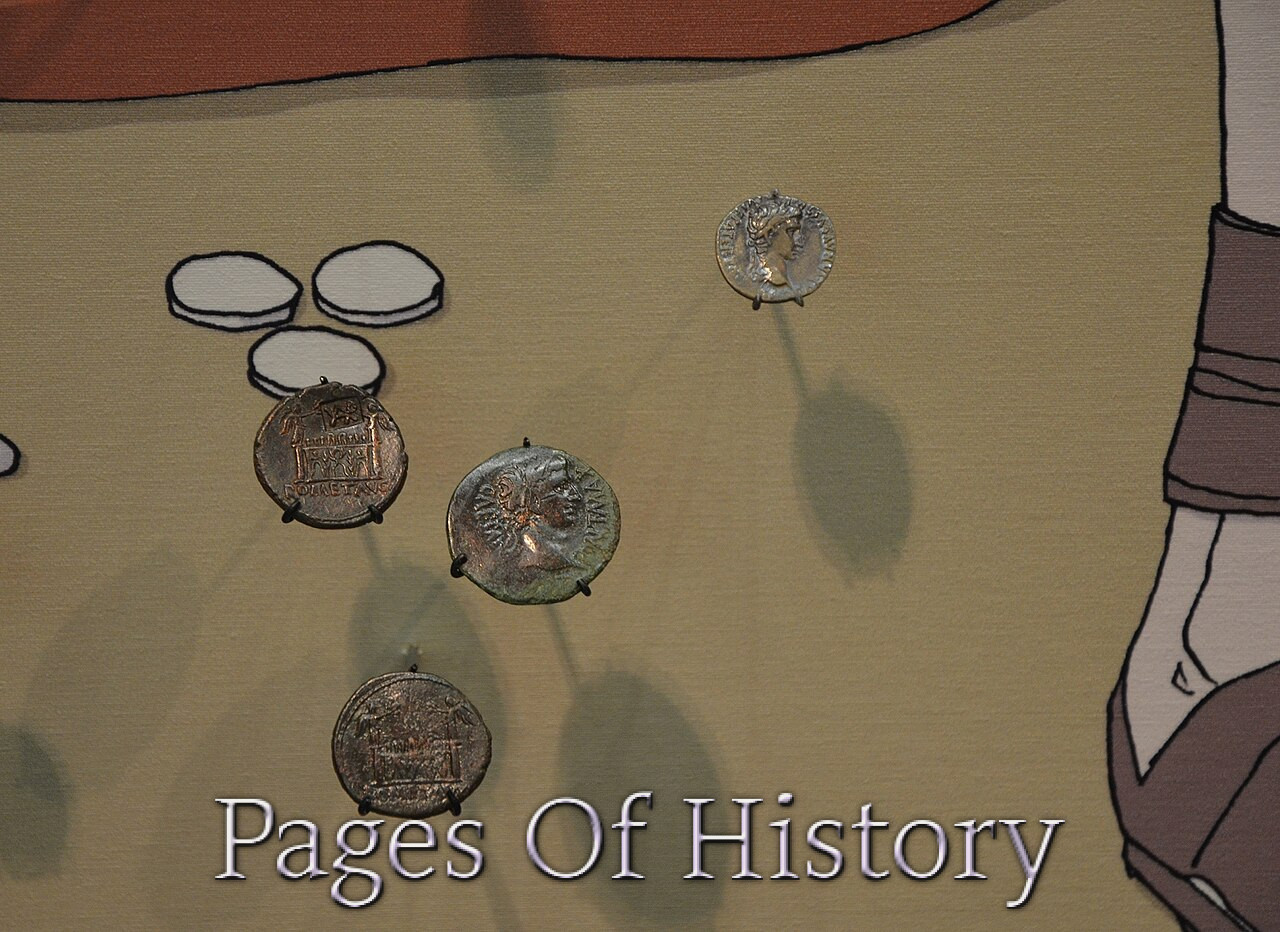
The archaeological record confirms the scale of the disaster. At Kalkriese, excavators have found Roman coins, armor fragments, spearheads, and a face mask from a cavalry helmet, all concentrated in a narrow passage between a hill and a marsh. The finds date to the Augustan period and match the ancient accounts. This is not legend. It is a crime scene.
Why Does the Battle of Teutoburg Forest Still Matter?
Teutoburg shaped the map of Europe. If Rome had held Germania to the Elbe, the empire would have been larger, richer, and possibly more stable. Instead, the Rhine frontier became a permanent military zone, consuming legions and resources for centuries. The Germanic peoples beyond the Rhine remained outside Roman law, outside Roman taxation, and outside Roman culture—until they began to enter the empire as migrants, allies, and eventually conquerors.
The battle also became a founding myth. In the nineteenth century, German nationalists cast Arminius—whom they called Hermann—as the liberator of Germany from Roman tyranny. A massive monument, the Hermannsdenkmal, was completed in 1875 near Detmold. This is history used for politics, and it distorts as much as it commemorates. Arminius was not a German nationalist; he was a Cheruscan aristocrat who fought for power within his own world and used Rome to do it.
What the Romans themselves concluded
Tacitus, writing a century later, put a speech in the mouth of Arminius’s brother Flavus that captures the Roman view: Rome offered law, order, and citizenship; resistance offered only blood and chaos. Arminius, in the same passage, replied that Rome offered slavery disguised as peace. Both were right. The battle was not a clash of civilizations. It was a collision between an empire that overestimated its reach and a local elite that understood its own terrain better than any foreign governor ever could.
The Real Reason: Overconfidence, Not Fate
Rome lost the Battle of Teutoburg Forest because it believed its own propaganda. It believed that Germania was conquered because a governor had been appointed and taxes were being collected. It believed that Arminius was loyal because he had been rewarded with citizenship and rank. It believed that Roman discipline would prevail because it always had.
Varus was not incompetent in the way that popular history sometimes suggests. He was a capable administrator who had governed Syria and dealt with complex provincial problems. His failure was not stupidity but a category error: he treated a militarized frontier as a settled province. He brought judges where he needed scouts. He trusted a client where he needed a spy. And he marched into a forest where Rome’s advantages—formation, engineering, logistics—counted for nothing.
The legions died because they were sent into a trap by a commander who did not know he was in one. The empire survived, but it never forgot. The Rhine became a wall, and the wall became a border, and the border became the edge of a world that Rome could not cross. That is the real legacy of Teutoburg: not a single defeat, but a permanent limit.