
📅 Last updated: 15.07.2026
- The Myth of a Single Catastrophic Library of Alexandria Fire
- The First Blow: Julius Caesar and the Alexandrian War (48 BCE)
- The Second Catastrophe: Aurelian’s Sack (c. 270 CE)
- The Third and Final Act: The Destruction of the Serapeum (391 CE)
- Key Figures and Events: A Chronological Table
- The Role of the Roman Empire: Neglect and Transfer of Knowledge
- The "Great Fire" That Wasn’t: The Arab Conquest Myth
- What Was Actually Lost? The Intellectual Legacy
- The Lasting Symbolism: Why We Still Talk About the Fire
- Conclusion: The Real Reason the Library Was Burned
The Library of Alexandria fire is one of the most enduring and misunderstood tragedies of the ancient world, a symbol of catastrophic knowledge loss that has been blamed on everyone from Julius Caesar to a vengeful Christian mob. Yet the real story is not a single dramatic conflagration but a centuries-long process of decline, marked by political violence, economic neglect, and ideological warfare. This article will unravel the myth by examining the multiple fires, sieges, and decrees that actually destroyed the Library, distinguishing historical fact from romantic fiction.
The Myth of a Single Catastrophic Library of Alexandria Fire
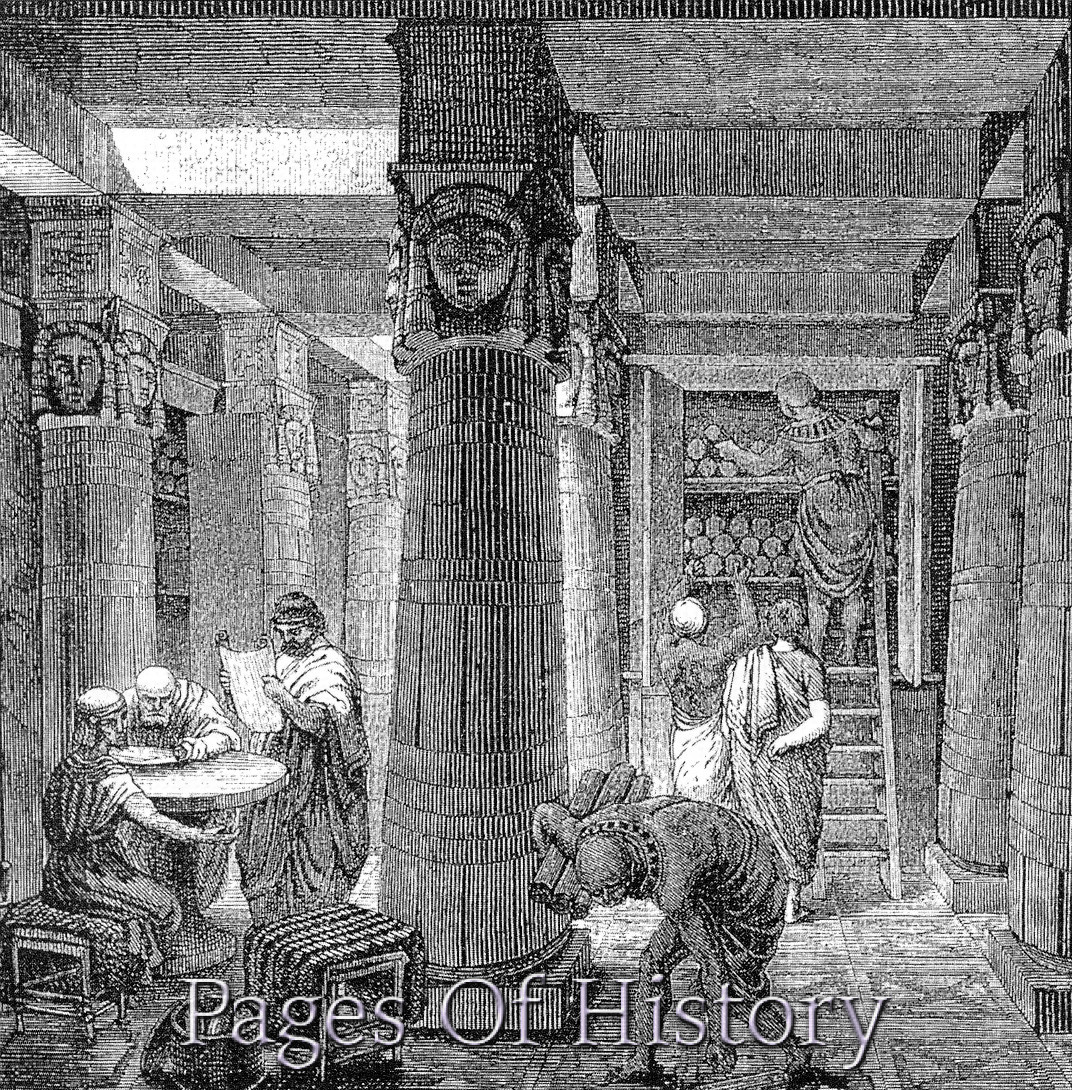
The popular image of the Library of Alexandria—a vast, single repository of all human knowledge, burned to the ground in one night—is a powerful but misleading narrative. In reality, the Library was not one building but a complex of institutions: the Royal Library (the Museion), attached to the palace complex, and the Serapeum, a temple-library dedicated to the god Serapis in the Rhakotis district. These were not destroyed simultaneously, nor by a single enemy.
The confusion arises because ancient sources describe at least three distinct destructive events over 600 years, each of which has been conflated into one “Library of Alexandria fire.” The first and most famous occurred in 48 BCE, during the civil war between Julius Caesar and Pompey the Great. The second was a series of attacks in the late 3rd century CE under the Roman emperor Aurelian. The third, and most controversial, was the destruction of the Serapeum in 391 CE under the Christian Emperor Theodosius I. Each event had different causes, perpetrators, and consequences.
The First Blow: Julius Caesar and the Alexandrian War (48 BCE)
Caesar’s Desperate Arson
The earliest and most frequently cited Library of Alexandria fire occurred during the Siege of Alexandria in 48–47 BCE. Julius Caesar, having pursued his rival Pompey to Egypt, found himself trapped in the royal palace quarter by the forces of the young Pharaoh Ptolemy XIII. Outnumbered and surrounded, Caesar ordered his ships in the Great Harbour to be set on fire to prevent them from falling into enemy hands.
The Roman historian Plutarch, writing in his Life of Caesar (c. 100 CE), states that the flames spread from the ships to the docks and then to the nearby warehouses and buildings. Crucially, he writes that the fire “destroyed the great library.” However, the Roman historian Livy (in a lost book, summarized by the later writer Seneca the Younger) claimed that 40,000 books were lost in this fire—a significant number, but not the entire collection.
The key nuance is that the fire likely destroyed only the warehouse annexes of the Royal Library, where scrolls were stored for export or transit, not the main reading rooms and archives of the Museion. The geographer Strabo, who visited Alexandria in the late 1st century BCE—decades after Caesar’s fire—describes the Museion as still functioning and well-stocked, suggesting the core collection survived.
The Deliberate Destruction of the Ptolemaic Fleet
Caesar’s motive was purely military: survival. He did not target the Library deliberately. The fire was collateral damage from a tactical arson that destroyed the Egyptian fleet in the harbour. The real culprit was the chaotic urban warfare of the period. The event is best understood not as a deliberate act of vandalism but as a tragic accident of war, typical of the brutal sieges of the late Roman Republic.
The Second Catastrophe: Aurelian’s Sack (c. 270 CE)
The Palmyrene Invasion and Roman Revenge
The second major Library of Alexandria fire occurred during the reign of the Roman emperor Aurelian. In 269–270 CE, the forces of Queen Zenobia of Palmyra (in modern Syria) invaded and occupied Egypt, including Alexandria. Aurelian, determined to restore Roman control, marched on the city in 272 CE and recaptured it after a brutal siege.
The historian Ammianus Marcellinus (writing c. 390 CE) records that during this war, the Bruchion quarter—the royal district that housed the Museion and the main Library—was completely destroyed. He writes: “The Bruchion, which had long been the abode of many distinguished men, was razed to the ground.” This was not a fire but a systematic demolition during street fighting. The Museion itself, the institutional heart of the Library, ceased to exist.
This event is far less famous than Caesar’s fire, but it was arguably more devastating. The Royal Library had already been weakened by centuries of neglect and periodic removals of scrolls to Rome (e.g., by Mark Antony, who reportedly gave Cleopatra the contents of the library of Pergamum as a gift). Aurelian’s destruction of the Bruchion effectively ended the main Library as a functioning institution.
The Survival of the Serapeum
However, a secondary library survived in the Serapeum, the temple of Serapis in the Egyptian quarter. This library, often called the “Daughter Library,” contained a smaller but still significant collection. It would endure for another 120 years.
The Third and Final Act: The Destruction of the Serapeum (391 CE)
The Religious War of Theodosius I
The final, and most ideologically motivated, Library of Alexandria fire occurred in 391 CE. The Roman Emperor Theodosius I had, in 380 CE, declared Nicene Christianity the official state religion and subsequently issued a series of edicts banning pagan worship. In 391 CE, he issued the Theodosian Decree, ordering the closure of all pagan temples throughout the empire.
In Alexandria, the powerful and often violent Christian Patriarch Theophilus saw this as a mandate to destroy the Serapeum, which was both a temple and a library. The pagan philosopher Eunapius of Sardis (a contemporary witness) describes how a Christian mob, encouraged by Theophilus, attacked the Serapeum. They smashed statues, defaced reliefs, and looted the building. Crucially, the library within the Serapeum was also plundered.
The historian Orosius (c. 417 CE), a Christian apologist, confirms that the Serapeum was destroyed but claims—perhaps defensively—that the library’s shelves were “empty” before the attack, implying that the books had already been removed or lost. However, the pagan historian Ammianus Marcellinus had described the Serapeum’s library as still impressive just a few decades earlier. The most likely scenario is that the Christian mob destroyed whatever scrolls remained, either by burning them or by throwing them into the streets for destruction.
Not a Single Fire, But a Systematic Erasure
This event is often called the “Library of Alexandria fire,” but it was more accurately a systematic demolition of a pagan institution and its contents. Unlike Caesar’s accidental fire, this was a deliberate act of religious cleansing. The Serapeum was converted into a church, and the library was gone. This marked the definitive end of the Library of Alexandria as a physical entity.
Key Figures and Events: A Chronological Table
The following table summarizes the three primary destructive events, their causes, and their consequences. This helps clarify how the myth of a single fire emerged from three distinct historical episodes.
| Date | Perpetrator | Target | Nature of Destruction | Impact on Library |
|---|---|---|---|---|
| 48 BCE | Julius Caesar (Roman general) | Warehouses in the Great Harbour | Accidental fire from burning ships | Partial loss of stored scrolls (40,000 books); main Museion survived |
| 272 CE | Emperor Aurelian (Roman) | Bruchion quarter (royal district) | Deliberate demolition during siege | Destruction of the Royal Library and Museion; end of main institution |
| 391 CE | Patriarch Theophilus and Christian mob | Serapeum temple-library | Deliberate religious vandalism and looting | Final destruction of the remaining collection; the Serapeum closed |
The Role of the Roman Empire: Neglect and Transfer of Knowledge
Systematic Plunder Under the Romans
Long before the fires, the Library of Alexandria had been drained of its treasures by Roman emperors and generals. The most notorious example was Mark Antony, who, in 41 BCE, allegedly removed 200,000 scrolls from the library of Pergamum (in Asia Minor) and gave them to Cleopatra as a gift to restock Alexandria’s collection. However, this was a transfer, not a destruction.
More insidious was the gradual transfer of intellectual prestige from Alexandria to Rome. The Roman emperors, particularly Augustus and Trajan, established their own libraries in Rome (the Bibliotheca Ulpia), which attracted scholars and scribes away from Alexandria. The Greek geographer Strabo noted that by the 1st century CE, the Museion was no longer the vibrant centre of research it had been under the Ptolemies. The Roman government simply stopped funding it adequately.
The Rise of Parchment and the Decline of Papyrus
Another factor was the shift in writing materials. The Library’s collection was overwhelmingly on papyrus scrolls, which were fragile, flammable, and susceptible to humidity. The development of parchment (made from animal skins) in Pergamum during the 2nd century BCE offered a more durable alternative. As the Roman world transitioned to the codex (the bound book), the old papyrus scrolls of Alexandria became obsolete and were less likely to be copied or preserved. This technological change contributed to the Library’s decline even before the fires.
The “Great Fire” That Wasn’t: The Arab Conquest Myth
The Caliph Omar Legend
No discussion of the Library of Alexandria fire is complete without addressing the most persistent myth: that the Arab general Amr ibn al-As burned the Library in 642 CE on the orders of Caliph Umar. The story, first recorded by the 13th-century Christian historian Bar-Hebraeus, claims that when asked what to do with the Library’s books, Umar replied: “If these books are in agreement with the Quran, they are superfluous; if they are in disagreement, they are pernicious. So destroy them.”
This account is almost certainly a fabrication. It appears 600 years after the event, with no contemporary Arab, Greek, or Coptic source mentioning it. The Arab conquest of Alexandria in 642 CE was a military operation, and the conquerors, while not scholars, were not systematic destroyers of libraries. The great Islamic caliphates of the Abbasids (from the 8th century onward) were avid patrons of learning, translating Greek works into Arabic in the House of Wisdom in Baghdad. The idea that the first Arab rulers would burn the very texts they later valued so highly is historically inconsistent.
The myth likely arose from Christian polemicists in the Crusader period, who wanted to blame Muslims for the loss of classical knowledge. In reality, the Library was already long gone by 642 CE.
What Was Actually Lost? The Intellectual Legacy
The Irreplaceable Works
The true tragedy of the Library’s destruction is not the number of scrolls but the loss of unique works that were never copied elsewhere. We know from surviving catalogues (e.g., the Pinakes of Callimachus) that the Library contained:
- The complete works of the lost Greek playwrights: Aeschylus, Sophocles, and Euripides, of whom only a fraction survive.
- The histories of the Hellenistic period: Detailed accounts of Alexander the Great’s conquests by his generals (Diadochi) that could have rewritten our understanding of the ancient world.
- The astronomical observations of the Babylonians: Cuneiform tablets translated into Greek, which could have provided data for predicting eclipses and planetary movements.
- The medical writings of Herophilus and Erasistratus: Pioneers of human dissection, whose works on the nervous system and circulatory system were lost.
- The complete library of Aristotle: The philosopher’s personal collection, which was reportedly brought to Alexandria and used by later commentators.
The Survival of a Fraction
What we do have—the works of Homer, Plato, Aristotle, the Greek tragedians, and the historians Herodotus and Thucydides—survived because they were copied and recopied in libraries across the Roman and Byzantine empires. The Library of Alexandria was not the only repository of knowledge; it was simply the largest. The loss was real but not absolute. The works that were only in Alexandria—the Alexandrian commentaries, the local Egyptian histories, the scientific treatises of the Museion’s scholars—are the ones we mourn.
The Lasting Symbolism: Why We Still Talk About the Fire
The Metaphor of Lost Knowledge
The Library of Alexandria fire has become a powerful cultural metaphor for the fragility of civilization. It is invoked whenever knowledge is threatened by war, censorship, or fanaticism. From the burning of books by the Nazis in 1933 to the destruction of the National Library of Bosnia in 1992, the image of Alexandria haunts us.
The myth of a single, dramatic fire is more compelling than the complex, multi-century reality. It provides a clear villain (Caesar, the Christians, the Arabs) and a clear lesson: that knowledge is precious and must be protected. The historical reality—a slow decline due to war, neglect, religious intolerance, and technological change—is less dramatic but more instructive.
Conclusion: The Real Reason the Library Was Burned
The real reason the Library of Alexandria was burned is that no single reason exists. The Library was not destroyed by one fire but by a series of interrelated factors over six centuries:
- Accidental military action (Caesar’s fire in 48 BCE).
- Deliberate wartime destruction (Aurelian’s sack in 272 CE).
- Religious intolerance (Theodosius’s decree and the Christian attack on the Serapeum in 391 CE).
- Systematic neglect and underfunding by the Roman administration.
- Technological obsolescence of papyrus scrolls in favour of parchment codices.
- Geopolitical shifts that moved the centre of learning to Rome, Constantinople, and later Baghdad.
The Library of Alexandria was not a victim of a single villain but of the cumulative forces of history: war, ideology, and the slow erosion of institutional support. Its story is a cautionary tale not about a dramatic fire but about the quiet, gradual disappearance of the institutions that preserve knowledge. The real tragedy is that it did not happen in one night—it happened over centuries, and almost no one noticed until it was too late.