
📅 Last updated: 15.07.2026
- The Traditional View: The Great Sphinx Origin in the Old Kingdom
- The Case for a Lost Civilization: Challenging the Great Sphinx Origin
- Geological and Archaeological Counterarguments
- The Dream Stela and the Restoration Tradition
- The Astronomical Alignment Theory
- What Does the Great Sphinx Origin Mean for History?
- The Sphinx’s Purpose and Symbolism
- Conclusion: The Enduring Mystery of the Sphinx
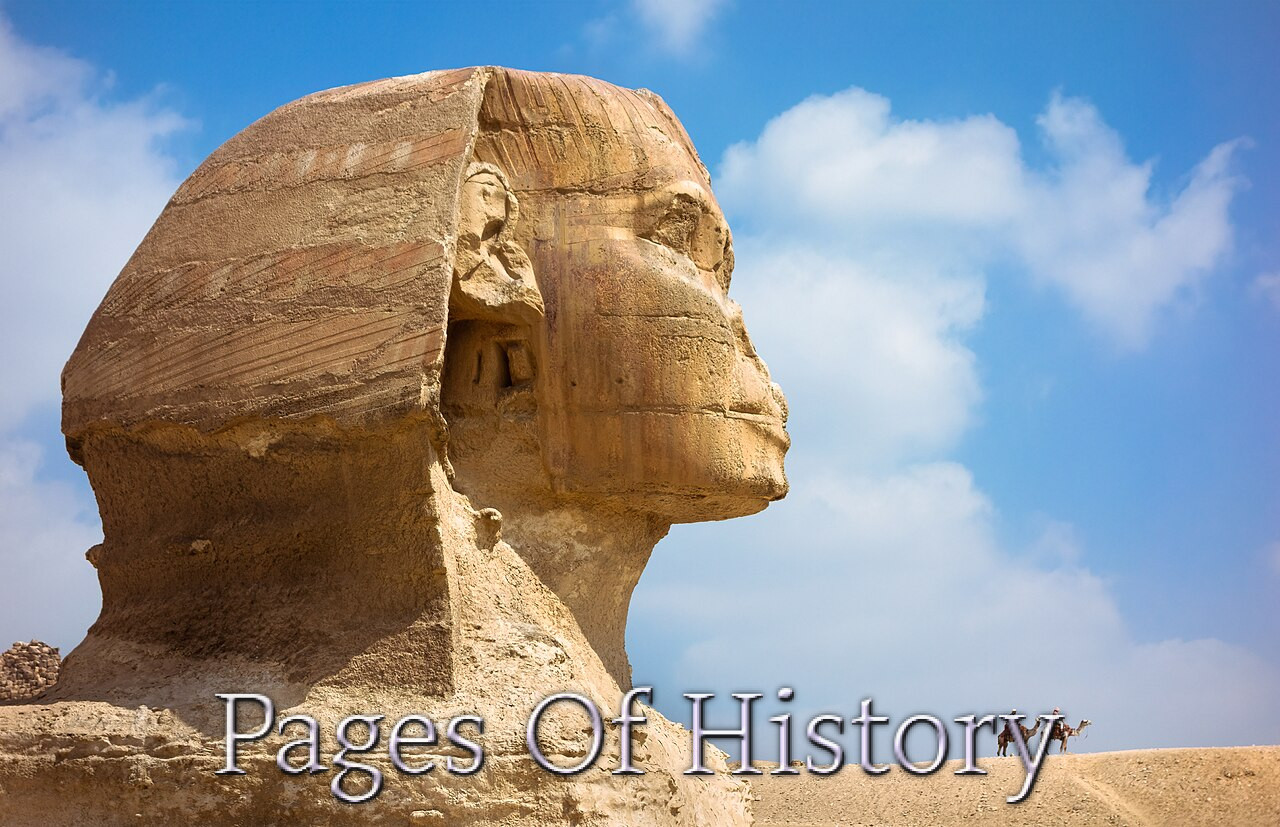
The debate over the Great Sphinx origin has raged for centuries, captivating historians, archaeologists, and tourists alike with a mystery as enduring as the monument itself. Carved from the living bedrock of the Giza Plateau, this colossal half-human, half-lion statue stands as a silent sentinel to an age long past, its weathered features hinting at secrets its creators never recorded. While mainstream Egyptology attributes the Sphinx to the Fourth Dynasty Pharaoh Khafre (c. 2558–2532 BCE), a persistent and provocative theory suggests it may be the handiwork of a lost, pre-dynastic civilization—a claim that challenges the very foundations of ancient history.
The Traditional View: The Great Sphinx Origin in the Old Kingdom
The orthodox narrative places the Great Sphinx origin squarely within the zenith of the Old Kingdom, during the reign of Pharaoh Khafre. This conclusion is not arbitrary; it is built upon a web of archaeological, architectural, and textual evidence that, for many, remains conclusive.
The Evidence for Khafre
The strongest link between the Sphinx and Khafre comes from the Valley Temple of Khafre, located directly in front of the Sphinx. This temple, constructed from massive, precisely cut blocks of granite and limestone, shares the same architectural style and masonry techniques as the Sphinx enclosure. Furthermore, a diorite statue of Khafre was discovered in the Valley Temple in 1860 by Auguste Mariette, depicting the pharaoh seated with the Horus falcon spreading its wings behind his head. The proximity and stylistic consistency strongly imply a single, coordinated building project.
Additional support comes from the Inventory Stela, discovered at Giza in the 19th century. Though the stela itself is a much later copy (likely from the 26th Dynasty, c. 664–525 BCE), its text claims that Khafre built the Sphinx. It reads, in part: “He [Khafre] made the statue of Hor-em-akhet [the Sphinx]… He built the temple of Isis, Mistress of the Pyramids.” While the stela is not contemporary, it reflects an ancient tradition linking the monument to this pharaoh.
The Causeway and Complex
Khafre’s pyramid complex includes a long, covered causeway that connects his Valley Temple to his Mortuary Temple beside his pyramid. This causeway runs directly past the Sphinx, suggesting the statue was integrated into the funerary complex. The alignment of the Sphinx’s body, facing due east, mirrors the orientation of Khafre’s pyramid and the solar symbolism of the era. The monument’s function, in this context, was likely as a guardian figure—a protector of the royal necropolis.
The Case for a Lost Civilization: Challenging the Great Sphinx Origin
Despite the apparent consensus, a vocal minority of researchers, most notably John Anthony West and Dr. Robert M. Schoch, have argued for a much older Great Sphinx origin. Their primary evidence is not textual but geological—the very wear patterns on the Sphinx’s body.
The Water Erosion Hypothesis
In the early 1990s, Dr. Schoch, a geologist at Boston University, conducted a detailed study of the Sphinx’s enclosure walls. He observed that the deep, undulating vertical fissures and rounded, weathered features on the limestone were not consistent with wind-driven sand erosion, which tends to produce horizontal, sharp-edged striations. Instead, Schoch argued, these patterns were characteristic of precipitation-induced weathering—the result of centuries or millennia of heavy rainfall.
The implications are staggering. The Giza Plateau has been an arid desert for at least the last 5,000 years. For water erosion to have occurred on such a scale, the Sphinx would have to predate the Sahara’s desiccation, placing its construction during the African Humid Period (c. 10,000–5,000 BCE). This would push the monument’s age back to at least 7,000 to 9,000 years ago, if not older—long before the rise of dynastic Egypt.
The Evidence from the Enclosure
Schoch’s analysis focused on the enclosure walls, which are carved from the same bedrock as the Sphinx itself. These walls have never been buried as deeply as the statue’s body, making their weathering patterns a clearer indicator of long-term climate. He also noted that the Sphinx’s head, which is proportionally smaller than the body, may have been recarved at a later date, possibly by Khafre, who reshaped a pre-existing lion statue into a likeness of himself.
| Feature | Evidence for Khafre (Old Kingdom) | Evidence for Lost Civilization (Pre-Dynastic) |
|---|---|---|
| Weathering Pattern | Wind and sand erosion (horizontal) | Water erosion (vertical fissures, rounding) |
| Archaeological Context | Khafre’s Valley Temple, causeway, and pyramid complex | No contemporary structures or artifacts |
| Textual Evidence | Inventory Stela (later copy), Dream Stela of Thutmose IV | No pre-dynastic texts exist |
| Head Proportions | Consistent with Fourth Dynasty royal portraiture | Disproportionately small compared to body |
| Geology | Limestone layers vary in hardness; natural degradation | Precipitation needed for observed erosion depth |
Geological and Archaeological Counterarguments
The water erosion hypothesis has faced fierce criticism from mainstream Egyptologists and geologists. They argue that the weathering patterns Schoch attributes to rain can be explained by other factors.
Salt Weathering and Exfoliation
Dr. James Harrell, a geologist at the University of Toledo, has proposed that the Sphinx’s erosion is caused by salt weathering. Groundwater seeping through the limestone brings dissolved salts to the surface. As these salts crystallize and expand, they flake off the stone, creating rounded, cavernous features that mimic water erosion. This process, combined with wind abrasion and temperature fluctuations, could produce the observed patterns without any need for a wetter climate.
Furthermore, the Sphinx’s body is composed of different layers of limestone. The softer layers erode more quickly, while the harder layers remain, creating the “wavy” appearance. This differential erosion is a natural geological process, not necessarily a signature of rainfall.
The Problem of Absent Archaeology
Perhaps the most damning argument against a lost civilization is the complete absence of any archaeological evidence for a sophisticated pre-dynastic society on the Giza Plateau. If a civilization existed 8,000 to 10,000 years ago capable of quarrying, transporting, and carving a 73-meter-long, 20-meter-high statue from solid rock, we would expect to find other traces: tools, pottery, settlement debris, or other monuments. Yet, the earliest known structures at Giza date to the First Dynasty (c. 3100 BCE)—simple mastaba tombs. There is no evidence of the advanced engineering or centralized state necessary to build the Sphinx before the Old Kingdom.
The Dream Stela and the Restoration Tradition
Another key piece of evidence is the Dream Stela, erected between the Sphinx’s paws by Pharaoh Thutmose IV (c. 1401–1391 BCE) of the 18th Dynasty. The stela recounts a story: as a young prince, Thutmose fell asleep in the shadow of the Sphinx, which was then buried up to its neck in sand. The Sphinx, as the god Harmachis (Horus of the Horizon), appeared to him in a dream and promised him the throne of Egypt if he would clear the sand. Thutmose did so and later became pharaoh.
This stela is often cited by proponents of the lost civilization theory as proof that the Sphinx was already ancient by Thutmose’s time. However, mainstream Egyptologists point out that this was a common political propaganda tool. By claiming a divine encounter with an ancient monument, Thutmose IV legitimized his rule, as he was not the direct heir to the throne. The stela does not provide a date of construction, only a date of restoration.
The Astronomical Alignment Theory
A further layer of the lost civilization argument comes from the work of Robert Bauval and Graham Hancock, who propose the Orion Correlation Theory. They argue that the three Giza pyramids are aligned with the stars of Orion’s Belt, and that the Sphinx, facing east, represents the constellation Leo. They claim this arrangement was designed to mirror the sky as it appeared in 10,450 BCE, a date they associate with a “Golden Age” civilization.
Critique of the Theory
This theory has been widely rejected by astronomers and Egyptologists. Dr. Ed Krupp, director of the Griffith Observatory, and others have pointed out that the alignment of the pyramids with Orion’s Belt is imprecise and that the pyramids’ orientation to the cardinal points is far more significant. Furthermore, the constellation Leo as we know it today is a modern construct; ancient Egyptians had a different constellation system, and there is no evidence they identified the Sphinx with Leo. The Sphinx is a lion, but its symbolism is likely solar and royal, not astronomical.
What Does the Great Sphinx Origin Mean for History?
If the lost civilization theory were true, it would rewrite the entire narrative of human development. It would imply that a technologically advanced, organized society existed during the Neolithic period, a time when humans were still largely hunter-gatherers in many parts of the world. The implications would extend beyond Egypt to global archaeology, suggesting that our understanding of the dawn of civilization is fundamentally incomplete.
However, the burden of proof remains heavy. Extraordinary claims require extraordinary evidence, and the water erosion hypothesis, while intriguing, has not been universally accepted. The geological debate continues, with new studies employing 3D scanning and chemical analysis attempting to settle the question.
The Sphinx’s Purpose and Symbolism
Regardless of its origin, the Sphinx’s role in ancient Egyptian culture is clear. The name “Sphinx” is Greek, derived from a mythical creature, but the Egyptians called it “Horemakhet” (Horus of the Horizon). It was a divine being, a guardian, and a symbol of royal power. The lion, the king of beasts, represented strength and ferocity, while the human head (likely that of a pharaoh) signified intelligence and divine rule.
“The Sphinx is the oldest known monumental sculpture in Egypt, and its enduring power lies not just in its size, but in its silent witness to the passage of time. It is a riddle without a definitive answer.” — Dr. Zahi Hawass, former Minister of State for Antiquities Affairs, Egypt.
The Sphinx has been restored multiple times throughout history, from Thutmose IV to the Romans, and most recently by modern archaeologists. Each restoration has subtly altered its appearance, adding layers to its complex history.
Conclusion: The Enduring Mystery of the Sphinx
The question of the Great Sphinx origin remains one of the most tantalizing puzzles in archaeology. The evidence for its construction by Khafre is substantial, grounded in archaeological context, stylistic analysis, and ancient texts. The geological argument for a lost civilization, while provocative, faces significant challenges from both geologists and archaeologists who point to alternative erosion mechanisms and a complete lack of supporting evidence.
Yet, the very existence of this debate is what makes the Sphinx so compelling. It is a monument that resists simple categorization, a stone enigma that forces us to question our assumptions about the past. Whether it was built by a pharaoh of the Old Kingdom or a forgotten people of a bygone age, the Sphinx stands as a testament to human ambition and ingenuity. Its silent gaze across the sands of time continues to inspire wonder, and the search for its true origins is a journey that enriches our understanding of history itself. The answer may never be fully known, but the questions it raises are as valuable as any conclusion.