
📅 Last updated: 08.09.2026
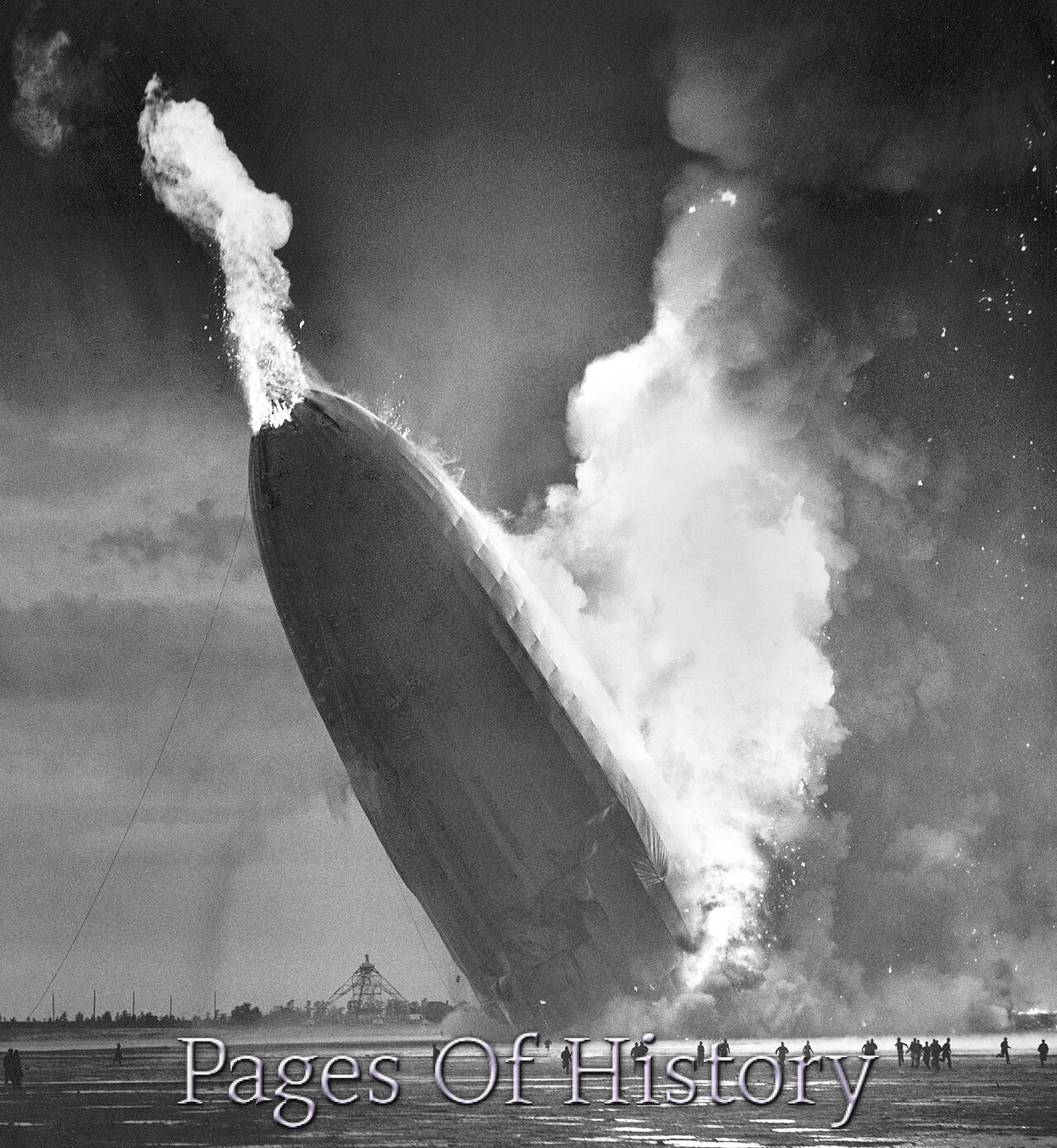
The enduring mystery of the Hindenburg disaster cause is not a single, simple spark, but a tragic confluence of volatile chemistry, questionable engineering choices, geopolitical tension, and sheer bad luck that culminated in 34 seconds of hellfire over Lakehurst, New Jersey, on the evening of May 6, 1937. While the iconic image of the giant zeppelin erupting in a fireball is seared into the public consciousness, the precise ignition source has been debated for nearly a century, with theories ranging from sabotage to static electricity, and even a phenomenon known as the “cascade effect.” To truly understand why the LZ 129 Hindenburg burned, we must strip away the myth and examine the physical evidence, the timeline of the disaster, and the unique vulnerabilities of a flying machine filled with 7 million cubic feet of the most flammable gas known to humanity.
- The Flawed Giant: Hydrogen, Duralumin, and a Political Gamble
- The Final Voyage: A Stormy Transatlantic Crossing
- The Catastrophe: 7:25 PM, May 6, 1937
- Investigating the Hindenburg Disaster Cause: The Official Verdict
- The Sabotage Theory: A Nazi Conspiracy or an Act of Desperation?
- The "Cascade Effect" and the Skin: A New Understanding
- Key Facts and Timeline of the Disaster
- Legacy and the End of the Zeppelin Era
- Why It Still Matters Today
The Flawed Giant: Hydrogen, Duralumin, and a Political Gamble
The Hindenburg was a marvel of engineering, a floating palace designed to ferry the elite across the Atlantic in opulent luxury. But beneath its swastika-adorned tail fins and art-deco lounges lay a fundamental structural compromise. The airship was designed to be filled with helium, an inert and non-flammable gas. However, the United States, the world’s sole producer of helium at the time, had passed the Helium Control Act of 1927, which placed a strict embargo on exporting the gas for strategic military reasons. Hugo Eckener, the visionary head of the Zeppelin Company, had lobbied Washington extensively, even securing a personal meeting with President Franklin D. Roosevelt, but the political climate in the lead-up to World War II made any deal untenable.
Faced with a choice between scrapping the project or flying with hydrogen, Eckener and his engineers reluctantly chose the latter. They were confident in their safety protocols, having flown millions of miles on hydrogen with the earlier Graf Zeppelin. The Hindenburg‘s designers implemented what they believed were robust safeguards, including a system of gas cells, venting valves, and a strict no-smoking policy for passengers. Yet, they were knowingly operating a craft where the lift gas was not merely passive but was a catastrophic explosive hazard waiting for a trigger. The airship’s skin was also a point of concern. It was a cotton fabric treated with a highly combustible concoction of cellulose acetate butyrate, iron oxide, and aluminum powder—a combination designed to reflect heat and UV rays, but one that also possessed the chemical properties of solid rocket fuel, as later analysis by NASA engineer Addison Bain would controversially suggest.
The Final Voyage: A Stormy Transatlantic Crossing
The Hindenburg‘s fatal journey began on May 3, 1937, at Frankfurt am Main. It was the first of what was planned to be a season of ten round-trip crossings to the United States. The airship carried 36 passengers and a crew of 61, many of whom were seasoned Zeppelin veterans. The flight was deliberately delayed by several hours to avoid the rough weather of a passing front over the Atlantic, but the delay was not enough. Headwinds were fierce, and the crossing was turbulent, forcing Captain Max Pruss to navigate a course that took the airship over the coast of Newfoundland and down the eastern seaboard of the United States.
By the time Hindenburg reached the vicinity of the Lakehurst Naval Air Station on the afternoon of May 6, it was running nearly 12 hours behind schedule. The weather at the field was atrocious. Thunderstorms rolled through the area, and the ground crew was standing by in anticipation of a landing. Pruss and Eckener, who was on board as a passenger and observer, debated whether to land or to wait out the storm. Pruss initially circled the field, but the storm was slow to dissipate. At approximately 6:12 PM, Commander Charles Rosendahl, the station’s commanding officer, radioed the airship with a weather update, suggesting that conditions might be clearing. Pruss acknowledged the message but chose to continue circling, waiting for the winds to die down enough for a safe approach.
Finally, at around 7:00 PM, the skies began to break. Pruss ordered the airship to begin its final approach. The landing at Lakehurst was a complex ballet involving a ground crew of nearly 200 men who would grab the mooring lines dropped from the bow and tail to guide the massive 804-foot-long vessel to its mooring mast. On board, the passengers were instructed to gather in the dining room for the landing, while the crew took their positions along the keel catwalk. The tension was palpable; everyone was eager to disembark after a long, uncomfortable voyage.
The Catastrophe: 7:25 PM, May 6, 1937
Eyewitnesses on the ground reported seeing the airship make a sharp, sweeping turn to port to bring its stern into the wind for the landing approach. This maneuver, known as a “Scharf” turn, was executed at full speed to compensate for the strong crosswinds. It was during this tight turn that the first signs of trouble appeared. Several witnesses, including ground crewman R.W. Antrim, reported seeing a “fluttering” or rippling of the outer cover near the upper fin, just aft of the tail. This was followed by a visible vibration that seemed to emanate from the rear of the ship.
At precisely 7:25 PM, as the airship was about 200 feet above the ground and dropping mooring lines, a small, bright flame appeared near the top of the hull, just forward of the vertical fin. It was not a massive explosion at first, but a localized ignition. Within seconds, however, the flame spread with terrifying speed, racing along the spine of the airship. The hydrogen cells, which were not interconnected but were separate bags within the hull, began to rupture and vent their contents. The fire became a massive conflagration, and the entire aft section of the airship collapsed into a burning wreck. The bow, still buoyant for a brief moment, tilted upward into the sky before the remaining lift gas was consumed, and the whole structure plunged to the ground. The entire sequence, from first flame to the wreck settling on the ground, took a mere 34 seconds.
The chaos on the ground was immense. The ground crew, who had been directly beneath the airship, scattered in terror. Some were killed by falling debris; others were horribly burned. Miraculously, 62 of the 97 people on board survived. Many of the survivors were those who had the presence of mind to run—not away from the falling wreckage, but into it, seeking shelter under the airship’s openings as it settled to the earth. Steward Max Schulz famously kicked out a window in the dining room and threw passengers to safety. Cabin boy Werner Franz survived by having a water tank burst over him, extinguishing the flames on his clothing. The death toll included 13 passengers, 22 crewmen, and one civilian ground crewman, Allen Hagaman.
Investigating the Hindenburg Disaster Cause: The Official Verdict
Within hours of the fire, the United States Department of Commerce launched an official inquiry, led by Secretary of Commerce Daniel C. Roper. The investigation was fast-paced and highly public, with hearings held in Lakehurst and Washington, D.C. The primary goal was to determine the cause of the fire, but the investigation was also politically charged. The United States was wary of blaming the Zeppelin Company without conclusive evidence, as it could be seen as an act of aggression against a technologically advanced nation. Conversely, the Nazis were eager to deflect blame away from sabotage, which they feared would lead to a diplomatic crisis or even war.
After weeks of testimony and analysis of the wreckage, the official report, released on May 25, 1937, concluded that the most probable cause of the fire was a discharge of electrostatic energy—a spark—igniting vented hydrogen. The report suggested that the ship had become electrically charged due to the stormy atmosphere, and that the wet landing ropes, which were not grounded upon touching the earth, had created a differential in electrical potential between the airship’s frame and the ground. This theory, championed by the inquiry’s chief technical advisor, Dr. Charles E. Rosendahl, posited that the spark jumped from the skin of the airship to the metal framework, igniting the hydrogen that had been leaking from a torn gas cell.
While the official report was accepted, it was far from definitive. It left many questions unanswered. How did the gas cell tear? Why did the fire spread so rapidly? And why was the flame initially a bright yellow-orange, the color of burning cellulose, rather than the nearly invisible blue flame of pure hydrogen? The official narrative painted a picture of an unavoidable accident, a freak confluence of weather and physics. But for many, the explanation felt incomplete.
The Sabotage Theory: A Nazi Conspiracy or an Act of Desperation?
One of the most persistent alternative theories regarding the Hindenburg disaster cause is that of deliberate sabotage. The political context of 1937 makes this a compelling possibility. The Hindenburg was a flying symbol of Nazi Germany’s technological prowess and ideological ambition. Its image was emblazoned with swastikas, and its voyages were used for propaganda purposes. There were many groups and individuals who would have had a motive to destroy it, including anti-Nazi activists, the Communist underground, and even factions within the German military who feared that a disaster would weaken the regime’s prestige.
The most prominent sabotage theory centers on a crew member named Eric Spehl, a 24-year-old rigger who was an amateur photographer and had a girlfriend who was a known anti-Nazi activist. The theory, popularized by author A.A. Hoehling in his 1962 book Who Destroyed the Hindenburg?, suggests that Spehl planted a small, timed incendiary device—perhaps a camera flash battery wired to a dry-cell battery—inside one of the gas cells. Hoehling argued that the location of the initial fire, near gas cell 4, was a spot where Spehl was known to be working during the flight. The theory also points out that Spehl was killed in the crash, which would be consistent with a suicide mission, or perhaps a tragic miscalculation where he was unable to escape.
While the sabotage theory is romantic and dramatic, it lacks definitive physical evidence. No remnants of a timing device or explosive charge were ever found in the wreckage—though, given the intensity of the fire, it is unlikely any would survive. Furthermore, the theory that a single individual could have smuggled a device aboard and placed it without being detected by the crew is difficult to reconcile with the strict discipline and routine inspections on Zeppelin flights. The Gestapo had a presence on the ship, and the crew was thoroughly vetted. The Nazi government itself was quick to promote the sabotage theory, hoping to deflect attention from any technical or design flaws in their flagship. However, their own investigation, led by the Gestapo, failed to produce a single credible suspect or piece of evidence, and the theory was quietly dropped by the German government.
The “Cascade Effect” and the Skin: A New Understanding
In the decades following the disaster, a more nuanced and scientifically rigorous understanding of the fire has emerged. The most comprehensive modern analysis, conducted in the late 1990s by retired NASA scientist Addison Bain, challenged the official electrostatic theory and the sabotage narrative. Bain’s research, which was initially met with skepticism but has since gained considerable traction, focused on the chemistry of the airship’s outer covering. He argued that the real culprit was not the hydrogen per se, but the highly flammable skin of the airship itself.
Bain’s theory, often called the “cascade effect,” proposes that the initial ignition was indeed a static spark, but the spark did not ignite hydrogen. Instead, it ignited the doped fabric of the outer cover. The dope—a lacquer applied to the cotton fabric to make it taut and weatherproof—was a mixture of cellulose acetate butyrate, iron oxide, and aluminum powder. This composition was practically identical to the solid fuel used in the V-2 rockets developed by German engineers. Once ignited, the skin burned ferociously, and this burning fabric acted as the ignition source for the hydrogen cells, which then vented and burned in a massive fireball. This explains the rapid spread of the fire and the color of the flame. Hydrogen burns with a pale blue, almost invisible flame; the massive orange and yellow flames captured in newsreels are more consistent with burning cellulose and aluminum.
Bain’s theory also explains the “fluttering” seen by witnesses just before the fire. The turn may have caused a bracing wire to snap inside the hull, which would have punctured a gas cell and also created a spark. This vented hydrogen would have risen to the top of the hull, but more importantly, the sharp turn stressed the outer skin, potentially causing it to tear. A spark from the broken wire, or from static electricity generated by the tearing fabric, would then easily ignite the highly flammable skin. The fire would then spread across the surface of the airship with terrifying speed, consuming the skin and causing the gas cells to overheat and rupture, releasing their contents into the inferno.
Key Facts and Timeline of the Disaster
To appreciate the complexity of the tragedy, it is helpful to examine a concise timeline of the key events and the physical characteristics of the airship. The following table summarizes the critical data points that investigators and historians have debated for decades.
| Element | Detail | Significance |
|---|---|---|
| Airship Designation | LZ 129 Hindenburg | Largest aircraft ever built at the time, 804 ft long with a diameter of 135 ft. |
| Lift Gas | Hydrogen (approx. 7,062,000 cubic feet) | Chosen due to the U.S. embargo on helium; highly flammable and the primary source of the fireball. |
| Initial Fire Origin | Near the upper fin, aft of the tail, around Gas Cell 4. | Located near the area where the “fluttering” was observed during the final sharp turn. |
| Time to Destruction | 34 seconds | The rapidity of the fire’s spread indicates the involvement of the highly combustible outer skin, not just the hydrogen. |
| Survivors vs. Fatalities | 62 survivors; 35 fatalities on board + 1 ground crewman. | The high survival rate is attributed to the airship’s low altitude and the quick actions of crew and passengers. |
| Official Cause (1937) | Electrostatic discharge igniting vented hydrogen. | Verdict of the U.S. Commerce Department inquiry, but considered incomplete by modern analysts. |
The table underscores a critical paradox: the very features that made the Hindenburg a luxury liner of the skies—its immense size and its hydrogen lift—made it a death trap under the wrong conditions. The official inquiry focused on the static electricity as the trigger, but it could not explain the fire’s ferocity. The modern analysis by Bain and others provides a more comprehensive explanation, showing that the airship was, in effect, a bomb wrapped in rocket fuel.
The Role of the Weather and the Landing Decision
Another critical aspect of the disaster is the decision-making process leading up to the landing. The airship was already late and the passengers were weary. Commander Rosendahl was eager to complete the landing to secure the airship before the next storm front moved in. Captain Pruss, a highly experienced airship commander, was under immense pressure to land. He executed the sharp turn to position the airship for a landing, but this maneuver was more aggressive than usual due to the wind conditions. This turn placed immense structural stress on the airframe, particularly the tail section, which is the most likely location for the initial structural failure or gas cell tear. The combination of a high-speed turn, a storm-charged atmosphere, and a delicate skin of flammable dope created a perfect storm for disaster.
Legacy and the End of the Zeppelin Era
The Hindenburg disaster cause may still be debated in technical journals, but its historical impact is undeniable. The horrific newsreel footage, narrated by a sobbing Herbert Morrison with his famous cry, “Oh, the humanity!”, brought the tragedy into the living rooms of the world. It was one of the first modern media disasters, a moment where technology and human vulnerability collided in real-time. The psychological impact was immediate and permanent. The public lost faith in airship travel overnight. The Zeppelin Company, which had been working on designs for larger, even more luxurious airships, was effectively bankrupted. The Graf Zeppelin, the sister ship, was grounded and eventually scrapped in 1940.
The disaster marked the definitive end of the passenger airship era. While airships continued to be used for maritime patrol and anti-submarine warfare during World War II, their role as a commercial transport was finished. The age of the fixed-wing airplane, which had been steadily advancing, was accelerated by the tragedy. The Hindenburg became a cautionary tale about the risks of technological hubris, the dangers of political compromise, and the unforgiving laws of physics. It was a spectacular failure that highlighted the gap between human ambition and the safety of engineering.
Why It Still Matters Today
Nearly a century later, the story of the Hindenburg continues to fascinate and instruct. For historians, it is a lens through which to view the political tensions of the 1930s. The helium embargo was not just a commercial dispute; it was a strategic decision by the United States to withhold a vital resource from a potential adversary. This geopolitical context is a reminder that safety decisions are rarely made in a vacuum and that national security concerns can have unintended and catastrophic consequences. For scientists and engineers, the disaster is a case study in materials science and failure analysis. The “cascade effect” theory, which emerged from a detailed study of the airship’s skin, demonstrates the importance of understanding the interaction of materials under extreme stress. It is a lesson in how the most obvious culprit—the hydrogen—may not be the sole villain, and that the ancillary materials used in construction can be the true source of a disaster’s lethality.
Furthermore, the Hindenburg disaster cause is a testament to the power of human memory and the resilience of survivors. The stories of those who lived, like Werner Franz and Max Schulz, are stories of quick thinking and incredible courage in the face of overwhelming terror. Their accounts provide a human dimension to the technical analysis, reminding us that history is not just a collection of dates and causes but a tapestry of individual experiences. The disaster also led to significant improvements in fire safety and aircraft design, even if those lessons were applied to airplanes rather than airships. The rigorous investigation, the public inquiry, and the subsequent scientific debate set a precedent for how we examine and learn from technological catastrophes.
In the end, the Hindenburg is a powerful symbol of a world on the brink of transformation. It was a vessel of luxury and national pride that was destroyed in a flash, much like the fragile peace of the interwar years would soon be destroyed by an even greater conflagration. The fire that consumed the airship was a harbinger of the firestorms that would engulf Europe just two years later. The image of the giant craft, once a symbol of a glorious future, reduced to a twisted, burning skeleton on the sandy soil of New Jersey, serves as a sobering reminder of the fragility of human achievement and the ever-present potential for disaster when we push the boundaries of what is possible. The mystery of that first spark may never be fully resolved, but the legacy of the tragedy is clear: it was a pivotal moment in history that closed one chapter of aviation and opened another, leaving us with a story that is as much about human error and political folly as it is about fire and hydrogen.