
📅 Last updated: 14.07.2026
- The Arrival of the Antonine Plague Rome: A Biological Catastrophe
- Military Collapse: How the Antonine Plague Rome Crippled the Legions
- Economic Devastation: The Plague’s Long Shadow
- A Timeline of Crisis: Key Events During the Antonine Plague Rome
- Social and Psychological Fractures: The Crisis of Confidence
- Political Consequences: From Stability to Chaos
- The Long-Term Legacy: A World Forever Changed
- Conclusion: The True End of Pax Romana
The Antonine Plague Rome ravaged from 165 to 180 AD, a catastrophic pandemic that tore through the Roman Empire at the height of its power, killing millions and irrevocably shattering the fragile foundations of the *Pax Romana*. While historians often attribute the empire’s decline to political corruption or barbarian invasions, the true turning point was biological. This plague did not merely disrupt Roman life; it fundamentally altered the empire’s demographic, economic, and military structures, creating a cascade of crises from which Rome never fully recovered.
The Arrival of the Antonine Plague Rome: A Biological Catastrophe
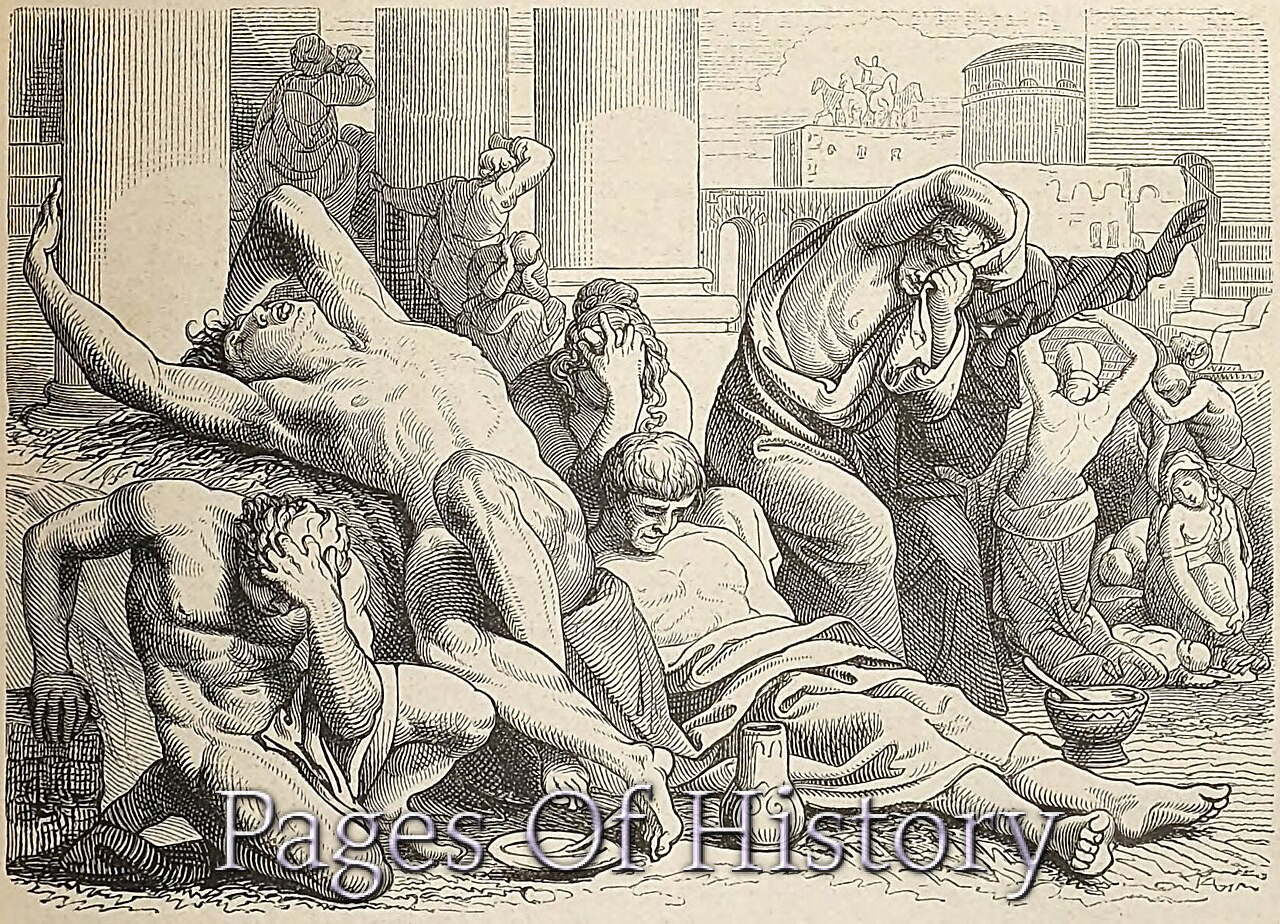
The plague first appeared in 165 AD, during the reign of co-emperors Marcus Aurelius and Lucius Verus. Roman troops returning from a brutal campaign against the Parthian Empire in Mesopotamia carried the disease back to the heartland. The most likely culprit was Variola major—smallpox—or perhaps a hemorrhagic fever like Ebola, though ancient descriptions of fever, pustules, and high mortality align closely with smallpox. The Greek physician Galen, who treated victims in Rome, left detailed clinical accounts: black pustules covering the skin, uncontrollable diarrhea, fever so intense that patients coughed blood, and a mortality rate that emptied entire households.
The scale of death was staggering. Modern estimates suggest that the Antonine Plague killed between 7 and 10 million people across the empire, roughly 10 to 15 percent of the total population. In some urban centers, such as Rome itself and Alexandria, mortality may have reached 25 to 30 percent. The army, which had been a highly disciplined force of citizen-soldiers, lost thousands of legionaries to the disease. Entire cohorts were decimated, not by barbarian swords, but by invisible pathogens. Marcus Aurelius himself wrote in his Meditations of the “pestilence” that “swept away” so many, a somber acknowledgment of his empire’s vulnerability.
The Immediate Collapse of Public Order
The plague’s arrival triggered a breakdown in basic civic functions. Grain shipments from Egypt and North Africa slowed as dockworkers, sailors, and farmers died or fled. In Rome, the annona—the state-subsidized grain dole—faltered, leading to food riots. The city’s aqueducts, normally well-maintained, began to silt up as the workforce vanished. Temples, bathhouses, and markets closed. The Roman state, so adept at logistics and administration, found itself paralyzed. Galen, fleeing the capital in 166 AD, noted that “the streets were filled with the dead, and there were not enough living to bury them.” This was not a temporary setback; it was a systemic failure.
Military Collapse: How the Antonine Plague Rome Crippled the Legions
Perhaps no institution suffered more than the Roman army. The plague struck at the very moment the empire needed its legions most. The Marcomannic Wars (166–180 AD), a series of brutal conflicts along the Danube frontier, erupted just as the disease peaked. Marcus Aurelius faced a nightmare: barbarian tribes—the Marcomanni, Quadi, and Iazyges—poured across the river, while his own forces melted away from illness.
Recruitment Crisis and Economic Drain
The loss of soldiers was not just a numerical problem; it was a qualitative disaster. Veteran legionaries, the backbone of Roman military discipline, died in droves. In their place, the empire was forced to recruit from desperate sources: slaves, gladiators, and even bandits were offered citizenship and land in exchange for service. The Historia Augusta records that Marcus Aurelius auctioned off imperial treasures—golden goblets, silk robes, even his wife’s jewelry—to fund new legions. This was a humiliating admission that the empire’s gold reserves, already strained, could not keep pace with the plague’s destruction.
The consequences were immediate and brutal. In 170 AD, the Marcomanni broke through the Alpine passes and besieged Aquileia, a Roman city in northern Italy. For the first time in over 200 years, a foreign enemy threatened the Italian homeland. The legions that finally repelled them were a shadow of their former selves: under-strength, poorly trained, and riddled with disease. The victory, when it came in 175 AD, was pyrrhic. The empire had lost an entire generation of soldiers.
The Sarmatian Cavalry and a Shifting Military Balance
To fill the gaps, Marcus Aurelius made a fateful decision: he began recruiting heavily from the very barbarian tribes he was fighting. Thousands of Sarmatian and German cavalrymen were integrated into the Roman army as foederati—allied troops who fought under their own leaders. This solved an immediate manpower crisis but planted the seeds of future trouble. These foreign soldiers owed loyalty to their chieftains, not to Rome. Within a century, such units would become kingmakers, using their military power to install and depose emperors. The Antonine Plague Rome thus directly accelerated the barbarization of the Roman military, a process that would eventually hollow out the empire from within.
Economic Devastation: The Plague’s Long Shadow
The economic impact of the Antonine Plague was profound and enduring. The Roman economy, based on agriculture, trade, and slave labor, depended on a steady supply of human capital. When that supply collapsed, so did the economy.
Agricultural Collapse and Land Abandonment
The countryside was hit especially hard. Peasants, who had no immunity and lived in close quarters with livestock, died in staggering numbers. Fields lay fallow. Olive groves and vineyards, which required years of labor to establish, were abandoned. The latifundia—the vast slave-run estates that produced much of the empire’s grain, wine, and oil—lost their workforce. Landowners, unable to find tenants or laborers, let their lands revert to scrub. In Egypt, papyrus records from the Fayum region show a dramatic drop in tax revenues and land registration between 165 and 180 AD. The state, desperate for cash, began demanding taxes in gold rather than grain, forcing peasants into debt and dependency.
Trade and Urban Decline
Long-distance trade, the lifeblood of the Roman economy, also withered. The Silk Road and maritime routes from India brought spices, silk, and luxuries to Roman ports. But as merchants and sailors died, trade networks frayed. The port of Ostia, once a bustling hub, saw its population plummet. In Rome, the number of collegia—trade guilds—shrunk dramatically. The state tried to intervene, compelling the sons of artisans to follow their fathers’ trades, but this only created resentment and inefficiency. The silver denarius, the empire’s standard coin, began to be debased under Marcus Aurelius’s successors, as the treasury minted coins with less precious metal to stretch its dwindling resources. This inflation eroded the savings of ordinary Romans, further destabilizing society.
Taxation and the Provincial Burden
The tax system, already oppressive, became crushing. The Roman state needed revenue to pay soldiers and buy grain, but the tax base had shrunk. Provinces that had been wealthy, such as Asia Minor and Syria, were devastated by the plague. Cities like Ephesus and Antioch lost half their populations. The burden fell disproportionately on the poor, who were tied to their land and could not flee. In Gaul and Spain, peasant revolts broke out in the late 2nd century, a direct result of tax collectors’ brutality. The Bagaudae, bands of impoverished farmers and runaway slaves, began raiding Roman estates. This was not yet a rebellion that could topple the empire, but it was a sign that the social contract had broken.
A Timeline of Crisis: Key Events During the Antonine Plague Rome
To understand the depth of the disaster, consider this chronological overview:
| Date | Event | Impact |
|---|---|---|
| 165 AD | Plague arrives in Rome via returning troops from Parthia | Initial wave of mortality; panic and flight from the capital |
| 166–168 AD | Peak mortality; Galen documents symptoms | Urban population collapses; grain shortages; economic paralysis |
| 169 AD | Lucius Verus dies, possibly from the plague | Marcus Aurelius becomes sole emperor; crisis deepens |
| 170 AD | Marcomanni invade Italy; siege of Aquileia | First foreign invasion of Italy in 200 years; military desperation |
| 175 AD | Marcus Aurelius suppresses Cassius’s rebellion in the East | Provincial revolt fueled by plague-related tax burdens |
| 180 AD | Death of Marcus Aurelius; Commodus becomes emperor | End of the Antonine dynasty; start of a century of instability |
This table captures only the most dramatic moments. Behind each date lies a story of villages emptied, families shattered, and an empire slowly bleeding out.
Social and Psychological Fractures: The Crisis of Confidence
The Antonine Plague Rome did not just kill bodies; it killed beliefs. The Pax Romana was built on a shared faith in Roman power, justice, and the gods. The plague shattered that faith.
Religious Despair and the Search for Scapegoats
Romans traditionally believed that disease was a punishment from the gods for impiety. The state responded by ordering public sacrifices and building temples to Apollo and Aesculapius, the gods of healing. But the plague continued. This failure of traditional religion opened the door to new cults. The worship of Mithras, a Persian god, gained popularity among soldiers. More significantly, Christianity began to spread rapidly in the cities. Christians were known for caring for the sick, even at the risk of their own lives. Their message of salvation and a better afterlife resonated with a population that had lost hope in the old gods. By the early 3rd century, Christian communities had grown from a tiny sect to a significant minority, a direct consequence of the plague’s psychological devastation.
At the same time, the plague fueled xenophobia. In 165 AD, rumors spread that a Parthian sorcerer had cursed a Roman well, causing the disease. Foreigners, especially Syrians and Jews, were attacked in the streets. The state did little to stop this; indeed, the emperor himself blamed the plague on “foreign superstitions.” This atmosphere of fear and suspicion eroded the cosmopolitan tolerance that had characterized the Pax Romana.
The Decline of Civic Virtue
Roman society had long prized pietas—duty to family, state, and gods. The plague made such virtues seem futile. Why save for the future when you might die tomorrow? Why serve in the army when your comrades were dying of disease? The rich, who could afford to flee to their country villas, abandoned the cities. The poor, left behind, turned to crime or despair. In Rome, the number of beggars and homeless skyrocketed. The state, which had once provided public baths, games, and grain, now struggled to maintain basic order. The great historian Edward Gibbon wrote that the empire under Marcus Aurelius was “a time of general prosperity and happiness”—but that was a myth. The plague had already hollowed out that happiness.
Political Consequences: From Stability to Chaos
The political fallout of the Antonine Plague Rome was immediate and long-lasting. Marcus Aurelius, despite his philosophical wisdom, could not stop the rot. His death in 180 AD marked the end of the “Five Good Emperors,” a period of stable succession and competent rule. His son Commodus, who succeeded him, was a tyrant and a fool, but he was also a product of his times. The empire he inherited was broke, depopulated, and under constant military threat.
The Crisis of the Third Century
The plague directly set the stage for the Crisis of the Third Century (235–284 AD), a period of civil war, invasion, and economic collapse. The depleted legions could not hold the frontiers. Germanic tribes, Goths, and Persians all took advantage of Roman weakness. In 251 AD, the emperor Decius was killed in battle against the Goths—the first Roman emperor to die fighting a foreign enemy. Between 235 and 284, there were over 20 emperors, most of whom were assassinated. This chaos was not inevitable; it was the direct result of the demographic and military devastation wrought by the plague.
Furthermore, the plague eroded the legitimacy of the imperial office. Emperors had once been seen as semi-divine figures, chosen by the gods to protect Rome. But how could a god-chosen ruler allow a plague to kill millions? The people’s faith in the emperor was broken. This opened the door to military usurpers, who claimed power not by divine right, but by force of arms. The army, now composed largely of barbarian mercenaries, became the true master of Rome.
Legal and Administrative Changes
The state responded to the crisis with harsh measures. Under the Severan dynasty (193–235 AD), the legal system became more authoritarian. The Constitutio Antoniniana of 212 AD, which granted citizenship to all free inhabitants of the empire, was not a progressive reform but a desperate attempt to expand the tax base. New laws tied peasants to the land, forcing them to remain as serfs. Soldiers were forbidden to marry, to keep them focused on their duties. These draconian measures were a direct legacy of the plague: the state, terrified of losing control, clamped down on individual freedom. The Pax Romana had been a time of relative liberty; the post-plague empire was a police state.
The Long-Term Legacy: A World Forever Changed
The Antonine Plague Rome did not end the Roman Empire overnight. The empire would survive for another 300 years in the West, and nearly 1,000 in the East. But the plague broke the empire’s spine. It destroyed the demographic surplus that had fueled Roman expansion. It bankrupted the treasury. It forced the army to rely on barbarian recruits. And it shattered the psychological confidence that had made Rome seem eternal.
Comparison to Later Pandemics
The plague’s effects can be seen in the later Plague of Cyprian (249–262 AD), which further devastated the empire, and the Plague of Justinian (541–542 AD), which helped doom the Eastern Roman Empire. Each pandemic followed a similar pattern: demographic collapse, economic contraction, military weakness, and social upheaval. The Antonine Plague was the first and, in many ways, the most consequential, because it struck at the height of Roman power. It was the original crack in the foundation.
Conclusion: The True End of Pax Romana
When historians speak of the Pax Romana, they often point to the death of Marcus Aurelius in 180 AD as its symbolic end. But that is a convenient fiction. The Pax Romana was already dying by 167 AD, as plague victims filled the streets of Rome and barbarians crossed the Danube. The Antonine Plague Rome was the true executioner. It killed the *Pax Romana* not with a single blow, but with a thousand small cuts: a farmer dying in his field, a legionary coughing blood in his tent, a child abandoned in a gutter. The peace and prosperity that Rome had known for two centuries were not sustainable in the face of such biological catastrophe. The empire survived, but it was a different empire—poorer, meaner, and more desperate. The golden age was over, and the long, slow decline had begun. The lesson is a brutal one: even the mightiest empires are not immune to the microscopic forces of nature. In the end, a pathogen, not a barbarian, brought Rome to its knees.