
📅 Last updated: 12.07.2026
- The City Before the Flames: A Tinderbox of Medieval London
- The Spark and the Spiral: The True Beginning of the Great Fire of London
- The Four Days of Terror: A Chronology of Destruction
- Human Cost and the Refugee Crisis: The Other Casualties of the Great Fire of London
- The Blame Game: Scapegoats, Paranoia, and the Search for a Cause
- The Rebuilding: Forging a New London from the Ashes
- The Lasting Legacy: Fire, Insurance, and the Modern City
- Conclusion: The Fire as a Crucible of Modernity
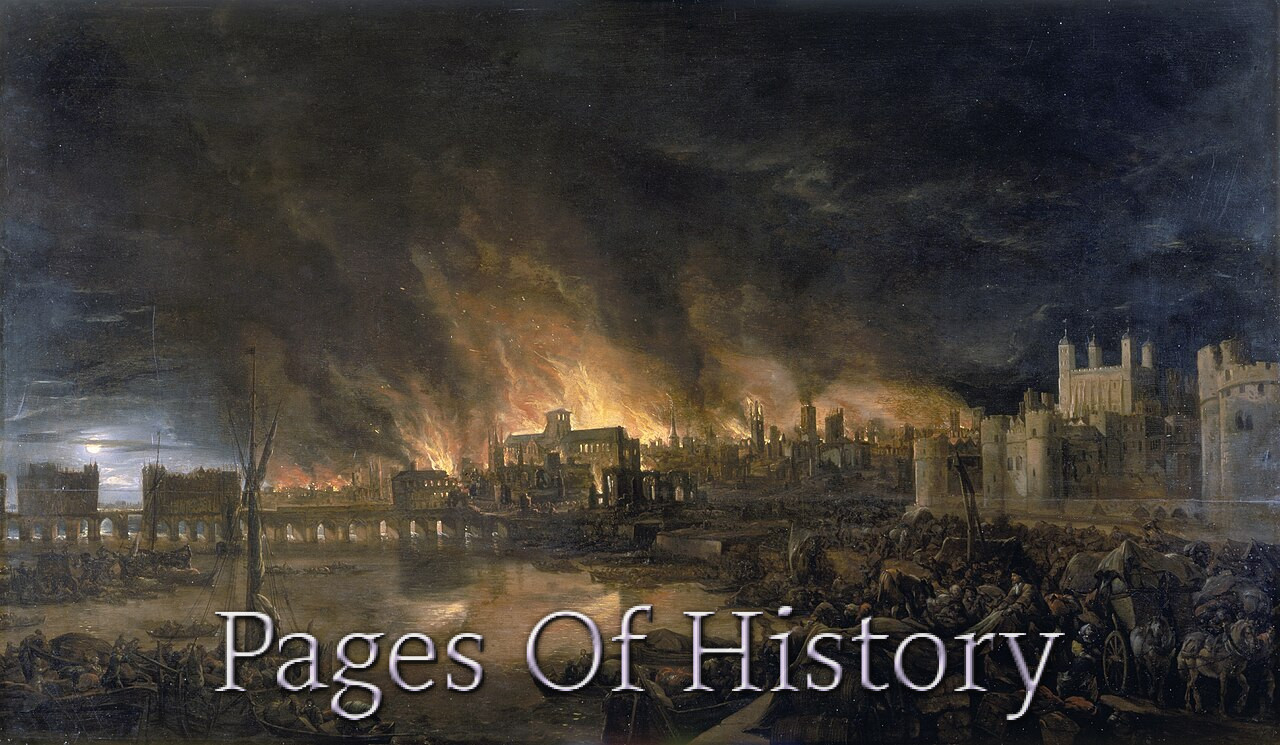
The Great Fire of London, which erupted in the early hours of a September Sunday in 1666, remains one of the most transformative urban catastrophes in European history, a crucible that simultaneously destroyed a medieval city and forged a modern metropolis. While the popular image of a small bakery on Pudding Lane igniting a city of wood and thatch is essentially correct, the true story is a far richer tapestry of systemic failure, human error, geopolitical tension, and astonishing resilience. It is a tale not merely of flames, but of a city’s soul being tested by fire and emerging, phoenix-like, with a new identity.
The City Before the Flames: A Tinderbox of Medieval London
To understand the sheer ferocity of the Great Fire of London, one must first appreciate the city it consumed. Mid-17th century London was a sprawling, teeming, and fundamentally medieval organism. Its population had swelled to approximately 350,000 residents, crammed within the ancient Roman walls and spilling into the surrounding suburbs. The city was a dense labyrinth of narrow, winding streets, many no wider than six or seven feet, often overhung by the jettied upper stories of timber-framed houses.
A City Built of Combustibles
The architectural materials were the primary accelerant. The vast majority of buildings—homes, shops, and warehouses alike—were constructed from timber, lath, and plaster. Roofs were universally thatched with reed or straw, a practice that had been repeatedly banned by royal decree but never effectively enforced. Adding to the peril, the city’s industries—breweries, bakeries, soap-makers, and metal-founders—relied on open flames and stored vast quantities of combustible goods. Warehouses along the River Thames held mountains of pitch, tar, tallow, hemp, oil, and gunpowder for the navy and merchant fleets.
The Summer of ’66: A Perfect Drought
The summer of 1666 had been exceptionally hot and dry. A prolonged drought had parched the wooden structures, turning them into seasoned kindling. A contemporary diary entry by John Evelyn, a prominent diarist and civil servant, noted that the vegetation in the city’s few green spaces had “withered and dried up.” The wooden water pipes, which ran beneath the streets, had also shrunk and leaked, reducing the already inadequate water pressure from the city’s conduits and the River Thames. The stage was set for a catastrophe of immense proportions.
The Spark and the Spiral: The True Beginning of the Great Fire of London
The accepted narrative begins at 1 a.m. on Sunday, September 2, 1666, at the bakery of Thomas Farriner on Pudding Lane, a narrow street just east of London Bridge. Farriner, the King’s baker, later testified that he had extinguished his oven fire before retiring. However, a stray ember, likely from a faulty flue or a spark that had remained smoldering in the wattle-and-daul structure, caught fire to the kindling stored nearby. Within minutes, the bakery was ablaze.
The Failure of Initial Response
The first critical failure was one of communication and authority. The Lord Mayor of London, Sir Thomas Bloodworth, was summoned to the scene. In a moment of catastrophic misjudgment, he famously dismissed the blaze as a minor affair. According to the diary of Samuel Pepys, another of the era’s great chroniclers, Bloodworth declared, “A woman might piss it out.” He then refused to authorize the demolition of neighboring houses to create a firebreak, fearing the cost of compensating the owners. This decision, born of petty parochialism, sealed the city’s fate. By the time he realized the scale of the threat, the fire had grown too large to contain.
The Role of Wind and Geography
A strong, dry easterly wind fanned the flames, driving them relentlessly westward into the heart of the city. The fire did not move as a single wall of flame but as a series of violent, unpredictable leaps. It would ignite one house, then skip across a street to another, sending a shower of burning debris—fire-brands—ahead of it. These brands, carried by the wind, would land on distant roofs, creating new fires behind the main front, trapping citizens and overwhelming firefighters.
The geography of London itself became a death trap. The narrow streets acted as wind tunnels, while the congested, jumbled layout prevented firefighters from moving effectively. The only firefighting equipment available were leather buckets, hand-operated squirts, and long hooks for pulling down burning structures. With the water supply compromised, these tools were nearly useless against the inferno.
The Four Days of Terror: A Chronology of Destruction
The conflagration unfolded over four distinct days, each with its own character and level of devastation. The following table summarizes the key events of this period.
| Day | Date | Key Events & Characteristics | Area of Destruction |
|---|---|---|---|
| Day 1 | September 2 (Sunday) | Fire starts at 1 a.m. on Pudding Lane. Lord Mayor Bloodworth refuses demolitions. Fire consumes the eastern wards, reaching the Thames. | Pudding Lane, Fish Street Hill, Thames Street (warehouses) |
| Day 2 | September 3 (Monday) | Fire crosses the Walbrook stream. Royal Navy sailors, under the Duke of York, begin using gunpowder to create firebreaks. The wind strengthens. | Royal Exchange, Cornhill, Lombard Street, Cheapside |
| Day 3 | September 4 (Tuesday) | The peak of the inferno. St. Paul’s Cathedral is consumed. Fire threatens the Tower of London and Whitehall Palace. Panic peaks among refugees. | St. Paul’s, Fleet Street, the Strand, western wards |
| Day 4 | September 5 (Wednesday) | Wind finally subsides. Massive firebreaks at Temple Bar and the Tower succeed. The fire is contained and begins to burn itself out. | Remaining western fringe, outskirts of the city walls |
Monday: The Fire Breaks Its Bounds
By Monday morning, the fire was an unstoppable force. It had crossed the natural barrier of the Walbrook stream and was now consuming the commercial heart of London. The Royal Exchange, the center of the city’s mercantile trade, was a roaring inferno. The massive stone-built Guildhall, while surviving structurally, had its roof collapse and its interior gutted. King Charles II and his brother, James, Duke of York, took personal command of the firefighting effort, a move that was both practical and politically vital. The Duke of York, a former Lord High Admiral, brought military discipline to the chaos. He established a chain of command and authorized the systematic use of gunpowder to blow up buildings in the path of the fire, creating effective firebreaks. This was the first truly effective tactic employed.
Tuesday: The Fall of St. Paul’s
Tuesday, September 4, was the most terrifying day. The fire reached the great medieval St. Paul’s Cathedral. The building had been in a state of disrepair, surrounded by a scaffold for restoration work. The flames caught the wooden scaffolding, climbing the structure and then igniting the massive timber roof. The lead covering of the roof melted, pouring down the streets in a “terrible, molten river,” as one witness described it. The heat was so intense that the stonework of the cathedral exploded and the great bells crashed down from the tower. For Londoners, the destruction of St. Paul’s was the ultimate symbol of the catastrophe—their spiritual and civic heart had been torn out.
Human Cost and the Refugee Crisis: The Other Casualties of the Great Fire of London
One of the most remarkable facts about the Great Fire of London is its relatively low confirmed death toll. Official records list only six deaths. This number, however, is almost certainly a dramatic undercount. The fire was so intense that many victims were cremated without trace. The poor, the elderly, and the infirm, trapped in cellars or unable to flee, would have perished without record. Furthermore, deaths from heat, smoke inhalation, and the collapse of buildings were likely numerous but unquantifiable.
The Exodus to the Fields
The true human cost was measured in displacement. An estimated 70,000 of the city’s 80,000 homes were destroyed, leaving roughly 80,000 to 100,000 people homeless. These refugees fled in a desperate exodus. They carried what they could—a bundle of clothes, a few pieces of furniture, a small chest of valuables. Many buried their goods in the fields of Moorfields, a marshy area north of the city, or loaded them onto boats on the Thames.
The refugees set up vast, sprawling tent cities in the open fields of Finsbury, Moorfields, and St. George’s Fields. Samuel Pepys recorded the scene: “The poor people… lying along by the waterside, and among the burnt goods, and the whole night… making a sad sight.” The social order was stretched to its breaking point. Looting was rampant, and the government struggled to provide food, water, and sanitation. The threat of disease—dysentery, typhus, and plague—hung heavy, especially as the Great Plague of 1665 had only recently subsided.
The Blame Game: Scapegoats, Paranoia, and the Search for a Cause
In the immediate aftermath, Londoners, traumatized and desperate for an explanation, turned to blame. The fire had been too large, too destructive, to be a mere accident. Conspiracy theories flourished.
The Catholic Scapegoat: Robert Hubert
The most prominent scapegoat was a hapless French watchmaker named Robert Hubert. He was a mentally unstable man who initially confessed to starting the fire at the Westminster Palace, a claim that was geographically impossible. Despite this, and despite evidence that the fire had started at Farriner’s bakery, the authorities seized upon him. In a climate of intense anti-Catholic and anti-foreign sentiment (England was then at war with the Dutch and the French), Hubert was a perfect target. He was tried, convicted, and hanged at Tyburn on October 26, 1666. It was later proven that Hubert had not even been in London at the time the fire started. His execution was a judicial murder, a desperate act of political theater to satisfy a populace demanding a culprit.
The Monument and the Inscription
The official search for a cause was never truly resolved. For decades, the Monument to the Great Fire, a towering Doric column designed by Sir Christopher Wren, carried an inscription blaming the “treachery and malice of the Popish faction.” This inscription was not removed until 1830, a testament to the deep-seated sectarian paranoia the fire had inflamed. The truth, as most historians agree, is that the fire was a tragic accident, the result of a perfect storm of environmental conditions, urban density, and human error.
The Rebuilding: Forging a New London from the Ashes
The physical destruction was staggering: 13,200 houses, 87 parish churches, 44 company halls, the Royal Exchange, the Custom House, and St. Paul’s Cathedral were all gone. The total area destroyed was 436 acres, roughly 80% of the walled city. Yet, from this devastation emerged an unprecedented opportunity.
Wren’s Grand Plan and the Realities of Reconstruction
Within a week of the fire, several grand plans for a new London were presented to King Charles II. The most famous was by Sir Christopher Wren, who envisioned a baroque city of broad, straight boulevards, piazzas, and uniform building lines, inspired by the avenues of Paris and Rome. John Evelyn presented a similar, equally ambitious scheme.
These grand plans, however, were rejected. The primary obstacle was property rights. London was a city of thousands of individual freeholders, each owning a small, irregularly shaped plot. Redrawing the street plan would have required a massive, complex, and legally fraught redistribution of land, which the government was unwilling to undertake. The King and Parliament chose pragmatism over aesthetics.
The Rebuilding Acts: A New Standard
Instead of a radical redesign, the government passed a series of Rebuilding Acts (1667-1671) that imposed strict new regulations. These acts were arguably the fire’s most lasting legacy. They mandated:
- Building Materials: All new houses were to be built of brick or stone, not timber. Thatched roofs were explicitly banned.
- Street Width: Four categories of streets were established, each with a minimum width, preventing the narrow, claustrophobic alleys of the past.
- Party Walls: Thicker, fire-resistant party walls between houses were required.
- Height and Projections: Limits were placed on building height and the overhanging jetties that had allowed fire to spread from house to house were prohibited.
The Livery Halls and the Cathedral
While the street plan remained largely medieval, the buildings themselves were transformed. The city’s powerful Livery Companies (the trade guilds) rebuilt their halls in a grand classical style. Sir Christopher Wren, although denied his grand plan, was given the commission of a lifetime: the rebuilding of 51 parish churches and his masterpiece, the new St. Paul’s Cathedral. The cathedral, with its iconic dome, became the symbol of the new London—orderly, Protestant, and resilient. The Great Fire of London thus created a unique architectural landscape: a medieval street pattern lined with elegant, fireproof, early Georgian brick buildings.
The Lasting Legacy: Fire, Insurance, and the Modern City
The Great Fire of London was not just a local event; it had profound and lasting consequences for the development of urban life in the Western world.
The Birth of Fire Insurance
In the fire’s immediate aftermath, a new industry was born: fire insurance. A man named Nicholas Barbon, a speculator, physician, and economist, founded the “Fire Office” in 1680, the first fire insurance company in London. Other companies soon followed, such as the “Friendly Society” and the “Sun Fire Office.” These companies did more than just sell policies. They employed their own private fire brigades, identifiable by distinctive uniforms and badges. A building insured by a particular company would display a metal fire mark on its facade, signaling to that company’s brigade to extinguish the blaze. This market-driven system was the direct precursor to modern municipal fire departments.
Urban Planning and Building Codes
The fire became the foundational event for modern urban planning and building regulations. The principles established by the Rebuilding Acts—fire-resistant materials, minimum street widths, and regulated party walls—became the template for cities across the British Empire and, later, the United States. The fire demonstrated, in the most dramatic way possible, that a city’s safety was a public good that required collective, enforced standards.
The Monument and a City’s Memory
The Monument to the Great Fire, a 202-foot-tall Doric column designed by Wren and Robert Hooke, stands near the site of the bakery on Pudding Lane. Its height is said to be exactly the distance from the bakery to the spot where the fire was finally stopped. The Monument is not merely a memorial; it is a scientific instrument, containing a spiral staircase and a laboratory for scientific experiments at its top. It embodies the spirit of the new age: a scientific, rational, and ordered response to a chaotic disaster.
Conclusion: The Fire as a Crucible of Modernity
The Great Fire of London was a catastrophe of almost unimaginable proportions. It destroyed a city that had grown organically for over a thousand years. It displaced a population the size of a small nation. It killed scapegoats, shattered communities, and left a psychological scar on the English psyche. Yet, its true legacy is one of transformation. The fire did not simply destroy a city; it created the opportunity for a new one.
It forced the adoption of fire-resistant building materials, laying the foundation for modern building codes. It gave birth to the insurance industry, a cornerstone of modern capitalism. It provided the canvas for Christopher Wren’s architectural genius, giving London its most iconic landmarks. It demonstrated the power of a centralized, professional response to disaster, a lesson learned by every major city since.
In the end, the story of the Great Fire of London is not just a story of a fire. It is a story about human nature: our capacity for error and panic, but also our immense power to rebuild, to innovate, and to learn. The London of today—a global city of brick and stone, of order and resilience—was literally forged in the flames of September 1666. The fire was the crucible, and from it emerged the modern city.