
📅 Last updated: 06.07.2026
- The Mighty Ninth: A Legion’s Origins and Early Glory
- The Final March: The Ninth Legion Disappearance in Northern Britain
- A More Plausible End: The Ninth Legion Disappearance on the Danube
- What the Evidence Actually Tells Us: A Table of Key Facts
- Alternative Theories: Disbandment, Mutiny, or Absorption
- The Cultural Legacy: Why the Myth Endures
- Historical Context: The Roman Army’s Lifecycle
- Conclusion: The Most Likely Truth
The disappearance of the Ninth Legion is one of history’s most enduring and romanticized mysteries, yet the phrase “Ninth Legion disappearance” often conjures images of a legion swallowed whole by barbarian hordes in the misty forests of Caledonia. While that popular image is compelling, the reality is far more complex, rooted in the shifting sands of Roman military administration, political upheaval, and the slow erosion of an empire’s reach. The Ninth Legion (Legio IX Hispana) did not simply vanish in a single, dramatic battle. Instead, its fate was likely sealed by a combination of strategic overreach, devastating defeat, and the quiet, bureaucratic death of a military unit that had outlived its usefulness.
The Mighty Ninth: A Legion’s Origins and Early Glory
To understand the Ninth Legion’s disappearance, one must first appreciate its formidable history. Founded by Pompey the Great in 65 BCE, or possibly by Julius Caesar himself during his Gallic campaigns, the Ninth was a veteran unit long before it set foot in Britain. It fought with distinction in Gaul, earning the cognomen Hispana (Spanish) after a period of service in the Iberian Peninsula. The legion’s emblem, likely the bull—a common symbol for Caesarian legions—signified strength and endurance.
The Ninth’s most significant early test came during the Civil Wars. It fought for Caesar at the decisive Battle of Pharsalus (48 BCE) against Pompey, and later served under Mark Antony. After the turmoil of the Second Triumvirate, the legion was settled in the province of Hispania Tarraconensis for a generation, a period of quiet that belied its future role in the empire’s most remote frontier.
Invasion of Britain: A New Frontier
The Ninth’s destiny changed forever in 43 CE, when Emperor Claudius launched the invasion of Britain. The legion, now under the command of the future emperor Vespasian (then a legate), was one of four legions tasked with subjugating the island. The others were the II Augusta, XIV Gemina, and XX Valeria Victrix. The Ninth was assigned to the eastern flank, pushing north from the invasion beachhead in Kent.
The legion’s early years in Britain were brutal. It fought in the Battle of the Medway (43 CE) and later campaigned against the fierce Silures and Ordovices tribes of modern-day Wales. But its greatest test came in 60-61 CE, during the Boudican Revolt. While the governor Suetonius Paulinus was preoccupied with crushing the rebellion in the south, the Ninth, under the command of Petillius Cerialis, attempted to relieve the besieged city of Camulodunum (Colchester). The result was a catastrophic ambush. The legion’s infantry was nearly annihilated, with only the cavalry escaping. This was not the end of the Ninth, but it was a severe wound. The legion was reconstituted with reinforcements from the continent, but its reputation for invincibility was shattered.
The Final March: The Ninth Legion Disappearance in Northern Britain
The most dramatic and popularly accepted narrative for the Ninth Legion disappearance places its final destruction in the highlands of Caledonia (modern Scotland) around 117-120 CE. This theory, fueled by archaeological gaps and the writings of the historian Tacitus, is tantalizing but problematic.
The context is the reign of Emperor Hadrian (117-138 CE). Upon his accession, he abandoned the expansionist policies of his predecessor, Trajan, and consolidated the empire’s borders. In Britain, this meant a withdrawal from the far north and the construction of Hadrian’s Wall (begun 122 CE). The Ninth Legion, stationed at Eboracum (York), was the logical force to hold the northern frontier.
The Caledonian Hypothesis
The theory of a Caledonian massacre rests on a few slender threads. The Silchester eagle (a bronze eagle found at the site of Calleva Atrebatum) was once thought to be a legionary standard, but this is now dismissed. More significantly, the Glasgow sarcophagus, a Roman stone coffin found in the 19th century, was rumored to contain the remains of a legionary commander, but evidence is lacking.
The most famous literary reference comes from the Historia Augusta, a notoriously unreliable late Roman collection of imperial biographies. It states that during Hadrian’s visit to Britain, “the Britons could not be kept under Roman control.” This is vague. A more specific, though still contested, passage mentions a “great disaster” involving a legion. However, the Historia Augusta was written centuries later, and its claims cannot be taken as fact.
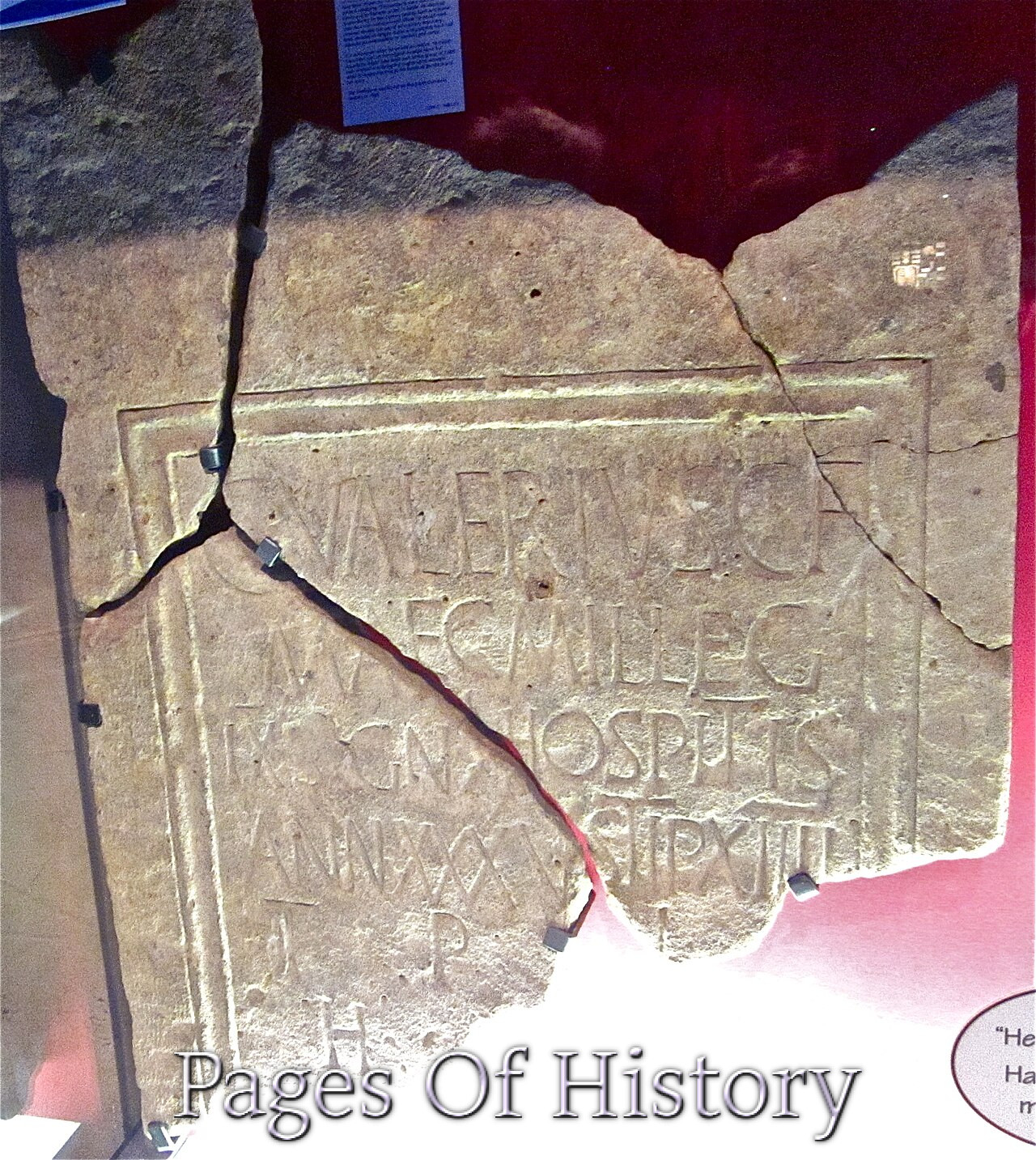
The archaeological record for the Ninth in Britain ends abruptly. The last datable inscription for the legion in Britain is a building stone from York, dating to roughly 108 CE. After that, the legion simply disappears from British epigraphy. This silence is deafening to historians. Where did the legion go? If it was destroyed, where are the mass graves? The absence of evidence is not evidence of absence, but it is deeply suggestive.
A More Plausible End: The Ninth Legion Disappearance on the Danube
A more compelling, though less dramatic, theory for the Ninth Legion disappearance places its final demise not in the mists of Scotland, but on the bloody battlefields of the Danube frontier. This theory is supported by fragmentary but suggestive evidence from the eastern empire.
The key lies in the reign of Emperor Trajan (98-117 CE). Trajan was a conqueror, and his grand project was the subjugation of Dacia (modern Romania). The Dacian Wars (101-106 CE) required a massive military buildup. It is highly plausible that the Ninth Legion was transferred from Britain to the Danube to reinforce Trajan’s armies. Such transfers were common; legions were not permanently tied to one province.
Evidence from the East
A tile stamp from Nijmegen (modern Netherlands) shows the Ninth was present on the Rhine frontier around 104 CE, possibly en route to Dacia. More importantly, a series of inscriptions from the eastern provinces, particularly from Palmyra (Syria) and Jerusalem, mention soldiers of the Ninth Legion dating to the reign of Hadrian (post-117 CE). One inscription, found in Rome, records a centurion of the Ninth who served in the Jewish War (132-136 CE) under Hadrian. This proves the legion, or at least a significant part of it, was in the East, not Britain.
The most likely scenario is that the Ninth was destroyed or disbanded during the Bar Kokhba Revolt (132-136 CE) in Judea. This was a savage, guerrilla war that cost the Romans heavily. The historian Cassius Dio records that the Romans suffered severe casualties, including the loss of an entire legion, though he does not name it. The Ninth, already weakened by its earlier history and possibly understrength, would have been a prime candidate for annihilation in the rocky hills of Judea. The legion’s name does not appear in any military lists after 160 CE, suggesting it was either destroyed or dissolved in disgrace.
What the Evidence Actually Tells Us: A Table of Key Facts
To clarify the competing theories, consider the following table summarizing the key evidence for the Ninth Legion’s fate.
| Theory | Key Location | Proposed Date | Primary Evidence | Weaknesses |
|---|---|---|---|---|
| Caledonian Massacre | Northern Britain (Scotland) | 117-120 CE | Lack of British inscriptions after 108 CE; vague references in Historia Augusta; popular legend. | No archaeological evidence of a battle; no mass graves; Historia Augusta is unreliable. |
| Danubian Transfer & Destruction | Dacia (Romania) / Judea | 106-136 CE | Tile stamps from Nijmegen; eastern inscriptions mentioning Ninth soldiers; Cassius Dio’s account of lost legion in Bar Kokhba. | No single inscription proves the entire legion was in the East; evidence is fragmentary. |
| Gradual Disbandment | Multiple provinces | 130-160 CE | Absence from all military rosters after 160 CE; reorganization under Hadrian. | No direct cause identified; speculative based on administrative trends. |
The table highlights the central problem: while the Caledonian theory is romantic, the Danubian / Judean theory has the better evidence. The transition from a static frontier legion in Britain to an active combat unit in the East is a story of imperial logistics, not of mysterious disappearance.
Alternative Theories: Disbandment, Mutiny, or Absorption
Beyond the two main theories, historians have proposed other, less dramatic explanations for the legion’s end. These are not as exciting as a last stand against painted warriors, but they are often more grounded in Roman administrative reality.
Disbandment After a Mutiny
Roman legions could be disbanded as a punishment for mutiny or cowardice. The Ninth had a history of trouble. In 14 CE, while stationed in Pannonia, the legion was involved in a serious mutiny over pay and conditions, suppressed by Germanicus. In Britain, the Boudican defeat was a black mark. If the legion performed poorly in Judea or Dacia, Hadrian—a disciplinarian—may have simply cashiered it, distributing its soldiers to other legions. This would explain the lack of a dramatic end: the legion simply ceased to exist as a unit.
Absorption into Other Units
A more subtle possibility is that the Ninth was gradually drained of manpower and merged into other legions. The Roman army frequently transferred vexillations (detachments) from one legion to another. Over decades, the Ninth’s identity could have been diluted until it was no longer a distinct entity. Inscriptions from the reign of Antoninus Pius (138-161 CE) show soldiers who previously served in the Ninth now serving in the II Augusta or XX Valeria Victrix. This suggests a quiet, bureaucratic death.
The Cultural Legacy: Why the Myth Endures
The Ninth Legion disappearance has proven irresistible to novelists, filmmakers, and conspiracy theorists. The mystery has been exploited in works like Rosemary Sutcliff’s The Eagle of the Ninth (1954) and the subsequent film The Eagle (2011). These stories depict a lone Roman’s quest to recover the legion’s lost standard from the Caledonian tribes. While historically inaccurate, they tap into a deep human fascination with lost causes and forgotten heroes.
The myth endures for several reasons:
- Romanticism of the frontier: The idea of a Roman legion vanishing in the misty, savage north appeals to the imagination of the British Isles.
- Nationalistic pride: For some, the idea that the fierce Caledonians destroyed an entire legion is a point of national pride, a last stand against the empire.
- Historical gaps: The lack of a clear answer creates a vacuum that fiction eagerly fills. The silence of the archaeological record is a blank canvas.
- The eagle symbol: The legion’s eagle standard, a sacred object, becomes a potent symbol of lost honor and redemption in popular culture.
The reality, however, is that the Ninth was likely not the only legion to disappear without a trace. Legions like the XVII, XVIII, and XIX were annihilated in the Teutoburg Forest (9 CE), but their fate is well-documented. The Ninth’s story is unique because the evidence is so ambiguous, allowing the imagination to fill the void.
Historical Context: The Roman Army’s Lifecycle
To truly grasp the Ninth Legion disappearance, one must understand the Roman military system. Legions were not immortal. They were raised for specific campaigns, and they could be disbanded or destroyed with surprising frequency. The Roman army was a vast, bureaucratic machine, and legions were often recycled.
Consider the lifecycle of a typical legion:
- Raising: A legion was raised by a general or emperor, often from volunteers and conscripts.
- Service: The legion served in a province for decades, building forts, roads, and walls.
- Transfer: The legion could be moved to a new frontier to meet a crisis.
- Destruction or Disbandment: The legion could be wiped out in battle, or it could be disbanded due to mutiny, age, or strategic reorganization.
- Legacy: The legion’s number might be reused decades later, as happened with the III Gallica and III Cyrenaica.
The Ninth likely followed this path. It was raised, fought hard, was transferred, and then met its end—either in battle or by administrative decree. The lack of a dramatic narrative does not make its end any less significant. It simply reflects the cold, hard reality of Roman military life.
Conclusion: The Most Likely Truth
After weighing the evidence, the most plausible explanation for the Ninth Legion disappearance is a combination of the Danubian and Judean theories. The legion was transferred from Britain to the Danube around 106 CE to reinforce Trajan’s Dacian Wars. It may have suffered heavy casualties there. Subsequently, it was sent to Judea to suppress the Bar Kokhba Revolt (132-136 CE), where it was likely annihilated or so badly mauled that Hadrian disbanded it in disgrace. The legion’s name simply fades from the historical record, replaced by newer, more effective units.
This conclusion is less cinematic than a lost legion in the Scottish mist, but it is more historically grounded. It explains the eastern inscriptions, the lack of British evidence after 108 CE, and the silence of the later sources. The Ninth Legion did not vanish; it was destroyed in the service of an empire that was already stretching its limits.
The mystery of the Ninth Legion disappearance ultimately teaches us a broader lesson: history is often messy, incomplete, and resistant to neat narratives. The truth is rarely as satisfying as a good story, but it is always more complex. The Ninth Legion’s fate is a reminder that even the most powerful armies are mortal, and that the past is a foreign country where even the most famous legions can be lost to time.