
📅 Last updated: 17.08.2026
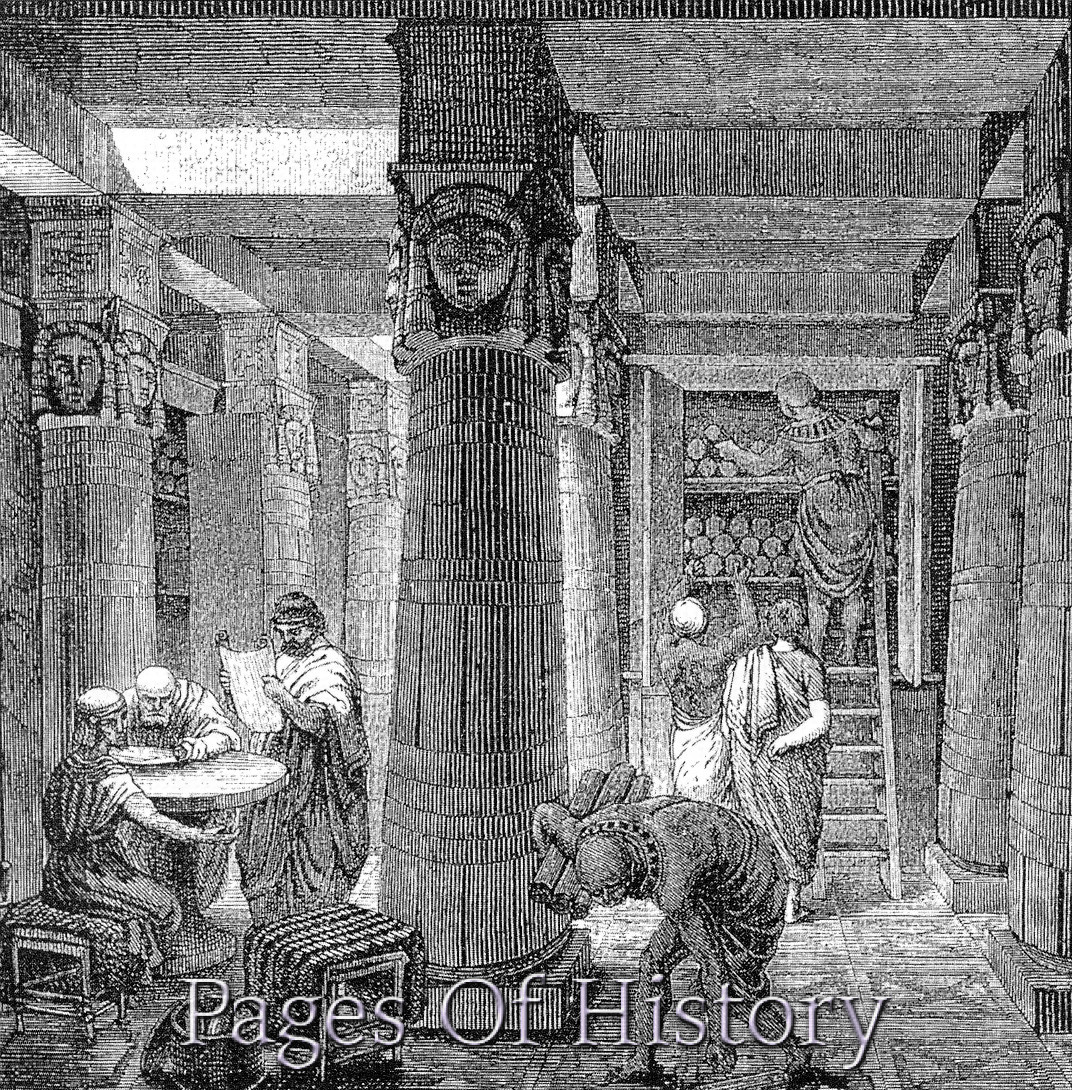
The Library of Alexandria fire is one of the most enduring and misunderstood catastrophes in human history, a story so potent that it has become a metaphor for the fragility of knowledge itself. Yet, the truth behind the Library of Alexandria fire is far more complex and unsettling than the popular image of a single, dramatic blaze consuming centuries of wisdom in one night. The reality is that the Great Library was not destroyed by one fire, but was a victim of a series of political upheavals, religious conflicts, and, most ironically, the very austerity measures and civil wars that plagued the city that housed it.
- The Myth of the Single Conflagration: Setting the Historical Stage
- The Real Culprits: Civil War, Austerity, and the "Burning" of the Brucheion
- Comparing the Fires: A Table of Destruction
- The Unsung Killers: Papyrus, Austerity, and Apathy
- Was it an Accident or a Conspiracy? The Role of Hypatia
- The Lasting Impact: What Was Actually Lost?
- Conclusion: The Fire That Never Went Out
The Myth of the Single Conflagration: Setting the Historical Stage
The popular narrative often points a finger at Julius Caesar, claiming that his soldiers accidentally set fire to the city—and by extension, the Library—during the Siege of Alexandria in 48 BC. This story, while dramatic, is a historical oversimplification. The Library of Alexandria was not a single building but an institution, a Mouseion (shrine to the Muses) and a research complex that included lecture halls, botanical gardens, and the famous stacks of scrolls. To understand its demise, one must first understand that the Library was a product of the Ptolemaic dynasty, a Greek-Macedonian ruling family that sought to legitimize their control over Egypt by positioning Alexandria as the intellectual capital of the world.
The initial destruction, if we can call it that, occurred during Caesar’s intervention in a dynastic civil war between Cleopatra VII and her brother, Ptolemy XIII. In 48 BC, Caesar was trapped in the royal palace with Cleopatra. To sever his supply lines and escape the Egyptian fleet, he ordered his men to set fire to the ships in the harbor. The fire, however, quickly spread to the docks and then into the city itself. The flames reached the warehouses near the harbor, where—according to the Roman historian Cassius Dio—vast quantities of grain and possibly a stockpile of scrolls destined for export were stored. The Mouseion itself, located in the royal quarter (the Brucheion), likely survived this fire, but the damage to the city’s infrastructure and the loss of the harbor warehouses was a severe blow.
This event, however, marks the beginning of a long, slow decline rather than a sudden end. The Library was damaged, but it was not erased. The real tragedy is that the subsequent centuries saw a pattern of neglect, civil strife, and ideological intolerance that systematically dismantled what Caesar’s fire had spared.
The Real Culprits: Civil War, Austerity, and the “Burning” of the Brucheion
If Caesar’s fire was the first act of a tragedy, the second act was written during the reign of Emperor Aurelian in the 3rd century AD. The Roman Empire was fracturing, and Egypt was a battleground. In 269 AD, Queen Zenobia of Palmyra, a formidable conqueror, seized control of Egypt. Emperor Aurelian responded by marching his legions to Alexandria to reclaim the province. The result was the Brucheion War, a brutal siege that culminated in the complete destruction of the royal quarter. The Roman historian Ammianus Marcellinus, writing in the 4th century, explicitly states that the Brucheion—the district that housed the Mouseion and the original Library—was “laid waste” during Aurelian’s recapture of the city.
This was not an act of deliberate cultural vandalism by a mad emperor; it was the collateral damage of a civil war. The fortified palaces of the Ptolemies were turned into a fortress by Zenobia’s defenders, and Aurelian had to take them by force. The result was the comprehensive destruction of the city’s most sacred intellectual district. The scholars fled, the buildings collapsed, and the Library, as a functioning institution, ceased to exist. This event, often overshadowed by the more famous Caesar story, was arguably the definitive end of the Great Library. The city itself shrank, and the population moved away from the shattered Brucheion towards the waterfront and the Serapeum, a smaller satellite temple-library that would now carry the torch of Alexandrian scholarship.
The Serapeum and the Rise of Religious Intolerance
The final, and most symbolically potent, destruction came in 391 AD, and this time the culprit was not a Roman general but a Christian bishop and a mob. The Serapeum, the temple of the god Serapis, had become the home for what remained of the Library’s collection. It was a magnificent structure, described by contemporaries as one of the wonders of the ancient world. However, the political landscape had changed. Theodosius I was the Roman Emperor, and he had made Christianity the official state religion. His edicts against paganism emboldened extremist elements within the Christian community.
The spark for the final Library of Alexandria fire was a violent conflict between the pagan community, who still used the Serapeum, and the Christian patriarch, Theophilus. A riot broke out after Theophilus mocked pagan rituals, and the pagans barricaded themselves inside the Serapeum. When the Roman authorities intervened, they sided with the bishop. The Serapeum was razed to the ground, its statues smashed, and its contents—including the precious scrolls—were either burned or dispersed. The historian Socrates Scholasticus, writing shortly after, recorded that the temple was “destroyed and the sacred images were cut to pieces.” The destruction of the Serapeum was the final act of the Library’s long death. It was not a random act of arson; it was a deliberate act of religious conquest, the erasure of a rival belief system and the intellectual tradition that supported it.
Comparing the Fires: A Table of Destruction
To fully grasp the complexity of the Library’s demise, it is helpful to view the three major events side-by-side. Each “fire” was a distinct event with a distinct cause, and each had a different impact on the institution.
| Event & Date | Perpetrator | Cause | Extent of Damage |
|---|---|---|---|
| Alexandrian War (48 BC) | Julius Caesar’s troops | Accidental fire to burn enemy fleet | Damage to harbor warehouses; likely loss of export scrolls, not the main Library stacks. |
| Brucheion War (269-272 AD) | Emperor Aurelian’s legions | Siege of the city to defeat Queen Zenobia | Total destruction of the Royal Quarter, including the Mouseion and the original Library site. |
| Destruction of the Serapeum (391 AD) | Christian mob under Bishop Theophilus | Religious conflict between pagans and Christians | Complete demolition of the temple and the burning of its library collection. |
The table illustrates a crucial point: the Library of Alexandria fire was not a singular event but a process. The first fire was an accident of war. The second was the systematic destruction of a city district during a civil conflict. The third was a deliberate act of iconoclasm. The Library was not killed by one blow but by a hundred cuts over four centuries.
The Unsung Killers: Papyrus, Austerity, and Apathy
Beyond the dramatic battles and religious riots, the Library faced an equally deadly enemy: economic neglect and the inherent fragility of its medium. The Library’s collection was primarily written on papyrus scrolls. Papyrus is highly flammable and susceptible to humidity and mold. The Library’s very existence depended on a massive, state-funded bureaucracy to copy, repair, and purchase scrolls. This funding was a political decision, and when the Roman Empire entered its “Crisis of the Third Century,” the money dried up.
The Roman emperors, particularly after the Severan dynasty, cared little for the intellectual prestige of Alexandria. They were focused on military survival. The Library was a luxury, and in times of hyperinflation and plague, it was a luxury that the state could no longer afford. The Mouseion’s scholars were a state-funded elite, and when the funding stopped, the institution withered. The shift from papyrus scrolls to the codex (the bound book) also played a role. The Library’s organization was built around the scroll, and the transition to the codex—which was a Christian innovation—made the old system obsolete. The new religion favored the codex because it was easier to conceal and more portable for missionaries. The Library, with its vast stores of scrolls, was not just a pagan institution; it was a technological dinosaur.
Was it an Accident or a Conspiracy? The Role of Hypatia
No discussion of the Library of Alexandria fire is complete without mentioning the tragic figure of Hypatia, the female mathematician and philosopher. Her brutal murder in 415 AD is often conflated with the Library’s destruction, creating a narrative of a single, violent end to Alexandrian scholarship. Hypatia was a prominent Neoplatonist philosopher who taught in Alexandria. She was a symbol of pagan learning and had the ear of the Roman prefect, Orestes, who was locked in a power struggle with the Christian bishop, Cyril.
In March of 415 AD, a mob of Christian monks, incited by Cyril’s rhetoric, dragged Hypatia from her chariot, stripped her, and murdered her in a church, tearing her body apart. Her death was a political assassination, designed to send a message to Orestes and the pagan elite. While Hypatia was not the “librarian” and the Library was already a ruin, her murder signaled the final death knell for the secular, philosophical tradition that the Library represented. The intellectual climate had become so toxic that open inquiry was dangerous. The Library of Alexandria fire, in a metaphorical sense, was the fire of intolerance that consumed the spirit of free thought. The scholars did not all flee because the building was gone; they fled because the city had become a place where asking the wrong question could get you killed.
The Lasting Impact: What Was Actually Lost?
The most profound tragedy of the Library’s destruction is that we cannot truly know what we lost. We have a few tantalizing hints. We know that Eratosthenes, the chief librarian in the 3rd century BC, calculated the circumference of the Earth with remarkable accuracy—within a few hundred miles of the true figure. We know that Aristarchus of Samos proposed a heliocentric model of the universe, placing the sun at the center, nearly 1,800 years before Copernicus. These were not just “clever ideas”; they were rigorous, mathematically proven theories that were lost for centuries.
The Library was the first institution to systematically collect and categorize the world’s knowledge. It was the home of the Pinakes, a 120-volume catalog of all Greek literature, created by Callimachus. The loss of this catalog alone is a devastating blow to historians. We know that the Library housed the original, unedited works of Sophocles and Euripides, which we now only have in fragments. The loss of these texts means that we have lost entire genres of ancient literature—the complete works of the poet Sappho, the lost histories of the successors of Alexander the Great, and countless works of science and medicine that would have accelerated human progress by centuries.
The Library’s Legacy: A Symbol of What We Owe to the Past
Despite the physical loss, the idea of the Library of Alexandria had a profound and lasting impact on Western civilization. It established the paradigm of the “universal library”—the notion that a single institution could and should collect all human knowledge. This concept directly inspired the creation of the Library of Congress, the British Library, and the modern university system. The very idea of a “research library” is an Alexandrian invention.
Furthermore, the Library’s destruction serves as a cautionary tale. It is a constant reminder that knowledge is not self-sustaining; it requires institutional support, political will, and a culture of tolerance. The Library did not die because of a single villain; it died because a succession of rulers and societies decided that other things—military victory, religious purity, or fiscal austerity—were more important than the preservation of knowledge. The Library of Alexandria fire is not just a historical event; it is a recurring possibility. Every time a government cuts funding for the arts and sciences, every time a mob burns a book, every time a society chooses dogma over evidence, the ghost of Alexandria whispers a warning.
Conclusion: The Fire That Never Went Out
The real reason the Library of Alexandria was burned down is not a singular answer but a mosaic of human failure. It was the hubris of Caesar, the military brutality of Aurelian, the religious zealotry of Theophilus, and the economic apathy of a declining empire. The Library was not a victim of one catastrophe but of a systemic failure of civilization to protect its own heritage. The “fire” was not a single flame but a slow, smoldering process of decay, neglect, and violent conflict that spanned four centuries. The most important lesson from this tragedy is that the destruction of knowledge is rarely a single, dramatic event. It is a quiet, incremental process that happens when we take our institutions for granted. The Library of Alexandria fire, in all its historical complexity, is a timeless story about the high cost of forgetting—and a powerful argument for why we must always fight to remember.