
📅 Last updated: 22.09.2026
The Great Wall of China is the largest military structure ever built, a serpent of stone and rammed earth that once stretched more than 21,000 kilometers across mountains, deserts, and steppes. Yet for all its staggering scale, it failed at the one job it was designed to do: keeping invaders out. Within decades of its most ambitious construction, Mongol armies were riding through its gaps, and within a few centuries, the Manchus conquered China outright. Understanding why requires looking past the postcard image of an unbroken barrier and into the messy realities of geography, politics, and human nature.
- What the Great Wall of China Actually Was
- Why the Great Wall of China Could Never Be a Sealed Barrier
- Key Dates in the Great Wall's Rise and Failure
- When the Wall Was Breached: Concrete Failures
- Why Did the Great Wall of China Ultimately Fail?
- The Wall's Hidden Successes
- What the Wall's Failure Teaches Us
What the Great Wall of China Actually Was
The popular image of a single, continuous wall is a myth. What we call the Great Wall of China is really a patchwork of fortifications built, abandoned, rebuilt, and extended by different dynasties across roughly two thousand years. The earliest sections appeared during the Warring States period (475–221 BCE), when kingdoms like Qin, Zhao, and Yan threw up earthen ramparts to defend against each other and against northern pastoral nomads.
The first attempt at unification came under Qin Shi Huang, the emperor who unified China in 221 BCE. He ordered the linking and extension of existing walls into a rough northern frontier defense, reportedly employing hundreds of thousands of conscripted laborers. But this Qin wall was largely rammed earth, and it was never a continuous line from the sea to the desert. It was a chain of segments guarding key passes and roads.
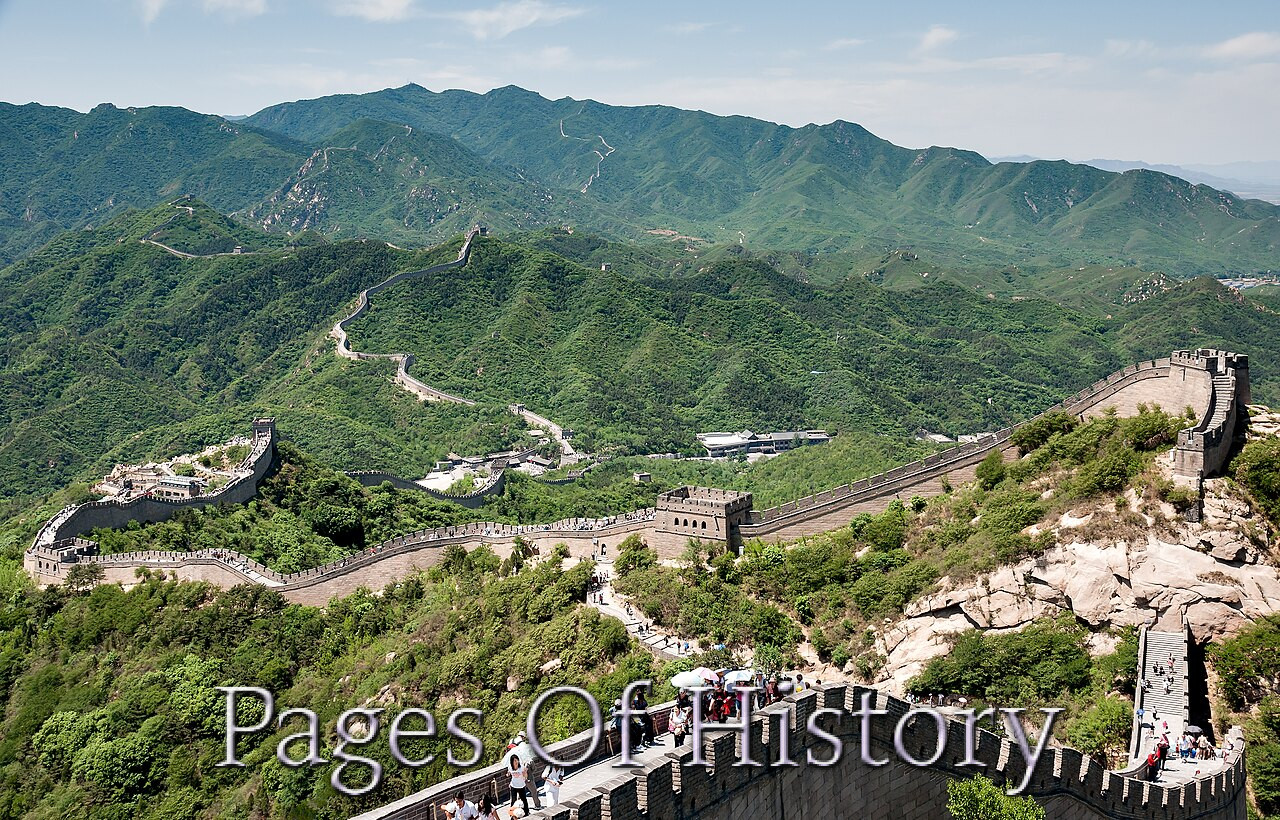
The structure most tourists visit today is the work of the Ming dynasty (1368–1644). After driving the Mongols out of China, the Ming spent nearly two centuries building and reinforcing walls, especially after the disastrous Battle of Tumu in 1449, when a Ming emperor was captured by Mongol forces. The Ming wall featured brick and stone facing, crenellations, watchtowers, and garrison forts — a genuine engineering marvel. It also, crucially, still failed.
Why the Great Wall of China Could Never Be a Sealed Barrier
The fundamental problem was scale versus manpower. A wall stretching thousands of kilometers through some of the most inhospitable terrain on Earth could not be continuously manned. Estimates suggest the Ming deployed perhaps one million soldiers along the northern frontier at its peak — a staggering number, but still not enough to place defenders shoulder-to-shoulder along the entire line.
Instead, the wall functioned as a tripwire and early-warning system. Watchtowers used smoke by day and fire by night to signal attacks. Cavalry garrisons stationed behind the wall could then ride to intercept raiders. This worked reasonably well against small-scale banditry and cattle raids. It was far less effective against a determined, organized army that could mass at a single point, overwhelm local defenders, and pour through a breach before reinforcements arrived.
The Geography Problem
No wall can follow a perfect defensive line. Rivers, mountains, and deserts forced compromises. The Yellow River, for instance, could be forded or frozen over in winter. Gobi Desert stretches were sometimes left unwalled because the terrain itself was considered defense enough — a gamble that failed whenever nomads found routes around or through them.
More importantly, the wall could always be gone around. Nomadic cavalry was highly mobile. A force could ride hundreds of kilometers east or west, cross at an unguarded point, and strike deep into China before the Ming military could respond. The wall protected specific corridors, not the entire border.
Key Dates in the Great Wall’s Rise and Failure
| Date | Event | Significance |
|---|---|---|
| 221 BCE | Qin Shi Huang unifies China and links northern walls | First attempt at a unified frontier defense; built largely with conscript labor |
| 1449 CE | Battle of Tumu; Ming emperor captured by Mongols | Triggered massive Ming wall-building program |
| 1550 CE | Altan Khan raids to the gates of Beijing | Demonstrated that even a reinforced wall could be bypassed |
| 1644 CE | Manchu forces enter China through Shanhai Pass | Wall betrayed from within; Ming dynasty falls |
When the Wall Was Breached: Concrete Failures
The historical record is full of moments when the Great Wall of China proved porous. Perhaps the most humiliating came in 1550, when the Mongol leader Altan Khan led a massive cavalry force through a poorly defended section northeast of Beijing. His troops ravaged the countryside for weeks, reaching the outskirts of the capital and burning suburbs before withdrawing laden with plunder. The Ming court was powerless to stop him.
Even more decisive was the Manchu conquest of 1644. The Manchus, a semi-nomadic people from Manchuria, had been pressing against the Ming frontier for decades. But they did not batter down the wall with siege engines. Instead, they were invited in. A Ming general named Wu Sangui, stationed at the strategic Shanhai Pass — the main gateway between China proper and Manchuria — opened the gates to Manchu forces to help him defeat a rebel army that had captured Beijing. The Manchus promptly took the throne for themselves, founding the Qing dynasty.
The lesson was brutal: a wall is only as strong as the loyalty of the people guarding it. Internal rebellion, corruption, and divided loyalties doomed the Ming far more effectively than any external assault.
Why Did the Great Wall of China Ultimately Fail?
Several interlocking factors explain the wall’s strategic failure:
- Impossible length: No pre-modern state could fortify and man thousands of kilometers continuously.
- Mobility mismatch: Fast-moving cavalry could concentrate force at a single point while defenders were spread thin.
- Bypass routes: Nomads could ride around the wall, through gaps, or across frozen rivers.
- Internal betrayal: Gates were opened from within during rebellions and civil wars.
- Cost versus benefit: The astronomical expense of building and maintaining the wall drained resources that might have funded mobile armies or diplomacy.
There is also the deeper issue of what the wall represented. It embodied a defensive, static mindset — an attempt to freeze a fluid frontier. But the steppe was never static. Nomadic confederations rose and fell, and when a strong leader like Genghis Khan or Altan Khan unified the tribes, the wall became a speed bump rather than a barrier.
“The wall was never meant to be impregnable. It was meant to make raiding expensive enough that most raiders would look elsewhere.”
That strategy had real successes. For long stretches, the wall did reduce small-scale raids, protect trade routes, and serve as a customs barrier for the Silk Road. But against existential threats — full-scale invasions aimed at conquest — it could not hold.
The Wall’s Hidden Successes
To call the Great Wall of China an outright failure would be too simple. It functioned effectively as a border control system. It regulated movement, taxed trade, and prevented smuggling. It gave China a psychological sense of security and a clear symbolic boundary between civilization and the steppe. For centuries, it helped keep minor conflicts minor.
It also served as a communications and transportation corridor. Troops, supplies, and messages could move rapidly along the wall’s internal roads. In peacetime, it was a frontier market where Chinese farmers and nomadic herders traded grain, silk, and horses. In this sense, the wall was less a weapon and more a piece of infrastructure — a border wall, customs post, and highway rolled into one.
The Qing Solution: No Wall at All
The Manchus, once they conquered China in 1644, made a telling decision: they largely abandoned the wall. As a people who had themselves come from beyond it, they understood its limitations. Instead of fortifying the frontier, the Qing expanded into Mongolia, Tibet, and Xinjiang, using diplomacy, marriage alliances, and military campaigns to neutralize threats at their source. The result was a larger and more secure empire than the Ming had ever achieved — without relying on a static wall.
This is perhaps the most damning verdict on the Great Wall. The dynasty that finally solved China’s northern security problem did so precisely by not depending on it.
What the Wall’s Failure Teaches Us
The story of the Great Wall of China is not just a story about bricks and mortar. It is a case study in the limits of static defense. Any barrier — physical or otherwise — can be circumvented, bribed, or opened from within. Security ultimately depends on adaptable strategy, strong institutions, and the loyalty of the people who man the gates.
The wall’s builders understood this to some degree. They never expected it to be impenetrable. But over time, the wall became a symbol that obscured its own strategic reality. Emperors poured resources into stone while neglecting the political and military reforms that might have saved them. The wall became a monument to what China feared, not a solution to what threatened it.
When we stand on a restored Ming watchtower today and gaze out over the mountains, it is tempting to see permanence and power. But history tells a different story. The wall was breached, bypassed, and betrayed. It failed not because it was poorly built, but because no wall — however long, however tall — can substitute for the harder work of governance, diplomacy, and the willing allegiance of those who defend it.