
📅 Last updated: 22.09.2026
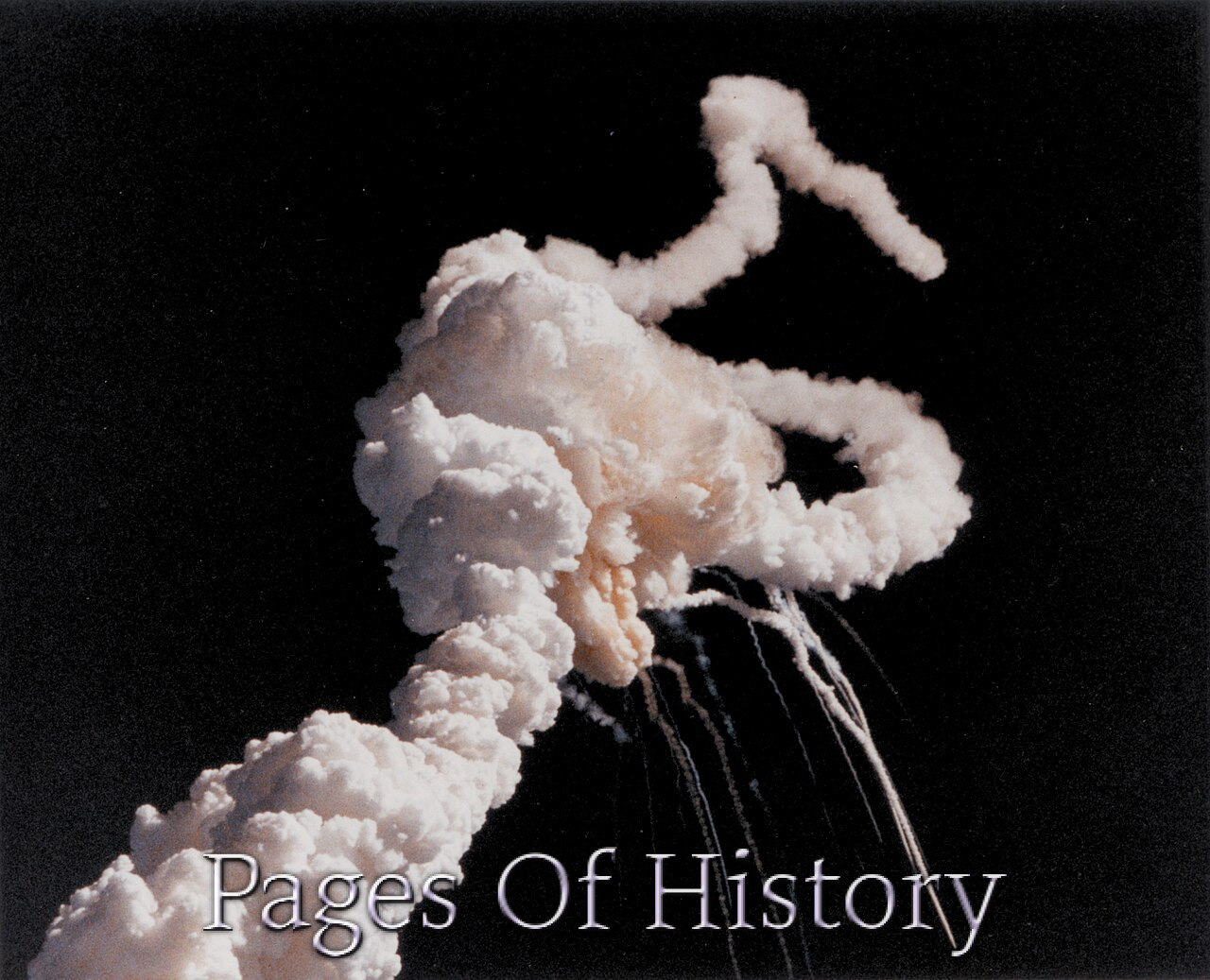
The Challenger disaster of January 28, 1986, remains one of the most searing moments in the history of human spaceflight. Seventy-three seconds after lifting off from Pad 39B at Kennedy Space Center, the space shuttle Challenger broke apart in the cold Florida sky, killing all seven astronauts aboard — including schoolteacher Christa McAuliffe, whose presence had turned the mission into a national event watched live by millions. For decades, the shorthand explanation has been simple: a rubber O-ring failed in the cold. That is true, but it is only the surface of the story. The real cause was a chain of engineering warnings, schedule pressure, and organizational failure that stretched back years before the launch — and that would be repeated, with tragic symmetry, seventeen years later.
- The Mission and the Crew: Why Challenger Mattered
- The Anatomy of the Failure: What Actually Broke
- A Timeline of the Challenger Disaster's Final Minutes
- Known for Years: The Warnings Before the Challenger Disaster
- The Teleconference That Sealed the Outcome
- What the Rogers Commission Found — and What It Meant
- The Human Cost and the Public Reckoning
- Seventeen Years Later: The Same Lesson, Unlearned
- Was Anyone to Blame? The Question of Accountability
- What the Challenger Disaster Teaches Us Today
The Mission and the Crew: Why Challenger Mattered
By 1986, NASA was selling the space shuttle as a routine, economical “space truck.” The agency had promised dozens of flights per year, and it was under pressure to deliver. The mission designated STS-51-L was, on paper, unremarkable: deploy a communications satellite, observe Halley’s Comet, and conduct a handful of experiments. What made it extraordinary was the Teacher in Space Project, announced by President Ronald Reagan in 1984. From more than 11,000 applicants, NASA selected Christa McAuliffe, a 37-year-old social studies teacher from Concord, New Hampshire. She was to broadcast two lessons from orbit, an event the agency hoped would rekindle public enthusiasm for a program that had begun to feel ordinary.
The rest of the crew was a mix of experience and ambition:
- Francis R. “Dick” Scobee, 46, mission commander, a veteran Air Force pilot on his second shuttle flight.
- Michael J. Smith, 40, pilot, a Navy aviator on his first spaceflight.
- Ronald E. McNair, 35, mission specialist, a physicist and the second African American in space.
- Ellison S. Onizuka, 39, mission specialist, the first Asian American to reach orbit.
- Judith A. Resnik, 36, mission specialist and electrical engineer.
- Gregory B. Jarvis, 41, payload specialist from Hughes Aircraft.
- Christa McAuliffe, 37, payload specialist and teacher.
Media interest was intense, partly because the launch had already slipped repeatedly — from July 1985 to January 1986 — and partly because McAuliffe’s story gave the flight a human face. That public attention would soon turn the launch into a shared national trauma.
The Anatomy of the Failure: What Actually Broke
To understand the Challenger disaster, you have to understand one component: the solid rocket booster (SRB) field joint. Each shuttle was flanked by two SRBs, each built in four segments and assembled at the launch site. Where the segments met, two rubber O-rings — primary and secondary — were meant to seal the joint against the 5,000-degree gases burning inside the motor. The O-rings sat inside a gap that opened when the motor pressurized at ignition; the sealing depended on the rubber flexing quickly enough to fill that gap.
Rubber, however, stiffens as it gets colder. On the morning of January 28, the temperature at the launch pad was 36°F (about 2°C) — far below the 53°F (roughly 12°C) that engineers considered the lowest safe condition. Ice had formed on the launch tower. The Rogers Commission, the presidential panel that investigated the accident, concluded that the cold had robbed the O-rings of their resilience. At ignition, the right SRB’s aft field joint failed to seal. Hot gas escaped, burned through the joint, and impinged on the external fuel tank. Sixty-four seconds in, cameras caught a plume of flame jetting from the booster. Seconds later, the tank ruptured, the boosters tore free, and aerodynamic forces ripped the orbiter apart. The crew cabin survived the initial breakup but was destroyed on impact with the ocean; there was no survivable abort mode at that point in the flight.
A Timeline of the Challenger Disaster’s Final Minutes
The sequence was captured in forensic detail by tracking cameras and telemetry. This table summarizes the key moments.
| Time (T+) | Event |
|---|---|
| T+0.678 sec | Ignition; black smoke observed at the right SRB aft field joint |
| T+58 sec | Flame plume becomes visible, growing from the right booster |
| T+64 sec | Plume reaches the external tank; tank begins to fail |
| T+73 sec | Structural breakup of Challenger; loss of all seven crew |
| Jan 28, 1986 (evening) | President Reagan addresses the nation; investigation begins |
That timeline tells us what happened. The harder question — the one that makes the Challenger disaster more than a mechanical anecdote — is why the launch was allowed to proceed.
Known for Years: The Warnings Before the Challenger Disaster
The O-ring problem was not a surprise discovered after the fact. Engineers at Morton Thiokol, the Utah-based contractor that built the SRBs, had documented O-ring erosion and “blow-by” — hot gas leaking past the primary seal — on multiple earlier flights. As early as 1985, Thiokol engineer Roger Boisjoly had written an urgent memo warning that erosion of the seals could lead to a catastrophic failure and urging action. NASA, meanwhile, had quietly reclassified the O-ring issue from a “criticality 1” hazard (failure could destroy the vehicle) to a lower-risk category, effectively normalizing a known danger.
There was also a cultural force at work: “launch fever.” NASA was under pressure from Congress, from the White House, and from its own promises to fly frequently and cheaply. The agency had already launched nine missions in 1985 and wanted a vigorous 1986 schedule. When the launch had already been delayed several times — by weather, by a stuck hatch, by schedule conflicts — managers were reluctant to slip again. That pressure shaped the decisions of January 27 and 28.
The Teleconference That Sealed the Outcome
On the evening of January 27, with a forecast calling for unusually cold temperatures, NASA held a teleconference with Thiokol and other contractors. Thiokol engineers, led by Boisjoly and others, argued forcefully against launching below 53°F. They had data, but not enough data — the sample of low-temperature launches was small, and the correlation between cold and erosion was suggestive rather than proven. NASA’s Marshall Space Flight Center pushed back, questioning the engineers’ logic and asking Thiokol to reconsider.
Under that pressure, Thiokol’s management reversed its own engineers’ recommendation. The company’s vice president, Jerry Mason, reportedly told colleagues they had to make a “management decision” rather than an engineering one. Thiokol gave the go-ahead; NASA accepted it. No one at the top of the agency had been given a clear picture of the dissent. The next morning, Challenger launched.
“The decision to launch the Challenger was flawed.” — Rogers Commission report, 1986
That single sentence from the commission captured the essence: the failure was not merely mechanical but organizational. The commission, chaired by former Secretary of State William P. Rogers, included astronauts Neil Armstrong and Sally Ride, physicist Richard Feynman, and Air Force general Donald Kutyna. Feynman’s dissent was especially pointed: he demonstrated the O-ring’s cold brittleness by dunking a sample in ice water during a televised hearing, a moment that became the investigation’s most famous image.
What the Rogers Commission Found — and What It Meant
The commission’s report, released in June 1986, identified the physical cause as the failure of the right SRB’s aft field joint seal, but it placed equal weight on NASA’s management failures. It found that NASA had known about the O-ring erosion for years, that it had failed to act, and that its safety oversight had eroded. The report offered nine recommendations, including redesigning the SRB joints, establishing an independent safety office, and improving communication between engineers and managers.
Beyond the technical fixes, the Challenger disaster forced a reckoning with the shuttle program’s fundamental assumptions:
- The shuttle was never truly routine. Its complexity and fragility made high flight rates unrealistic.
- Schedule pressure can override safety. The “go fever” that pushed the launch was a systemic condition, not a one-off lapse.
- Dissent must reach decision-makers. Engineers’ concerns were filtered out before they reached the top.
- Normalization of deviance is dangerous. Repeated near-misses had been treated as acceptable risk.
The shuttle fleet was grounded for nearly three years. Flights resumed in September 1988 with Discovery (STS-26). The SRBs were redesigned with a third O-ring, heaters, and a capture feature to prevent joint rotation. NASA also created a new Office of Safety, Reliability, and Quality Assurance — though, as later events would show, cultural change proved harder than hardware change.
The Human Cost and the Public Reckoning
The immediate aftermath was a national mourning. President Reagan’s address on the evening of January 28 — written in part by Peggy Noonan — became one of the most quoted speeches of the era. “We will never forget them,” Reagan said of the crew, “nor the last time we saw them, this morning, as they prepared for their journey and waved goodbye and slipped the surly bonds of earth to touch the face of God.” He had been scheduled to deliver the State of the Union that night; he postponed it.
The tragedy also reshaped how the public understood risk and institutions. The Teacher in Space Project was quietly retired; McAuliffe’s backup, Barbara Morgan, would eventually fly on Endeavour in 2007 as a mission specialist, a bittersweet coda. Families of the crew pursued answers, and some, like the family of Michael Smith, pushed for recovery of the crew cabin and remains — a painful process that revealed the crew had likely survived the breakup but not the impact.
For NASA, the Challenger disaster was a turning point in public trust. The agency had built its reputation on Mercury, Gemini, and Apollo — triumphs that made failure seem unthinkable. Now, the country watched a launch live on CNN and saw a teacher’s dream end in a plume of smoke. The illusion of infallibility was gone.
Seventeen Years Later: The Same Lesson, Unlearned
The most haunting aspect of the Challenger disaster is that its core lesson — that schedule pressure and suppressed dissent can kill — was not fully absorbed. On February 1, 2003, the shuttle Columbia broke apart during reentry, killing its seven astronauts. The cause was different in detail — a piece of foam insulation had struck the left wing during launch — but the investigative board (the Columbia Accident Investigation Board) concluded that the organizational causes were strikingly similar: NASA had again normalized a known hazard and again failed to heed engineers’ warnings.
That parallel is why historians treat the Challenger disaster not as a singular accident but as a case study in how institutions fail. The Rogers Commission’s findings about communication, risk assessment, and management pressure read almost as a preview of the Columbia report. The tragedy, in other words, was not just that a seal failed in the cold — it was that the system around the seal had failed long before.
Was Anyone to Blame? The Question of Accountability
The question of blame has never been fully settled. The Rogers Commission stopped short of assigning personal criminal liability, focusing instead on systemic failure. But public and congressional pressure led to changes at NASA, and some officials faced professional consequences. Morton Thiokol’s management bore heavy criticism for reversing its engineers; NASA’s Marshall center bore criticism for pressuring the contractor. Roger Boisjoly, who had warned of the danger, left Thiokol and became a prominent voice on engineering ethics, speaking to students and professional groups about the duty to speak up.
No one was criminally prosecuted for the deaths. The families of the crew reached a settlement with the government, and the broader debate shifted from punishment to prevention. That shift — from “who is guilty?” to “how do we build systems that do not fail this way?” — is arguably the Challenger disaster’s most durable legacy.
What the Challenger Disaster Teaches Us Today
The Challenger disaster is often reduced to a single image: the O-ring, the cold, the explosion. But the fuller story is about human judgment under pressure. It is about engineers who saw the danger and managers who overruled them. It is about an agency that had grown confident, maybe arrogant, and a public that had come to see spaceflight as safe. The physical cause was a rubber seal that lost its flexibility at 36°F. The real cause was a decision-making process that lost its flexibility long before that.
For anyone studying history, engineering, or leadership, the lesson is not that technology fails — it always can. The lesson is that organizations must build cultures where the person closest to the problem can be heard, where schedule never silently outranks safety, and where “we’ve always done it this way” is treated as a warning rather than a comfort. The seven astronauts who died on January 28, 1986, did not die because of a single cold morning. They died because a system had learned to ignore its own warnings — and that is a failure we are still learning to prevent.