
📅 Last updated: 18.10.2026
The Indus Valley script remains one of the most tantalizing unsolved puzzles in archaeology: thousands of tiny, elegant signs stamped on seals, potsherds, and copper tablets from a civilization that flourished more than four millennia ago. For nearly 150 years, scholars have chipped away at these symbols, and every few years a headline announces that the code has finally been broken. So where does the decipherment actually stand?
The Indus Valley script is not yet deciphered. Claims of a “breakthrough”—most recently by researcher Yajnadevam in 2024, who proposed a Sanskrit-based reading—remain unverified and are rejected by most specialists because they rest on unproven assumptions and cannot be independently tested. The script’s brevity, the absence of a bilingual key, and the unknown underlying language keep it among the world’s great undeciphered writing systems, alongside Linear A and the rongorongo of Easter Island.
- What Exactly Is the Indus Valley Script?
- Why Has the Indus Valley Script Resisted Decipherment?
- The Long History of Attempts to Crack the Indus Valley Script
- Key Milestones in Indus Script Research
- What Would an Indus Valley Script Decipherment Actually Require?
- Why the Indus Valley Script Still Matters
- Conclusion: A Code Still Waiting for Its Key
What Exactly Is the Indus Valley Script?
The script emerged with the mature phase of the Indus Valley (or Harappan) Civilization, roughly 2600–1900 BCE, in the great cities of Mohenjo-daro and Harappa in modern Pakistan and at sites such as Dholavira, Lothal, and Rakhigarhi in India. Its users built planned cities with grid streets, standardized baked bricks, covered drains, and vast granaries—an urban culture contemporary with Egypt’s Old Kingdom and Mesopotamia’s Sumer.
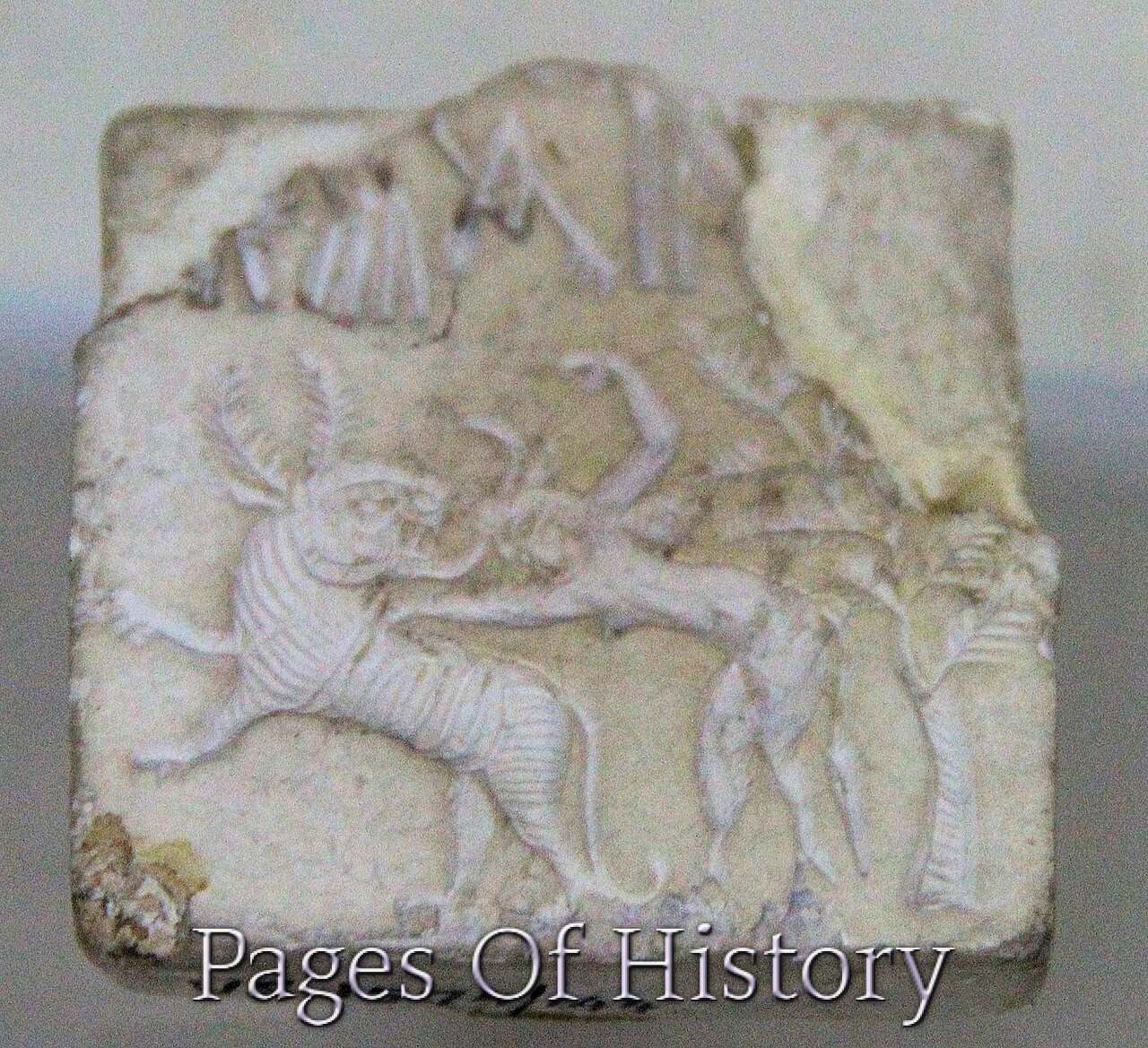
The signs themselves are short and pictorial. Most inscriptions run to just four or five characters; the longest known single-surface text, on a seal from Dholavira, has 26 signs. The corpus totals perhaps 4,000–5,000 inscribed objects, yielding somewhere between 400 and 700 distinct signs depending on how variants are counted. Scholars generally agree the script was written right to left, since signs at the right edge of seals are often cramped or truncated.
Nearly all inscriptions appear on small, portable objects: square steatite seals (many bearing the famous unicorn-like animal), pottery rims, copper tools, ivory rods, and tiny tablets. Almost nothing resembles a monumental text. There are no Indus equivalents of the Rosetta Stone, no long royal annals, no literary archives—an absence that shapes every decipherment attempt.
Why Has the Indus Valley Script Resisted Decipherment?
Decipherment of unknown scripts historically succeeds through one of two routes: a bilingual text (the Rosetta Stone unlocked Egyptian hieroglyphs via Greek) or knowledge of the underlying language combined with a large corpus (as with Linear B, cracked by Michael Ventris in 1952 using Mycenaean Greek). The Indus script offers neither.
The Missing Bilingual and the Shallow Corpus
No Indus text has ever been found paired with a known script. Mesopotamian cuneiform records mention a distant trading land called Meluhha—widely, though not universally, linked to the Indus region—but no bilingual document has surfaced. Compounding the problem, the corpus is statistically shallow: with most texts only a handful of signs long, there is too little material for the frequency analysis and pattern-matching that cracked Linear B.
The Language Problem
Even if every sign were identified, scholars would still need to know what language they encode. Candidates include a Dravidian language (favored by many Indian researchers and argued by Asko Parpola), an early Indo-Aryan form (proposed by Iravatham Mahadevan and others), a Munda language, or even a language isolate with no living relatives. Without a confirmed language, proposed readings float free of verification.
Is It Even Writing?
A dissenting school, most prominently the American researcher Steve Farmer along with Richard Sproat and Michael Witzel, argued in a widely cited 2004 paper that the signs may not encode language at all—that they are non-linguistic symbols of status, lineage, or ritual, closer to heraldry than to prose. Most epigraphers reject this, pointing to structured sign sequences and consistent positional rules, but the debate underscores how little is certain.
- No bilingual key: unlike Egyptian or Linear B, there is no parallel text in a known script.
- Tiny text lengths: average inscriptions of four to five signs defeat statistical decipherment.
- Unknown language: no consensus on whether the underlying tongue was Dravidian, Indo-Aryan, Munda, or isolate.
- No long documents: the civilization left no literary or administrative archives comparable to Mesopotamia’s clay libraries.
The Long History of Attempts to Crack the Indus Valley Script
Serious study began almost immediately after the script’s existence was recognized. In 1875, the archaeologist Alexander Cunningham published the first drawing of an Indus seal, though its significance was not yet understood. Excavations at Harappa from 1921 under Daya Ram Sahni and at Mohenjo-daro from 1922 under R. D. Banerji revealed the civilization and its inscribed seals to the world.
From Cunningham to Parpola
Early decipherers, including the philologist G. R. Hunter in 1929 and the Czech scholar Bedřich Hrozný—famous for cracking Hittite—tried and failed. The mid-century saw systematic sign lists: the Indian epigrapher Iravatham Mahadevan published the standard concordance of Indus texts in 1977, a foundation still in use. The Finnish scholar Asko Parpola advanced a detailed Dravidian hypothesis, arguing that the signs reflect a Proto-Dravidian language and that the “fish” sign, for instance, may relate to words for fish and star.
Computational approaches arrived in the 1960s and have multiplied since, with researchers applying entropy analysis, Markov models, and machine learning to test whether the sequences behave like natural language. Most such studies conclude the signs show language-like structure, but structure alone does not yield meaning.
The 2024 Yajnadevam Claim and Its Critics
In late 2024, an independent researcher writing under the name Yajnadevam released a paper claiming to have deciphered the script as an early form of Sanskrit, assigning each sign a syllabic value and offering sample readings. The announcement generated international headlines—and swift skepticism. Specialists noted that the method relies on unproven assumptions about the language, that the proposed readings have not been independently validated, and that the work has not passed peer review. The episode follows a familiar pattern: periodic “solutions” that collapse under scrutiny.
Key Milestones in Indus Script Research
| Date | Event | Significance |
|---|---|---|
| 1875 | Alexander Cunningham publishes the first drawing of an Indus seal | Earliest documented notice of the script |
| 1921–22 | Excavations at Harappa and Mohenjo-daro | Establishes the civilization and its inscribed seals |
| 1952 | Michael Ventris deciphers Linear B | Demonstrates the method that the Indus script lacks the conditions for |
| 1977 | Iravatham Mahadevan publishes the Indus text concordance | Standard reference corpus for all later work |
| 2004 | Farmer, Sproat, and Witzel argue the signs may not be writing | Intensifies debate over whether the script encodes language |
| 2024 | Yajnadevam claims a Sanskrit-based decipherment | Widely publicized but rejected by most specialists as unverified |
What Would an Indus Valley Script Decipherment Actually Require?
The path forward is clearer than the destination. Most specialists agree that a genuine decipherment would need at least one of several missing pieces, and the most valuable by far would be new archaeological finds.
The Search for Longer Texts
A single long inscription—an administrative list, a royal dedication, anything running to dozens or hundreds of signs—would transform the field. Excavations at sites such as Rakhigarhi in Haryana and the recently explored deposits at Keeladi in Tamil Nadu continue, and every season raises the possibility of a longer document. Equally valuable would be a bilingual: an Indus text on an object traded to Mesopotamia and inscribed there in cuneiform, or vice versa.
Testing the Language Hypotheses
If a long text appeared, researchers could test competing language models—Dravidian, Indo-Aryan, Munda—against its statistical patterns. Place-name evidence, the survival of substrate words in later languages, and the genetic and cultural continuities revealed by ancient DNA studies all feed into this debate, though none has yet settled it.
- New long inscriptions: the single most valuable discovery the field could make.
- A bilingual artifact: an Indus text paired with cuneiform or another known script.
- Rigorous peer review: any claimed decipherment must be independently testable and reproducible.
Why the Indus Valley Script Still Matters
The stakes go beyond antiquarian curiosity. The script is the only writing system of a major early civilization that remains unread, and reading it would open a window onto the social and economic life of a culture that left no obvious kings, no monumental propaganda, and no named rulers—an anomaly among Bronze Age states. The seals themselves, with their standardized animals and repeated sign clusters, hint at administration, trade regulation, and perhaps clan identity. Understanding them would clarify how the Harappans governed their vast, dispersed settlements and how their merchants traded with Mesopotamia and the Persian Gulf.
The script also sits at the center of modern debates about South Asian identity and deep history. Claims that the script encodes Sanskrit feed into arguments about the antiquity of Indo-Aryan presence in the subcontinent; Dravidian hypotheses carry their own cultural weight. For that reason, the field needs more than clever cryptanalysis—it needs evidentiary discipline and a willingness to say “we do not know.”
Conclusion: A Code Still Waiting for Its Key
The honest answer to whether the Indus Valley script has been cracked is no—not yet, and not by the claims that have made headlines. What has changed is the sophistication of the tools: better corpora, computational analysis, and continuing excavation. The civilization that built Mohenjo-daro’s Great Bath and Harappa’s granaries wrote something on those seals, and one day a long enough text, or a lucky bilingual, may finally let us read it. Until then, the Indus Valley script remains what it has been for a century and a half: a silent witness to one of humanity’s most remarkable and least understood civilizations, waiting for the key that fits.