
📅 Last updated: 27.10.2026
The Ninth Legion disappearance is one of the most enduring mysteries of the Roman world: the sudden vanishing of a legion from the historical record after the early second century AD. Legio IX Hispana had served Rome since the late Republic, campaigned in Spain, Gaul, and Britain, and then—apparently—slipped into silence. No ancient author describes its destruction, no battlefield has been found, and no mass grave has been identified. What survives is a patchwork of inscriptions, fort records, and later legends that have turned a bureaucratic gap into a myth.
The Ninth Legion (Legio IX Hispana) disappears from Roman records after roughly AD 120, when its last securely dated inscription at York (Eboracum) places it in Britain. Historians now believe it was most likely destroyed or disbanded during the Jewish revolt of Simon bar Kokhba (AD 132–135) or transferred east and annihilated there—not lost in a misty battle in Caledonia. There is no ancient evidence that the legion vanished in Scotland, and the popular story of a doomed march into the Highlands is a modern invention.
- What Was Legio IX Hispana?
- Why Did the Ninth Legion Disappearance Become a Mystery?
- The Caledonian Myth: Was the Ninth Legion Lost in Scotland?
- Where Did the Ninth Go? The Leading Theories
- Timeline of the Ninth Legion Disappearance
- What Do the Sources Actually Say?
- Why the Legend Endures
- What Really Happened to the Ninth Legion?
What Was Legio IX Hispana?
Legio IX was one of Rome’s oldest standing legions. Its numeral and cognomen, Hispana (“Spanish”), point to long service in the Iberian Peninsula, probably from the first century BC. The legion appears in the record of Julius Caesar’s campaigns and later under Augustus, and by the reign of Claudius it had been posted to the new province of Britannia following the invasion of AD 43. Its early British career included the bitter years of the Boudican revolt in AD 60–61, when the rebel queen Boudica destroyed a Roman force and the Ninth’s commander, Quintus Petillius Cerialis, barely escaped with his cavalry.
The British Garrison and York
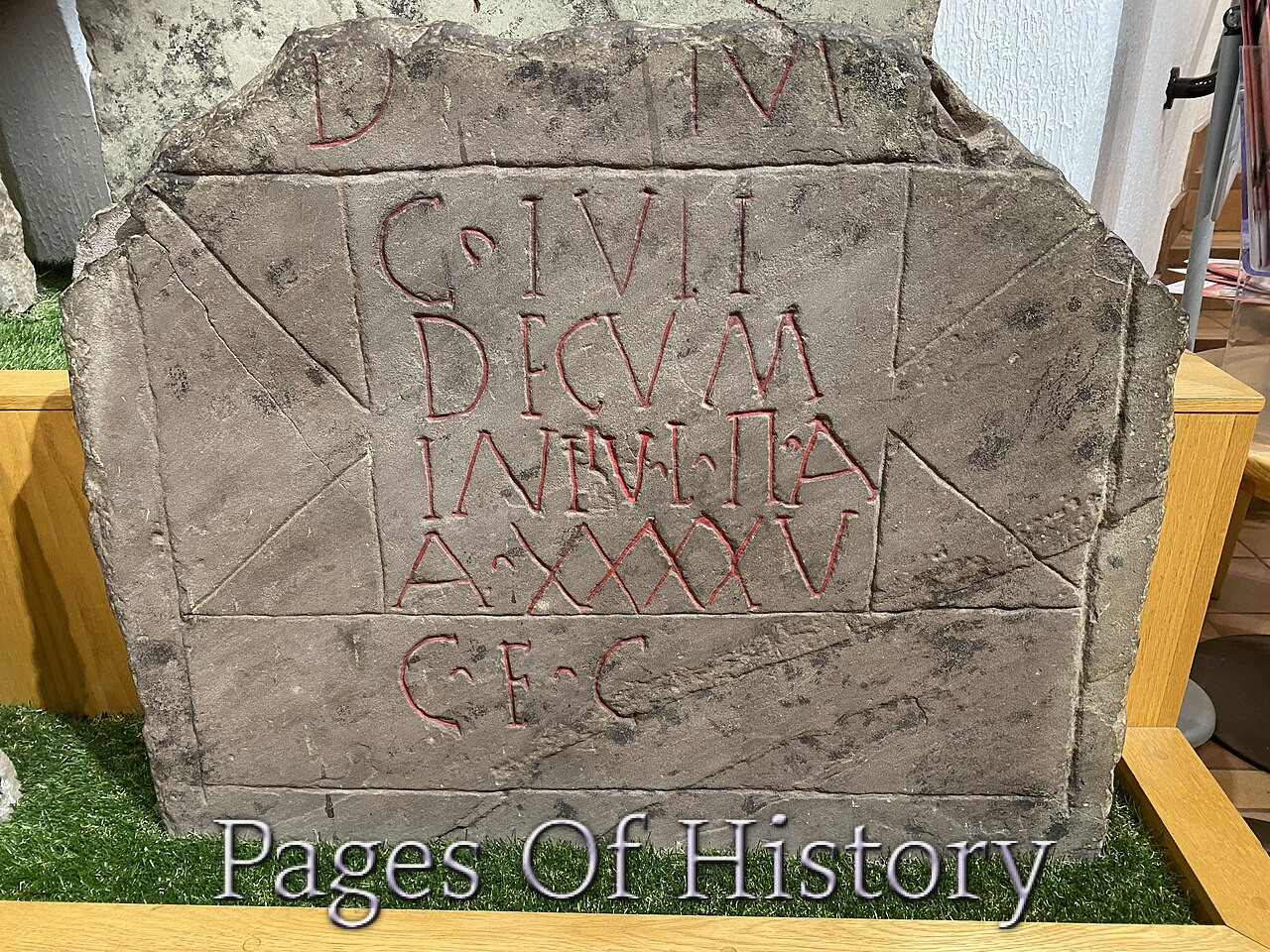
By the late first century the Ninth had settled at Eboracum, modern York, where it helped anchor the northern frontier. Tacitus and the epigraphic record place it in Britain through the Flavian period, and it likely took part in Agricola’s campaigns in Scotland in the late 70s and early 80s AD. Its presence at York is confirmed by stamped tiles and inscriptions, and the legion appears in military diplomas—official discharge certificates issued to auxiliaries—well into the reign of Trajan and Hadrian.
The crucial evidence is a bronze diploma dated to AD 98 that names the Ninth among the legions in Britain, and a later inscription from York generally dated to about AD 108. A diploma fragment from the reign of Hadrian, around AD 122–124, may or may not mention the legion; the reading is disputed. After that, the trail goes cold. No source records its destruction, its transfer, or its disbandment—only silence.
Why Did the Ninth Legion Disappearance Become a Mystery?
The mystery is partly an accident of evidence. Roman historians were not systematic record-keepers of every unit’s fate; legions could be transferred, merged, or destroyed without a surviving narrative. Cassius Dio, writing in the early third century, describes troubles in Britain under Hadrian and later under Antoninus Pius, but he does not mention the Ninth. The Historia Augusta, a notoriously unreliable late collection of imperial biographies, claims that Hadrian “removed” a legion from Britain—without naming it. That single ambiguous line has fueled centuries of speculation.
Compounding the problem, the legion’s disappearance coincided with a period of frontier reorganization. Hadrian’s Wall, begun around AD 122, marked a shift from conquest to consolidation. If the Ninth was withdrawn from Britain for service elsewhere, its departure would have fit that strategic reorientation—yet no document records the move.
The Caledonian Myth: Was the Ninth Legion Lost in Scotland?
The most famous version of the Ninth Legion disappearance places it in Scotland, destroyed by Pictish or Caledonian tribes in a catastrophic ambush. This story has enormous popular appeal, but it rests on no ancient source. The Roman historian Tacitus, in his Agricola, describes a battle at Mons Graupius around AD 83–84 in which Agricola defeated the Caledonians—but the Ninth is not portrayed as annihilated there, and the campaign did not destroy it.
The Caledonian myth gained traction in modern times largely through literature and film. Rosemary Sutcliff’s 1954 novel The Eagle of the Ninth imagined the legion marching north and vanishing, and the 2011 film The Eagle dramatized the same idea. These works are fiction, but they shaped public memory. Historians have repeatedly pointed out that the Ninth was still stationed at York after the supposed Scottish disaster, which makes a northern annihilation chronologically impossible.
What the Evidence Actually Shows
Inscriptions and diplomas place the legion in Britain into the second century, and it appears to have been based at York well after Agricola’s campaigns. If the Ninth had been wiped out in Scotland in the 80s AD, it could not have issued the later records attributed to it. The Scottish story, in other words, is not merely unproven—it conflicts with the documentary evidence.
Where Did the Ninth Go? The Leading Theories
Scholars have proposed several explanations for the Ninth Legion disappearance, and the debate remains open. The strongest candidates involve the eastern Mediterranean and the great Jewish revolt of the 130s AD.
The Bar Kokhba Revolt Theory
In AD 132, Simon bar Kokhba led a massive Jewish uprising against Roman rule in Judea. The revolt was brutal and costly; Cassius Dio claims that hundreds of thousands died, and Hadrian’s response was severe. Roman forces in the region included legions drawn from across the empire, and some historians argue that the Ninth was transferred east and destroyed in the fighting. A key piece of evidence is a fragmentary inscription from the reign of Antoninus Pius (AD 138–161) that appears to list legions and may omit the Ninth—suggesting it no longer existed by then. If the legion was annihilated in Judea, the lack of a detailed narrative is still puzzling, but the scale of the revolt could explain heavy losses that Roman sources did not bother to record unit by unit.
The Transfer and Disbandment Theory
Another possibility is that the Ninth was moved from Britain to the Continent or the East and later disbanded or merged into another unit. Legions were sometimes reconstituted after losses, and a unit could lose its identity through reorganization. Hadrian’s frontier policy involved redeploying forces, and the Ninth may have been withdrawn as part of that shift. If it was disbanded for poor performance or absorbed into another legion, the absence of a dramatic destruction would explain why no ancient author celebrated or mourned it.
The Britain-withdrawal Theory
Some scholars suggest the Ninth left Britain for the Rhine or Danube frontier and was destroyed in a later war, such as the Marcomannic Wars of the 160s–170s AD. This theory relies on the idea that the legion’s British records simply end because it moved, not because it died. The difficulty is that no inscription or diploma places the Ninth outside Britain after the early second century, leaving the theory speculative.
- Bar Kokhba revolt (AD 132–135): Strong candidate for the legion’s destruction; explains the eastern transfer and heavy losses.
- Disbandment or merger: Explains the lack of a battlefield or mass grave; legions could lose identity through reorganization.
- Frontier redeployment: Fits Hadrian’s shift to consolidation but lacks direct evidence of the Ninth’s new posting.
Timeline of the Ninth Legion Disappearance
| Date | Event | Significance |
|---|---|---|
| AD 43 | Claudian invasion of Britain | Legio IX Hispana joins the conquest force; begins its British service. |
| AD 60–61 | Boudican revolt | The Ninth is mauled by rebels; its commander Cerialis survives with cavalry. |
| AD 83–84 | Agricola’s campaigns; Mons Graupius | The Ninth is in Britain but not destroyed; the Scottish annihilation myth is unsupported. |
| AD 98 | Military diploma names the Ninth in Britain | Confirms the legion’s presence late in the first century. |
| c. AD 108–120 | Last secure inscriptions at York | The documentary trail ends; the legion fades from record. |
| AD 132–135 | Bar Kokhba revolt | Leading theory for the legion’s destruction in the East. |
What Do the Sources Actually Say?
The ancient evidence is thin and often indirect. Tacitus mentions the Ninth in the context of the Boudican revolt and Agricola’s campaigns, but he does not describe its end. Cassius Dio discusses Britain and the Jewish revolt but does not name the Ninth. The Historia Augusta says Hadrian removed a legion from Britain, a statement that is vague and possibly confused. Inscriptions and diplomas are more reliable but limited: they confirm the legion’s existence at specific moments without explaining its fate.
This evidentiary gap is the heart of the Ninth Legion disappearance. Roman military history often survives through monuments and administrative documents rather than narrative histories, and a legion could vanish from the record without a single author noting the fact. The mystery is therefore as much about the limits of ancient sources as about the legion itself.
Why the Legend Endures
The Ninth Legion disappearance has persisted because it combines several powerful ingredients: a disciplined military unit, a distant frontier, a silent record, and the romance of the lost. The Scottish version is especially attractive because it pits Rome against the wild north and ends in a dramatic annihilation. But the legend says more about modern storytelling than about Roman Britain.
Historians have used the case to illustrate how evidence works. A gap in the record is not proof of a dramatic event; it is a prompt to weigh probabilities. The Ninth may have died in Judea, been disbanded in a reorganization, or simply moved beyond the reach of surviving inscriptions. Each theory has strengths and weaknesses, and no single answer commands universal assent.
What Really Happened to the Ninth Legion?
The most defensible conclusion is that the Ninth Legion did not vanish in a Scottish mist. It disappears from the record after the early second century, most likely because it was transferred east and destroyed during the Bar Kokhba revolt, or because it was disbanded or merged in a period of military reorganization. The Scottish annihilation story is a modern fiction, however compelling.
The Ninth Legion disappearance remains unresolved because the ancient world did not preserve the answer. What survives is a lesson in historical method: legends fill gaps, but evidence—inscriptions, diplomas, and the silences of ancient authors—sets the boundaries of what can be claimed. The lost legion is less a ghost story than a case study in how Rome’s written record failed, and how later generations turned that failure into myth.