
📅 Last updated: 28.09.2026
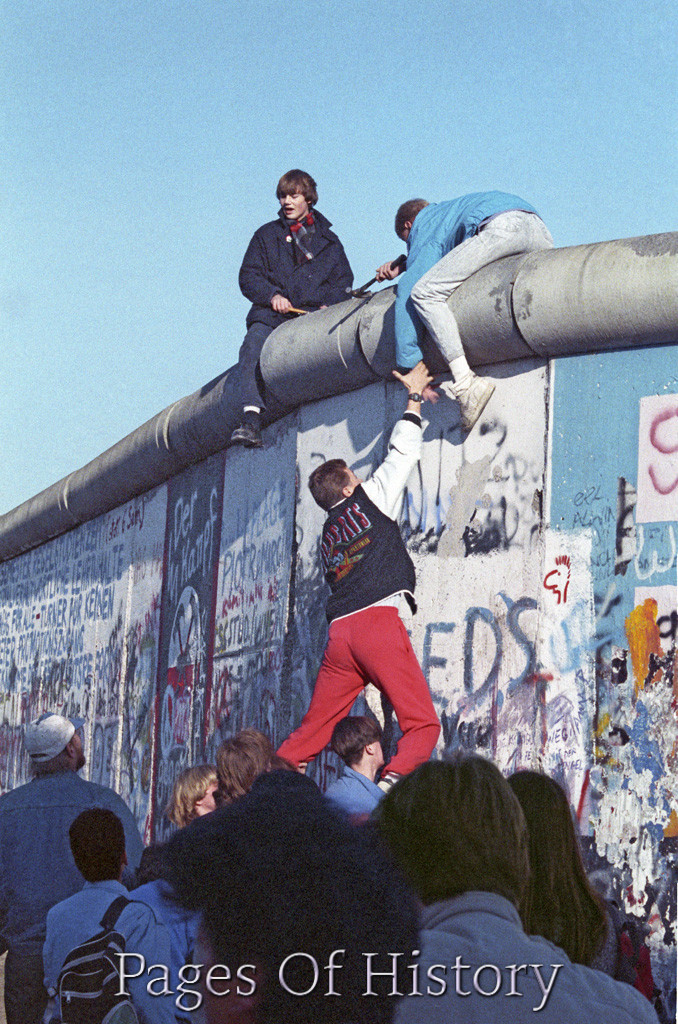
The Berlin Wall fall in 1989 remains one of the most dramatic and consequential events of the twentieth century — a moment when a concrete barrier that had divided a city for twenty-eight years suddenly became irrelevant. On the evening of November 9, 1989, crowds of East Berliners surged toward the border crossings, overwhelmed stunned guards, and began tearing down the wall with hammers and bare hands. But the story of why the Wall fell is far more complex than a single night of celebration. It was the product of decades of economic decay, a reformist Soviet leader, a cascade of revolutions across Eastern Europe, and a series of miscommunications that turned a bureaucratic press conference into a historical earthquake.
- The Wall as a Symbol: Origins and Purpose
- Structural Causes: Why the Eastern Bloc Was Already Cracking
- Key Events Leading to the Berlin Wall Fall
- The Accidental Trigger: The Press Conference That Changed History
- Why the Berlin Wall Fall Was Not Inevitable
- The Aftermath: From Wall to Reunification
- Legacy and Lessons of the Berlin Wall Fall
- Conclusion: Why the Berlin Wall Really Fell
The Wall as a Symbol: Origins and Purpose
To understand why the Berlin Wall fall happened, we must first understand why the Wall existed. Built overnight on August 13, 1961, the barrier was not primarily designed to keep Westerners out — it was designed to keep East Germans in. Since the founding of the German Democratic Republic (GDR) in 1949, millions of citizens had fled to West Germany through the open sector border in Berlin. By 1961, roughly 2.7 million people — a staggering proportion of the East German population — had left. Doctors, engineers, teachers, and skilled workers were bleeding away, threatening the GDR’s economic viability and, ultimately, its existence.
Walter Ulbricht, the East German leader, pressured Soviet Premier Nikita Khrushchev to authorize the closure of the border. On the night of August 12–13, 1961, East German troops and police rolled out barbed wire and concrete blocks, sealing the crossing points. Families were split overnight. Workers who had crossed to the West for jobs found themselves stranded. The Wall became the physical embodiment of the Iron Curtain — a 155-kilometer ring of concrete, watchtowers, floodlights, and death strips that would ultimately claim the lives of at least 140 people trying to cross.
For twenty-eight years, the Wall served its purpose. It stabilized the East German economy by stopping the exodus. It became a propaganda symbol for both sides: the East called it an “anti-fascist protection rampart,” while the West called it the “Wall of Shame.” But by the 1980s, the underlying problems it was meant to solve — economic stagnation, political repression, and a legitimacy deficit — had only worsened.
Structural Causes: Why the Eastern Bloc Was Already Cracking
The Berlin Wall fall did not come out of nowhere. By the 1980s, the Soviet bloc was in deep trouble, and the cracks were both economic and ideological.
Economic Stagnation and Debt
The East German economy, once the most successful in the Eastern Bloc, was faltering. Decades of central planning had produced inefficiency, outdated technology, and chronic shortages. The GDR had borrowed heavily from West Germany and international banks to maintain living standards, accumulating a foreign debt of around $20 billion by the late 1980s. The regime subsidized basic goods — bread, rent, transport — to keep the population quiescent, but this was unsustainable. Meanwhile, West Germany’s economy boomed, and East Germans could see the contrast every night on West German television, which was widely watched despite official disapproval.
The Soviet Burden and Gorbachev’s New Thinking
The Soviet Union itself was in crisis. The war in Afghanistan, the arms race with the United States, and the costs of maintaining an empire in Eastern Europe had strained the Soviet economy to its limits. When Mikhail Gorbachev became General Secretary of the Communist Party of the Soviet Union in March 1985, he introduced a program of reform: glasnost (openness) and perestroika (restructuring). Crucially, he also signaled a new doctrine for Eastern Europe.
In a speech to the United Nations in December 1988, Gorbachev announced that the Soviet Union would reduce its military presence in Eastern Europe. More importantly, he made clear that Moscow would no longer intervene militarily to prop up unpopular communist regimes — a policy later dubbed the “Sinatra Doctrine” (after Frank Sinatra’s song “My Way”), meaning each country could go its own way. This was a seismic shift. The Brezhnev Doctrine, which had justified the 1968 invasion of Czechoslovakia to crush the Prague Spring, was dead.
The Reform Movements and the Hungarian Tipping Point
Gorbachev’s signals emboldened reformers across the bloc. In Poland, the Solidarity movement, banned since 1981, re-emerged and won a landslide victory in partially free elections in June 1989. In Hungary, the communist government began dismantling its border fortifications with Austria in May 1989. On August 19, 1989, Hungary opened its border to Austria during a pan-European picnic — and East German citizens, who had flocked to Hungary as tourists, began crossing to the West in droves.
By September 1989, thousands of East Germans were camped in Hungarian refugee camps and West German embassies in Prague and Warsaw, demanding passage to the West. The East German regime, under its aging leader Erich Honecker, refused to allow them to leave — but the pressure was building. In October 1989, Honecker was replaced by Egon Krenz, but the change came too late to stop the momentum.
Key Events Leading to the Berlin Wall Fall
The fall of the Wall was preceded by a rapid sequence of events that transformed East German society and shattered the regime’s authority. The following timeline captures the crucial milestones.
| Date | Event | Significance |
|---|---|---|
| May 2, 1989 | Hungary begins dismantling border fence with Austria | Creates first major hole in the Iron Curtain |
| Aug 19, 1989 | Pan-European Picnic at Sopron; hundreds of East Germans cross to Austria | Demonstrates that the border is no longer impermeable |
| Sept–Oct 1989 | Mass protests in Leipzig and other cities; “We are the people” chants | Erodes regime’s legitimacy and confidence |
| Oct 18, 1989 | Erich Honecker resigns; Egon Krenz takes over | Last-ditch attempt to save the GDR with a new face |
| Nov 4, 1989 | Half a million protest in East Berlin’s Alexanderplatz | Shows the scale of popular discontent |
| Nov 9, 1989 | Border crossings open; Berlin Wall fall begins | The symbolic and practical end of the divided city |
The Accidental Trigger: The Press Conference That Changed History
If any single moment can be said to have caused the Berlin Wall fall, it was a press conference held on the evening of November 9, 1989, in East Berlin. The East German government, under mounting pressure, had been drafting a new travel law that would allow citizens to apply for exit visas without the usual hurdles. The intention was to regulate and control the process — not to open the borders immediately.
Günter Schabowski, the East German Politburo spokesman, was handed a note about the new regulations just before the press conference. He had not been fully briefed. When asked when the new rules would take effect, he shuffled his papers and said, “As far as I know, it takes effect immediately, without delay.”
The room erupted. West German television and radio broadcast the news within minutes. East Germans, who had been watching the press conference live, began gathering at the border crossings. The guards at the Bornholmer Strasse crossing, the most heavily used, were not prepared. They had received no orders. As the crowds grew into the thousands, chanting “Open the gate! Open the gate!”, the guards faced a choice: shoot or open. They opened.
“We were not prepared for this. We had no instructions. But we could see that the people were not going to turn back. So we opened the barriers.” — Harald Jäger, border guard at Bornholmer Strasse, later recalled.
By 11:30 PM, the Bornholmer Strasse crossing was open. Other crossings followed. Thousands of East Berliners poured into West Berlin, where they were greeted with champagne, cheers, and tears. The Wall had not been dismantled by a treaty or a battle — it had been overwhelmed by a crowd that simply refused to be stopped.
Why the Berlin Wall Fall Was Not Inevitable
It is tempting to see the fall of the Wall as inevitable — the natural conclusion of a decades-long struggle between freedom and oppression. But it was not. Several factors could have produced a very different outcome.
The Role of Soviet Restraint
The most critical variable was Soviet behavior. In 1953, Soviet tanks had crushed an uprising in East Berlin. In 1956, they had invaded Hungary. In 1968, they had invaded Czechoslovakia. In each case, the Soviet Union had used force to preserve communist rule. Why not in 1989?
Gorbachev’s decision not to intervene was a deliberate choice. He believed that the Soviet Union could not afford another military adventure, and he hoped that reform-minded communists could adapt and survive. But he also underestimated the speed and scale of the collapse. When asked later whether he regretted not sending troops, Gorbachev said he had done the right thing: “The use of force would have meant a bloodbath, and it would not have solved the problem.”
The East German Regime’s Paralysis
The East German leadership was also paralyzed. Honecker, who had been in power since 1971, was ill and out of touch. His successors, Krenz and Hans Modrow, were caught between hardliners who wanted a crackdown and reformers who wanted change. They hesitated, and in that hesitation, the moment passed. The border guards, left without clear orders, made the decision themselves.
The Power of the Crowd
Finally, the courage of ordinary East Germans was decisive. The Monday demonstrations in Leipzig, which began in September 1989 and grew to 70,000 by early October, showed that the regime could not rely on mass compliance. The slogan “We are the people” (Wir sind das Volk) was a direct challenge to the communist claim to represent the people. When the crowds gathered at the border on November 9, they were not organized by a political party or a foreign power — they were ordinary citizens who had simply had enough.
The Aftermath: From Wall to Reunification
The Berlin Wall fall was not the end of the story — it was the beginning of a rapid and irreversible process. In the weeks after November 9, the Wall was physically dismantled by crowds and later by official demolition crews. The “Mauerspechte” (wall woodpeckers) chipped away at the concrete with hammers, selling pieces as souvenirs. By the end of 1990, almost all of the Wall was gone, leaving only a few sections as memorials.
Politically, the collapse of the Wall accelerated the unification of Germany. On March 18, 1990, East Germans voted in free elections for the first time, choosing a government committed to rapid unification. On July 1, 1990, the two Germanys merged their economies. On October 3, 1990, less than a year after the Wall fell, Germany was officially reunified. The Cold War division of Europe was over.
The consequences were global. The Warsaw Pact dissolved in 1991. The Soviet Union itself collapsed in December 1991. The bipolar world order that had defined international relations since 1945 gave way to a new era — one that was not necessarily more peaceful, but certainly different.
Legacy and Lessons of the Berlin Wall Fall
The Berlin Wall fall remains a powerful symbol of the fragility of authoritarian systems and the resilience of ordinary people. It also offers several lessons that resonate today.
- Repression is costly and unsustainable in the long run. The GDR spent enormous resources on the Wall, the Stasi (secret police), and border security, but it could not buy legitimacy.
- Leadership matters. Gorbachev’s decision not to use force was a choice, not an inevitability. A different Soviet leader might have ordered a crackdown.
- Information is power. West German television and radio played a crucial role in undermining the East German regime by showing citizens what they were missing.
- Small events can have huge consequences. A misstatement at a press conference triggered the fall of the Wall. History is not always made by grand plans.
Today, the Berlin Wall exists mainly in memory — as a line of cobblestones through the city, as a memorial at the Bernauer Strasse, and as a warning about the dangers of division. The fall of the Wall was not just the end of a barrier; it was the end of a world.
Conclusion: Why the Berlin Wall Really Fell
The Berlin Wall fall in 1989 was the result of a confluence of factors: decades of economic stagnation, the rise of Gorbachev and his refusal to intervene, the courage of East German protesters, and a series of accidents and miscommunications that turned a bureaucratic reform into a revolutionary moment. It was not inevitable, but once the momentum began, it was unstoppable. The Wall fell because the system it was meant to protect had already collapsed from within — and because the people it was meant to contain had decided that they would no longer be contained. The lesson for our own time is clear: walls, whether made of concrete or of policy, are only as strong as the legitimacy of the system behind them. When that legitimacy evaporates, the walls come down.