
📅 Last updated: 18.09.2026
The Boston Tea Party is one of the most famous acts of political protest in history — and also one of the most misunderstood. Ask most people what happened on the night of December 16, 1773, and they will tell you that angry colonists dressed as Mohawk Indians dumped tea into Boston Harbor to protest a tax. That much is true, but it leaves out almost everything that matters. The destruction of 342 chests of East India Company tea was not a spontaneous explosion of rage over a few pennies per pound. It was the climax of a decade-long constitutional crisis, a carefully calculated act of resistance, and — in the eyes of many contemporaries — a dangerous escalation that helped make the American Revolution possible.
- What Actually Happened on December 16, 1773
- The Road to the Boston Tea Party: Ten Years of Grievance
- Why the Tea Act of 1773 Changed Everything
- Resistance Across the Colonies
- Key Dates and Events Leading to the Boston Tea Party
- The Aftermath: Punishment and Polarization
- Myths and Misconceptions About the Boston Tea Party
- Why the Boston Tea Party Mattered
- The Tea Party's Long Shadow
What Actually Happened on December 16, 1773
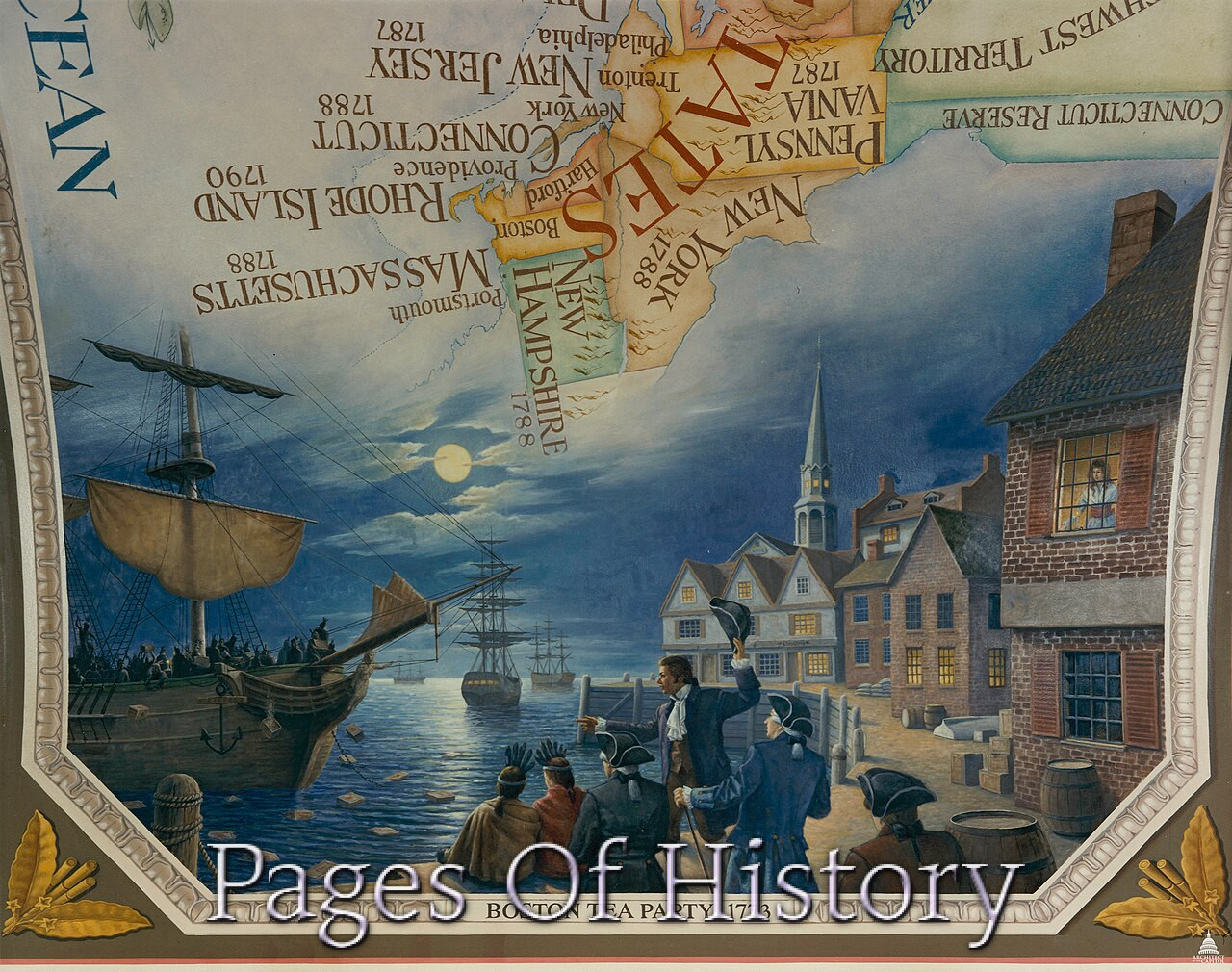
The basic facts are dramatic enough on their own. On the evening of December 16, 1773, a crowd of several thousand colonists gathered at the Old South Meeting House in Boston. A tense standoff had been building for weeks. Three ships — the Dartmouth, the Eleanor, and the Beaver — sat at Griffin’s Wharf, their holds crammed with 342 chests of tea belonging to the British East India Company. Under a law passed by Parliament earlier that year, the tea had to be landed and the duty paid by December 17, or customs officials could seize the cargo.
When the meeting’s moderator, Samuel Adams, announced that nothing more could be done to stop the landing, a war whoop rang out from the gallery. A group of men — some accounts say around 60, others as many as 130 — made their way to the wharf. Many had blackened their faces with soot and lampblack, wrapped themselves in blankets, and carried hatchets and axes. They were not, in fact, Mohawk Indians; the disguise was a piece of political theater, borrowing the symbolism of Native American identity as a marker of authentic, pre-British American liberty.
Working with remarkable discipline over roughly three hours, the men hauled the chests onto the decks and split them open with axes, shoveling the loose tea into the harbor. They damaged nothing else. When one participant, a locksmith named John Crane, was spotted with a piece of tea in his pocket, his companions stripped him of his coat and threw it into the water. A padlock was broken by accident and promptly replaced. By around 9 p.m., the last chest had been emptied and the crowd dispersed into the winter night. The tea — worth roughly £9,659 at the time, the equivalent of perhaps a million dollars today — was ruined, its leaves washing up on Dorchester shores for weeks.
The Road to the Boston Tea Party: Ten Years of Grievance
To understand why colonists took such a drastic step, you have to go back to the end of the Seven Years’ War in 1763. Britain had just won a global empire — and a staggering debt. The war had roughly doubled Britain’s national debt to around £133 million, and maintaining a standing army in North America cost some £225,000 a year. British officials, led by men like Prime Minister George Grenville, believed the colonies should help pay for their own defense. The colonists believed — with considerable legal force — that Parliament had no right to tax them because they elected no members to it. “No taxation without representation” was not a slogan invented in 1773; it had been the central argument of the American cause since 1765.
From the Stamp Act to the Townshend Duties
The first great crisis came in 1765 with the Stamp Act, which required colonists to buy special stamped paper for newspapers, legal documents, and even playing cards. The reaction was explosive: riots in Boston, the hanging of an effigy of stamp distributor Andrew Oliver from a tree, the ransacking of Lieutenant Governor Thomas Hutchinson’s house, and the formation of the Sons of Liberty. Parliament repealed the Stamp Act in 1766 but immediately passed the Declaratory Act, asserting its power to legislate for the colonies “in all cases whatsoever.”
Then came the Townshend Acts of 1767, named for Chancellor of the Exchequer Charles Townshend. These imposed duties on glass, lead, paint, paper, and tea imported into the colonies. The colonists responded with non-importation agreements — boycotts — that cut British exports sharply. In 1770, Parliament repealed all the Townshend duties except the one on tea, kept deliberately as a symbol of Parliament’s authority. That same year, on March 5, 1770, British soldiers fired into a Boston crowd in the Boston Massacre, killing five civilians including Crispus Attucks. The tea tax, then, was never really about money. It was about principle, and everyone on both sides knew it.
Why the Tea Act of 1773 Changed Everything
The immediate trigger for the Boston Tea Party was a piece of legislation that, on its face, looked generous. The Tea Act of 1773 was designed to rescue the East India Company, a vast commercial enterprise that was drowning in debt and sitting on a surplus of some 17 million pounds of unsold tea in its London warehouses. The company was too important to fail — it was a quasi-governmental entity that governed much of India and whose collapse would have shaken the British economy.
The Act allowed the company to ship tea directly to the American colonies, bypassing the English middlemen who had previously handled the trade. It also refunded the British import duty the company paid on tea re-exported to America. The result was that East India Company tea, even with the three-pence Townshend duty still attached, would be cheaper than the smuggled Dutch tea that many colonists drank.
Parliament expected the colonists to be delighted. Instead, they saw a trap. If Americans bought the cheaper tea, they would be implicitly accepting Parliament’s right to tax them. Worse, the Act gave the East India Company a legal monopoly on tea distribution, appointing specific colonial merchants as consignees. That threatened the livelihoods of local merchants — including many smugglers, most famously John Hancock — and concentrated economic power in the hands of a few Crown-friendly appointees. As the historian Benjamin Labaree put it, the Tea Act was “an ingeniously designed instrument” that made resistance look like ingratitude while quietly establishing the principle of parliamentary taxation.
Resistance Across the Colonies
Boston was not the only port to resist. In fact, the Boston Tea Party was the most dramatic episode in a coordinated, colony-wide campaign.
- Philadelphia: On October 16, 1773, a mass meeting resolved that any tea consignee who landed cargo would be “treated as a public enemy.” The tea ship Polly was turned back to England without unloading.
- New York: Similar threats forced the consignees to resign, and the ship Nancy returned to London.
- Charleston: Tea was landed but stored in a cellar, where it rotted for three years — a quieter form of resistance.
- Annapolis: In October 1774, the brig Peggy Stewart was burned to the waterline by its own owner, who set the fire himself to appease an angry mob.
What made Boston different was the refusal of Governor Thomas Hutchinson to let the ships leave without paying the duty. Hutchinson, whose house had been ransacked in 1765, was determined to uphold royal authority. He had also recently been revealed — through letters leaked by Benjamin Franklin — to have urged London to tighten its grip on the colonies. When he refused to grant the Dartmouth a pass to return to England, he left the radicals with only two choices: let the tea land, or destroy it.
Key Dates and Events Leading to the Boston Tea Party
| Date | Event | Significance |
|---|---|---|
| 1765 | Stamp Act passed | First direct internal tax on colonists; sparks widespread resistance |
| 1767 | Townshend Acts | Duties on imports including tea; tea tax retained in 1770 |
| March 5, 1770 | Boston Massacre | Five colonists killed; inflames anti-British sentiment |
| May 10, 1773 | Tea Act passed | Grants East India Company a monopoly; triggers colonial protests |
| December 16, 1773 | Boston Tea Party | 342 chests of tea destroyed; Britain responds with Coercive Acts |
The Aftermath: Punishment and Polarization
News of the Boston Tea Party reached London in late January 1774. The reaction was fury. Even Benjamin Franklin, then in London trying to mediate, condemned the destruction of private property and offered to pay for the tea. But the government of Lord North was in no mood for conciliation. Between March and June 1774, Parliament passed a series of laws the colonists called the Coercive Acts — known in Britain as the Intolerable Acts.
The Boston Port Act closed the harbor until the tea was paid for, strangling the town’s economy. The Massachusetts Government Act revoked the colony’s charter and made most offices appointed rather than elected. The Administration of Justice Act allowed royal officials accused of crimes to be tried in Britain. A new Quartering Act required colonists to house British troops. And the Quebec Act, passed at the same time, extended Canadian territory into the Ohio Valley and granted religious toleration to Catholics — alarming Protestant colonists and land speculators alike.
The consequences were profound. Rather than isolating Boston, the Coercive Acts united the colonies. In September 1774, delegates from twelve colonies met in Philadelphia at the First Continental Congress, endorsing a boycott of British goods and calling for military preparations. In Massachusetts, towns began forming militia companies and stockpiling arms. On April 19, 1775, British troops marched on Concord to seize those supplies — and the shots fired at Lexington and Concord began the Revolutionary War.
“The die is now cast. The colonies must either submit or triumph.” — King George III, 1774
Myths and Misconceptions About the Boston Tea Party
Popular memory has simplified the event in ways that obscure its real significance. Here are some common misconceptions, and what actually happened.
- Myth: It was a protest against high taxes. In fact, the tea was cheaper after the Tea Act. The objection was to the principle of taxation without consent, and to the monopoly granted to the East India Company.
- Myth: The participants were a lawless mob. The operation was disciplined and remarkably restrained. Nothing but tea was destroyed, and the ships were left otherwise intact.
- Myth: Everyone in Boston supported it. Many wealthy merchants and moderates opposed the destruction of property. John Adams privately called it “the most magnificent movement of all,” but others were appalled.
- Myth: It was called the “Boston Tea Party” at the time. Contemporaries called it “the destruction of the tea.” The phrase “Boston Tea Party” did not become common until the 1830s.
Why the Boston Tea Party Mattered
The Boston Tea Party was a turning point because it forced a choice. Before December 1773, the conflict between Britain and the colonies was a long, grinding argument over constitutional principles — the kind of dispute that could, in theory, have been negotiated. After the tea went into the harbor, both sides escalated. Parliament chose punishment over compromise; the colonies chose union over division. Within eighteen months, Americans were fighting a war.
The event also demonstrated something new in political history: the power of organized, public, non-violent (or at least property-focused) resistance to imperial authority. The participants were not soldiers. They were artisans, apprentices, and merchants — Paul Revere, a silversmith, was among them; so was George Robert Twelves Hewes, a shoemaker who later recalled the night in vivid detail. They acted in the open, with broad community support, and they accepted the risk of punishment. That combination of discipline, publicity, and principle gave the American cause a moral vocabulary that would echo through the Declaration of Independence and beyond.
The Tea Party’s Long Shadow
The Boston Tea Party has been invoked by generations of protesters ever since. The name was revived in 2009 by a political movement that borrowed its symbolism, though the historical event had little to do with modern tax debates. In its own time, it was neither a prank nor a riot. It was a calculated act of civil disobedience aimed at a specific law, carried out by people who believed they were defending their rights as Englishmen.
What makes the Boston Tea Party endure is the tension at its heart: the destruction of private property in the name of liberty. That tension has never fully resolved. Americans have argued ever since about when resistance becomes rebellion, and when rebellion becomes revolution. On a cold December night in 1773, a few dozen men with blackened faces and axes answered that question for their generation — and set in motion the chain of events that created the United States.