
📅 Last updated: 31.08.2026
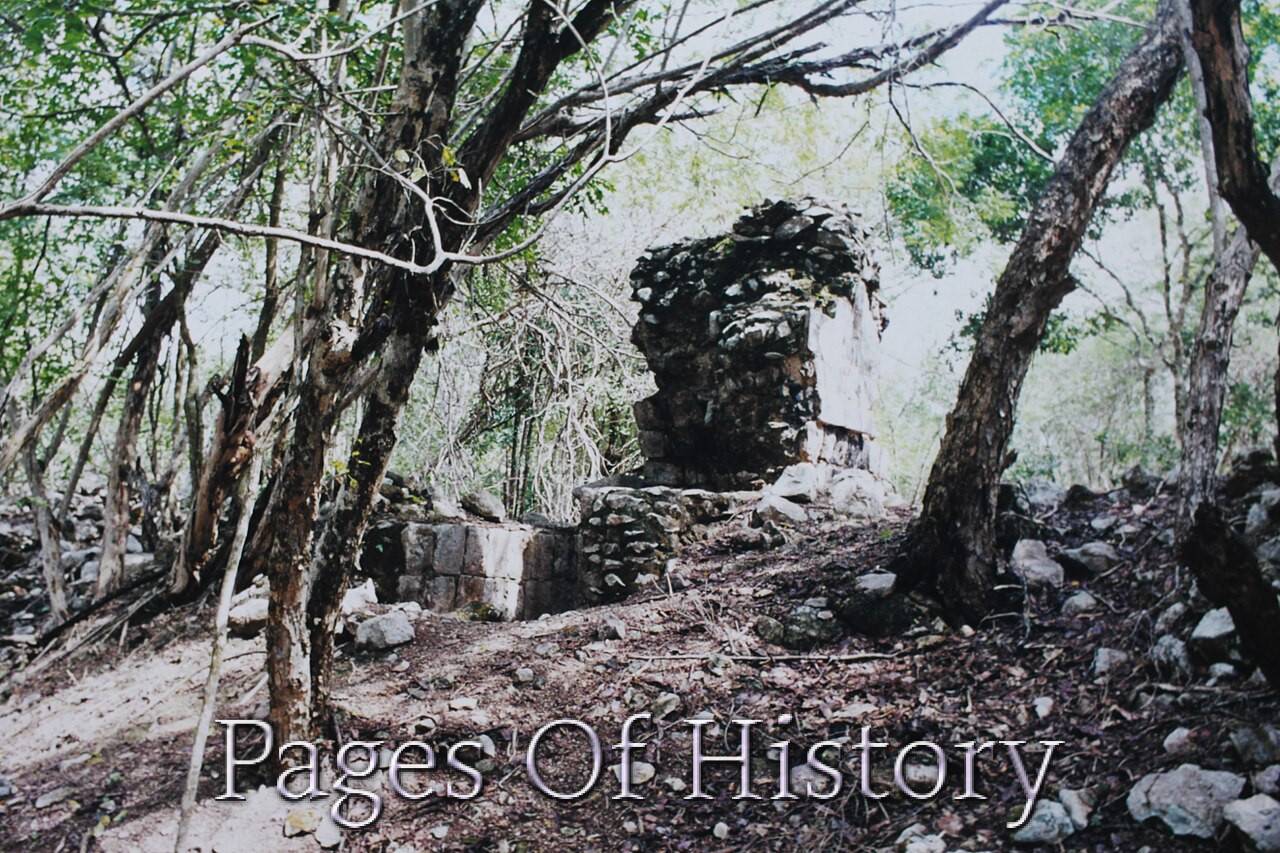
The Maya civilization collapse remains one of history’s most enduring enigmas, a dramatic unraveling that saw magnificent pyramid-studded cities like Tikal and Calakmul swallowed by the jungle, their populations vanishing or scattering within a few generations. For decades, the story was told as a simple ecological fable: a people who over-farmed, chopped down too many trees, and starved when the rains failed. But new archaeological science, from high-resolution climate data to ancient DNA and lidar scanning, is painting a far more complex and unsettling picture. The Maya civilization collapse was not a single event, nor a uniform one, but a mosaic of political failures, environmental catastrophes, and human decision-making that offers haunting parallels to our own era. The new clues suggest that the collapse was not just a matter of drought, but of how the drought was experienced by a society already stretched to its breaking point by war, inequality, and a rigid ideology of kingship.
- The Myth of a Single Collapse: Rethinking the Classic Era
- New Clues from the Mud: The Science of Ancient Drought
- War and the Weaponization of Water: The Political Collapse
- The Human Cost: Famine, Disease, and Violence
- Beyond the Southern Lowlands: The Northern "Survival"
- Rethinking the Collapse: A System's Perspective
- Lessons for the Modern World: The Takeaway
The Myth of a Single Collapse: Rethinking the Classic Era
To understand the Maya civilization collapse, we must first dismantle the idea that it was a single, sudden apocalypse. The so-called “Classic Maya Collapse” primarily refers to the abandonment of the southern lowlands—the great cities of the Petén Basin in modern Guatemala, western Honduras, and Belize—between roughly 760 and 900 CE. This was not a population extinction; millions of Maya people survived, and their descendants thrive today. Nor was it a uniform decline. While the great city of Palenque was already in decay by 800 CE, the northern cities of the Yucatán Peninsula, like Uxmal and later Chichén Itzá, were experiencing a renaissance, growing in power and influence even as their southern cousins were being consumed by forest.
What makes the new research so revolutionary is the shift away from a mono-causal explanation. The old narrative, popularized in the mid-20th century, blamed peasant revolts against oppressive elites. Later, the focus shifted to systemic ecological failure. The truth, as revealed by recent paleoclimatology and archaeology, is that the collapse was a cascade—a chain reaction of interconnected failures. It was a political collapse first, a demographic collapse second, and an ecological collapse that was both a cause and a consequence of the first two.
New Clues from the Mud: The Science of Ancient Drought
For years, the drought theory was based on circumstantial evidence. That changed in 2018 with a landmark study published in Science by a team led by paleoclimatologist Nicholas Evans and geochemist Mark Brenner from the University of Cambridge. They analyzed the stable isotopes of oxygen and hydrogen in water trapped inside the crystal lattice of gypsum deposits found at the bottom of Lake Chichancanab in Mexico’s Yucatán Peninsula. These crystals act as tiny time capsules, recording the ratio of heavy to light isotopes in the water at the time they formed. During a drought, evaporation preferentially removes the lighter isotopes, leaving a tell-tale signature of heavier isotopes behind. The results were staggering: the data showed that annual rainfall in the region decreased by 41% to 54% during the terminal Classic period, with peaks of severe aridity occurring in the decades around 800 CE and again around 930 CE.
This wasn’t just a dry spell; it was a megadrought, a regime change in the regional climate. To put this in perspective, a 50% reduction in rainfall in the Maya lowlands today would be catastrophic, turning tropical forests into savanna. The study suggested that the collapse wasn’t caused by a single, prolonged drought, but by a series of “punctuated” dry events—short, intense periods of aridity that struck with little warning, each one chipping away at the resilience of the agricultural and political systems.
The Role of Deforestation: A Human-Made Catastrophe
But the new clue from the mud is that the drought was not purely natural. A complementary study, published in 2020, used sedimentary ancient DNA (sedaDNA) from Lake Chichancanab and a nearby lake, Lake Puerto Arturo, to reconstruct the vegetation around the lakes. The DNA showed a dramatic shift in plant life during the collapse period: a sudden drop in tree pollen and a corresponding spike in the pollen of weedy, disturbance-tolerant plants like Amaranthus (pigweed). This indicates that the Maya had stripped the landscape of its forest cover, likely for slash-and-burn agriculture and for the vast quantities of lime plaster needed to construct and maintain their monumental architecture. It is estimated that producing one square meter of Maya plaza floor required burning 20 to 30 trees to generate the lime. The deforestation created a feedback loop: fewer trees meant less evapotranspiration, which meant less local rainfall, which made the region more susceptible to the larger-scale shifts in the Intertropical Convergence Zone (ITCZ) that drove the megadrought.
The Maya didn’t just suffer a drought; they helped create the conditions for it. By removing the forest, they removed the region’s natural buffer against climatic variability. The climate changed, but so had the land’s ability to cope with that change.
War and the Weaponization of Water: The Political Collapse
Climate stress does not automatically lead to societal collapse; it depends on how a society is structured to handle it. In the case of the Maya, the political structure was uniquely fragile. The Classic Maya world was a patchwork of competing city-states, engaged in a relentless, high-stakes game of dynastic rivalry. The two superpowers, Tikal and Calakmul, fought a series of “star wars”—conflicts named for their apparent alignment with Venus—for over a century, from roughly 562 CE to 695 CE. These wars were not just for territory; they were for control of trade routes, tribute, and, most importantly, the ideological legitimacy of the king.
The new clue here is the discovery of extensive water management systems at many major cities, particularly Tikal and Caracol. Lidar (Light Detection and Ranging) scans have revealed massive reservoirs, canals, and terraces that could hold millions of gallons of water. These were not simple public works; they were the physical manifestation of royal power. The king was the Chak Tok Ich’aak, the “Rain Giver,” and his primary duty was to ensure agricultural fertility through ritual and, more practically, through the construction of water storage. When the droughts hit, the reservoirs became a lifeline. But they also became a point of conflict. Analysis of the water system at Tikal shows that the reservoirs were lined with clay to prevent seepage, but they were also susceptible to contamination. As water levels dropped, the water became stagnant, and algae blooms would have made it toxic. The kings, who controlled access to this water, were thus holding a poisoned chalice.
When the rains failed for years at a time, the king’s fundamental promise was broken. He could not provide water, and therefore, he had lost his mandate from the gods. This explains the striking archaeological evidence of ritual destruction of royal monuments at cities like Piedras Negras and Yaxchilán in the early 9th century. Thrones were smashed, stelae were toppled, and royal palaces were burned. This wasn’t a random invasion; it was a systematic erasure of the institution of kingship. The people did not just starve; they lost faith in the entire cosmic order that justified their rulers’ existence.
| City | Peak Population (est.) | Primary Water Source | Collapse Phase | Key Evidence of Stress |
|---|---|---|---|---|
| Tikal | 60,000 – 80,000 | Man-made reservoirs (aguadas) | Gradual decline post-830 CE | Abandonment of palaces; proliferation of crude, non-royal ceramics |
| Caracol | 100,000 – 120,000 | Extensive terracing & reservoirs | Rapid collapse c. 895 CE | Mass graves with evidence of violence; cessation of monument carving |
| Calakmul | 50,000 | Seasonal swamps (bajos) | Collapse after 695 CE defeat | City sacked; political authority shattered by Tikal |
| Palenque | 30,000 | Natural springs & rivers | Early decline c. 800 CE | Elite residences abandoned; population shifts to rural areas |
| Chichén Itzá | 35,000 | Natural cenotes (sinkholes) | Rise during Southern Collapse | Prospered due to reliable water access & coastal trade |
The Human Cost: Famine, Disease, and Violence
The collapse was not a quiet, orderly migration. The new evidence points to a horrific human toll. The staple crop of the Maya was maize, and their agricultural system was highly productive but also highly sensitive to timing. A drought that delayed the onset of the rainy season by even two weeks could ruin the harvest. With the reservoirs failing and the political system in chaos, the food distribution networks broke down.
Bioarchaeologists have found stark evidence of this stress in the bones of the last generations of Classic Maya. At the site of Copán in Honduras, studies of skeletal remains show a sharp increase in cribra orbitalia—porous lesions in the eye sockets that are a classic sign of chronic iron-deficiency anemia, often caused by malnutrition and parasitic infection. Similarly, analysis of tooth enamel from skeletons at Lamanai in Belize shows a marked increase in linear enamel hypoplasia, a defect that occurs when a child suffers from a period of severe physiological stress, such as starvation or disease, during tooth formation. The children of the collapse were literally born into a world of hunger.
Evidence of Conflict at Aguateca
The desperation also led to violence. The site of Aguateca in Guatemala is a unique “Pompeii of the Maya,” a city that was attacked and burned so quickly that the inhabitants left their belongings behind. Excavations led by Takeshi Inomata of the University of Arizona have revealed a scene of sudden, catastrophic violence. The elite residences were fortified with hastily constructed wooden palisades. Inside the burned buildings, archaeologists found scattered arrow points, broken obsidian blades, and the skeletons of individuals who had been killed and left where they fell. The attackers had systematically smashed the royal regalia and thrown the king’s throne into a nearby ravine. This was not a border skirmish; it was an act of total war, likely driven by competition for the last remaining fertile land and water sources.
Beyond the Southern Lowlands: The Northern “Survival”
While the southern lowlands were collapsing, the northern Yucatán Peninsula was experiencing a golden age. Why? The new clue lies in the geological and hydrological differences between the two regions. The south, with its porous limestone bedrock, relied heavily on surface water stored in reservoirs, which required constant maintenance and a centralized authority to manage. The north, however, is dotted with natural cenotes—sinkholes that connect directly to the underground water table. These were far more resilient to drought. A city like Uxmal or Chichén Itzá had a built-in, decentralized water source that did not require a complex state apparatus to maintain.
Furthermore, the northern cities were better positioned for maritime trade. The collapse of the southern overland trade routes allowed the northern ports, such as Cancún‘s predecessor, Isla Cerritos, to monopolize the lucrative trade in salt, obsidian, and cacao. This economic shift provided a buffer against the agricultural crisis. The northern cities were not immune to the drought, but they were more resilient to it. This proves that the Maya civilization collapse was not predetermined by climate; it was a test of a society’s adaptive capacity. The south failed the test; the north, for a time, passed.
Rethinking the Collapse: A System’s Perspective
The most profound new clue emerging from the research is that the Maya civilization collapse is best understood not as a “collapse” but as a systemic transformation. The old order—the divine kingship, the massive monumental architecture, the dense urban centers—was a high-risk, high-reward strategy. It worked spectacularly for centuries, allowing the Maya to achieve incredible intellectual and artistic heights. But it was brittle. It lacked the flexibility to adapt to a changing climate because it was built on the premise of a stable climate.
Consider the energy budget of a Classic Maya city. To build the pyramids at Tikal, to plaster the plazas, to feed the artisans and the royal court, the system required a massive agricultural surplus. This surplus was generated by intensifying agriculture on the same land, which led to soil exhaustion and deforestation. When the drought hit, the system had no slack. It was like a tightrope walker who has been performing brilliantly for a century but has no safety net. One strong gust of wind—the megadrought—and the entire act came crashing down.
- Political Factor: The ideology of kingship made rulers responsible for the weather. Failure to produce rain delegitimized the state.
- Ecological Factor: Deforestation for agriculture and lime plaster reduced local rainfall and increased soil erosion.
- Social Factor: A rigid class structure with a large, disenfranchised peasantry meant that the burden of famine fell hardest on the poor, leading to revolt and internal collapse.
- Climatic Factor: A series of severe, multi-decadal megadroughts (c. 800-930 CE) that reduced rainfall by up to 50%.
- Geographic Factor: The southern lowlands’ reliance on vulnerable surface reservoirs made them far more susceptible than the northern cities with their natural cenotes.
Lessons for the Modern World: The Takeaway
Why does this ancient mystery matter to us today? Because the Maya civilization collapse is not a relic of the past; it is a stark warning about the fragility of complex societies in the face of climate change. The Maya were not a primitive people who made a simple mistake. They were a sophisticated, advanced civilization with mathematics, astronomy, and monumental architecture that rivaled anything in the ancient world. Their failure was not a failure of intelligence, but a failure of resilience.
Like the Maya, our modern global civilization is a complex, interconnected system. We are facing our own climate stress, but on a global scale. The new clues from the Maya collapse suggest that the societies most likely to survive are not necessarily the most powerful, but the most adaptable. The Maya’s rigid adherence to a political ideology that could not accommodate a changing world was a key factor in their downfall. They chose to double down on monumental building and royal competition even as the foundations of their world were crumbling.
The story of the Maya civilization collapse is a story of how one of humanity’s greatest achievements was undone by a combination of environmental change and societal inflexibility. It is a profound and humbling reminder that no civilization, no matter how brilliant, is invincible. The jungle that reclaimed Tikal and Calakmul is a silent testament to the fact that the greatest threat to our future may not be the climate itself, but our own response to it. The Maya left us not just their pyramids, but a blueprint for how to fail—and, if we learn the lesson, a guide on how to avoid the same fate.