
📅 Last updated: 27.09.2026
The phrase “the Maginot Line fail” conjures one of history’s most persistent clichés: a vast, expensive wall of concrete that France trusted so completely that its armies forgot how to fight. It is a story of hubris, of generals staring at the last war, of a nation cowering behind fortifications while German panzers slipped around the end. It is also, in large part, wrong. The Maginot Line did not collapse on 10 May 1940. Most of its major fortresses held out for weeks, some surrendering only after the armistice. The catastrophe of 1940 was not caused by the Line’s guns falling silent, but by what happened in the open country far to its north and by decisions made in Paris long before the first shot was fired.
- What the Maginot Line Actually Was
- Why France Built It: The Shadow of 1914–1918
- The Fatal Misreading: What the Line Could Not Do
- May 1940: The Battle That Decided Everything
- The Maginot Line in Combat: A Different Story
- Key Facts About the 1940 Campaign
- Why the Maginot Line Fail Narrative Persists
- Lessons and Legacy
What the Maginot Line Actually Was
To understand why the Maginot Line is so often blamed for the fall of France, you first have to understand what it was — and what it was not. Named after André Maginot, the French minister of war who championed its funding, the Line was approved by the French parliament in 1929 and built in stages through the 1930s. It was never a single continuous wall. It was a chain of fortified sectors running along France’s eastern frontier, from the Swiss border near Basel northward to Longwy and the Belgian frontier near Sedan.
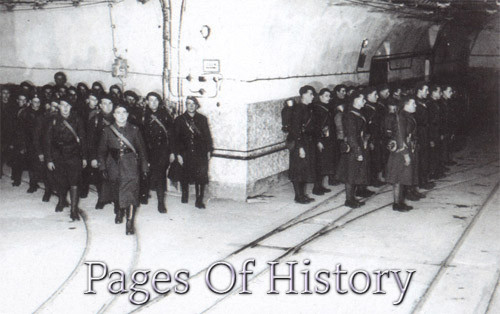
The fortifications came in several types. The gros ouvrages, or great works, were subterranean fortresses with retractable gun turrets, underground railways, barracks, hospitals, ventilation systems, and power plants. Smaller petits ouvrages and concrete casemates filled the gaps. Between the works lay minefields, anti-tank rails, and interlocking fields of fire. Troops could live underground for months. In 1940 the Line’s garrison numbered roughly 400,000 men, though many were reservists of the “fortress infantry” rather than elite troops.
Critically, the Line stopped at the Belgian border. France’s generals assumed that if Germany attacked again, it would come through Belgium as it had in 1914, and that French forces would meet it there. The fortifications were designed to protect the industrial regions of Alsace and Lorraine, to serve as a force multiplier that freed troops for mobile warfare elsewhere, and to give France time to mobilize. They were never intended to win a war on their own.
Why France Built It: The Shadow of 1914–1918
The Maginot Line was a product of demographic despair and industrial logic. France had lost around 1.4 million soldiers in the First World War — a higher proportion of its population than any other major belligerent. Its birth rate had been falling for decades, and by the 1930s French military-age cohorts were roughly half the size of Germany’s. Marshal Philippe Pétain and other senior commanders concluded that France could not afford another war of attrition fought with flesh and blood. Concrete and steel, they argued, were cheaper than sons.
There was also a technological argument. The defensive battles of 1914–1918 had shown that modern firepower favored the defender. The French high command, dominated by veterans of Verdun such as Pétain and later Maurice Gamelin, believed that a well-prepared position could bleed an attacker white. The Maginot Line was the ultimate expression of that doctrine — a “battlefield prepared in advance.”
Its costs were real but often exaggerated. The Line consumed roughly 3 billion francs by the late 1930s, a substantial sum but a fraction of total defense spending. Far more money went to the French navy and air force, and to mobilizing and equipping the field army. The problem was never that France spent everything on forts. The problem was that it spent too little on the things that would decide the battle of 1940: tanks, aircraft, radios, and anti-aircraft guns.
The Fatal Misreading: What the Line Could Not Do
Here lies the heart of the misunderstanding. The Maginot Line was a tactical instrument with a strategic purpose: to channel a German attack and buy time. It could not, by design, cover every possible avenue of invasion. The Ardennes Forest, straddling the Belgian-Luxembourg-French border, was considered impassable for large mechanized forces. The Belgian plain to the north was to be defended by mobile French and British armies advancing into Belgium — the so-called Dyle Plan.
That plan carried enormous risk. It committed France’s best forces, including the mechanized and motorized divisions, to a forward move into Belgium the moment Germany attacked. It also left the sector around Sedan — the “hinge” between the Maginot Line and the mobile armies — thinly held by second-rate formations. If the Germans broke through there, the entire Allied force in Belgium could be cut off from Paris.
French intelligence had clues about German intentions. In the winter of 1939–1940, a German staff officer carrying plans for a thrust through central Belgium crashed in Belgium, and the documents were shared with the Allies. The Germans then revised their plan. The new version, devised largely by General Erich von Manstein and endorsed by Hitler, called for the main armored effort through the Ardennes toward Sedan and the Channel coast — a Sichelschnitt, or “sickle cut.” France’s leaders, wedded to the idea that the Ardennes could not be crossed quickly, largely dismissed the danger.
May 1940: The Battle That Decided Everything
The German offensive began on 10 May 1940. Army Group B under General Fedor von Bock attacked into the Netherlands and Belgium, drawing the French First Army and the British Expeditionary Force forward. This was exactly what the Allies expected — and exactly what the Germans wanted. Meanwhile, Army Group A under General Gerd von Rundstedt, with seven panzer divisions under Ewald von Kleist and Heinz Guderian, pushed through the Ardennes.
The panzers reached the Meuse River near Sedan on 12–13 May. French defenses there were held by the 55th Infantry Division, a series of low-quality reservists with inadequate anti-tank weapons and almost no air support. German infantry crossed the river in rubber boats under heavy Luftwaffe bombardment; by the evening of 13 May, bridgeheads were established. The next day, German tanks poured across. French counterattacks were piecemeal and uncoordinated. By 15 May, the German spearheads were driving west into open country.
What followed was a collapse of command as much as a collapse of arms. French communications were slow and centralized; orders took hours or days to reach units. German commanders, by contrast, led from the front and exploited opportunities without waiting for permission. Guderian’s tanks raced to the Channel, reaching Abbeville on 20 May and cutting off the Allied armies in Belgium. The British evacuated from Dunkirk between 26 May and 4 June, saving some 338,000 soldiers but abandoning nearly all their equipment. Paris fell on 14 June. On 22 June, France signed an armistice in the same railway carriage at Compiègne where Germany had surrendered in 1918.
The Maginot Line in Combat: A Different Story
So did the Maginot Line fail? In the fighting itself, largely no. When the Germans attacked the Line directly in mid-June 1940 — during Fall Rot, the second phase of the campaign — the fortresses proved formidable. The gros ouvrage at Schoenenbourg, near the northern end of the Line, fired over 15,000 artillery shells and held out despite intense bombardment. The ouvrage at Simserhof fought until 30 June. Some fortresses, such as those around Bitche, did not surrender until 1 July — after the armistice had already been signed on 22 June.
The Line was also bypassed, not breached. German forces crossed the Rhine near Colmar and attacked the Line from the rear, where its defenses were weakest. Once the field armies had collapsed and the government had capitulated, isolated fortresses had no strategic purpose. Their garrisons often surrendered on orders from the French high command, not because they had been defeated.
Yet the Line’s defenders were not uniformly heroic. Some smaller positions were abandoned or surrendered quickly. The Line had been stripped of many of its best troops, who were sent north to meet the main German thrust. And the psychological effect of the Line — the belief that it made France safe — may have encouraged a defensive mentality that hampered French offensive thinking.
Key Facts About the 1940 Campaign
| Date | Event | Significance |
|---|---|---|
| 10 May 1940 | Germany invades Netherlands, Belgium, France | Begins Fall Gelb; draws Allied armies into Belgium |
| 13 May 1940 | German infantry cross the Meuse at Sedan | Breaks the hinge between Maginot Line and mobile forces |
| 20 May 1940 | Guderian reaches Abbeville | Cuts off Allied armies in Belgium from the south |
| 26 May – 4 June 1940 | Dunkirk evacuation | 338,000 Allied troops rescued; equipment lost |
| 22 June 1940 | Franco-German armistice signed | France divided; occupation begins |
Why the Maginot Line Fail Narrative Persists
The idea that the Maginot Line failed is durable because it offers a simple moral: static defense is obsolete, and nations that hide behind walls are doomed. There is truth in that lesson, but it is too neat. The Line was not defeated by tanks; it was defeated by a strategic plan that placed France’s mobile forces in the wrong place at the wrong time, by an underestimation of the Ardennes, by slow communications, and by a German operational style that was genuinely superior in 1940.
Consider the alternative history. If France had extended the Line to the sea — a proposal debated in the 1930s and rejected partly for cost and partly for diplomatic reasons, since it would have implied abandoning Belgium — the German sickle cut might have been blunted. If France had kept stronger reserves behind the Sedan sector, the panzers might have been delayed long enough for the Allies to consolidate. If French and British air forces had been better integrated, the Luftwaffe might not have dominated the Meuse crossing. None of these failures was inherent to the Maginot Line.
There is also a political dimension. The Line became a symbol of the Third Republic’s supposed decadence — of a nation that preferred to hide than to fight. After 1940, both Vichy propagandists and Gaullist critics found it convenient to blame the fortifications. The truth is more complex. France in 1940 was a divided, traumatized society with a fragile political system, but its soldiers often fought bravely. The failure was at the level of strategy and command, not concrete.
Lessons and Legacy
The Maginot Line’s real lesson is not that fortifications are useless. It is that fortifications, like any weapon, only work as part of a coherent strategy. The Line did what it was designed to do: it protected Alsace and Lorraine, forced the Germans to attack elsewhere, and tied down significant German forces. What it could not do was compensate for a flawed plan, an outdated command system, and a failure of imagination about how a modern war would be fought.
After 1945, the French reused parts of the Line during the Cold War, and today many ouvrages are museums. Visitors walk through the same tunnels where soldiers waited in 1940, and the question they ask is always the same: how could this have happened? The answer is not found in the concrete. It is found in the roads north of Sedan, where the panzers came through, and in the headquarters where French generals watched a battle they had not prepared to fight.
The Maginot Line did not fail France in 1940. France failed to use it as part of a strategy that matched the war Germany actually fought. That is a subtler and more uncomfortable truth — and a more useful one.