
📅 Last updated: 04.11.2026
The story of the Indus Valley decline is one of history’s great unsolved puzzles, a slow unraveling that saw one of the ancient world’s most sophisticated urban civilizations fade from the map over roughly a thousand years. Unlike the dramatic collapses of Egypt or Mesopotamia, the end of the Harappan world came not with a single catastrophe but through a complex interplay of environmental stress, economic breakdown, and gradual transformation.
The Indus Valley Civilization declined between approximately 1900 BCE and 1300 BCE, driven by a combination of monsoon weakening, river system changes, and the collapse of long-distance trade networks. The civilization was not destroyed by a single invasion or disaster, but rather transformed through de-urbanization, as populations dispersed into smaller rural settlements across the Indian subcontinent.
- What Was the Indus Valley Civilization?
- When Did the Indus Valley Decline Begin?
- Did Climate Change Cause the Indus Valley Decline?
- How Did Economic Collapse Contribute to the Indus Valley Decline?
- Was There an Aryan Invasion or Migration?
- What Role Did Disease and Social Factors Play in the Indus Valley Decline?
- What Is the Legacy of the Indus Valley Decline?
- What Remains Unknown About the Indus Valley Decline?
- Why the Indus Valley Decline Still Matters
What Was the Indus Valley Civilization?
Before examining the Indus Valley decline, it is essential to understand what was lost. The Indus Valley Civilization—also called the Harappan Civilization after its first-discovered site—flourished from approximately 3300 BCE to 1300 BCE across what is now Pakistan and northwestern India. At its height, known as the Mature Harappan period (2600–1900 BCE), it covered an area larger than ancient Egypt and Mesopotamia combined, stretching over 1.5 million square kilometers.
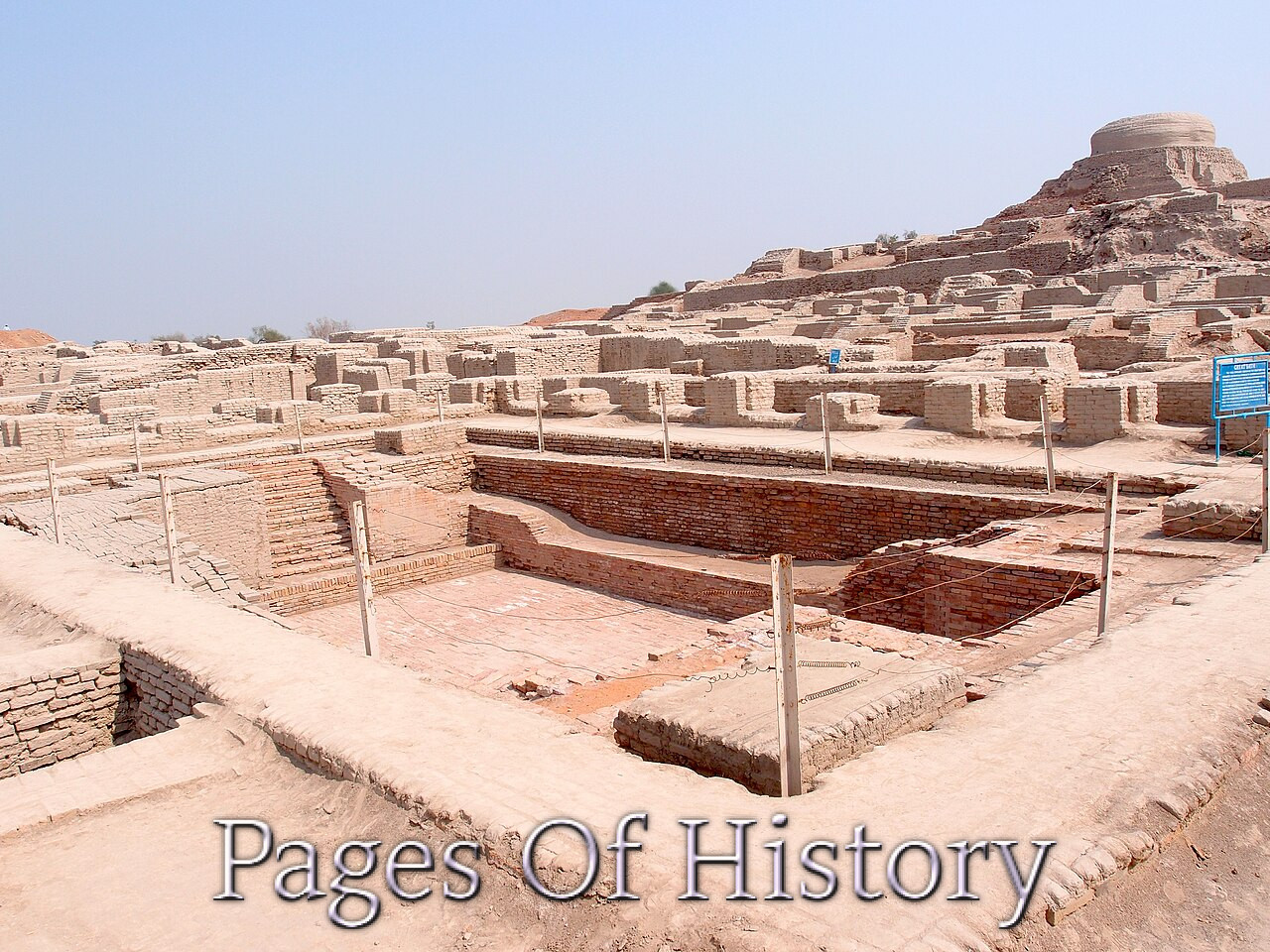
Its major cities—Mohenjo-daro, Harappa, Dholavira, Ganeriwala, and Rakhigarhi—displayed remarkable urban planning. Streets were laid out on grid patterns. Houses featured standardized baked bricks. Advanced drainage systems, including covered sewers, served neighborhoods. The Great Bath at Mohenjo-daro remains one of the ancient world’s most impressive hydraulic structures. Yet unlike Egypt or Mesopotamia, archaeologists have found no monumental temples, no royal tombs, and no evidence of large-scale warfare.
The civilization also developed a still-undeciphered script, standardized weights and measures, and extensive maritime trade networks reaching Mesopotamia, the Persian Gulf, and Central Asia. Indus seals have been found at Ur and other Mesopotamian sites, confirming commercial ties that stretched thousands of kilometers.
When Did the Indus Valley Decline Begin?
Scholars traditionally date the beginning of the Indus Valley decline to around 1900 BCE, marking the transition from the Mature Harappan to the Late Harappan period. However, the process was neither sudden nor uniform. Some sites show signs of stress as early as 2200 BCE, while others continued to thrive until 1700 BCE or later.
The periodization of this decline helps clarify the timeline:
| Phase | Dates | Key Characteristics |
|---|---|---|
| Early Harappan | 3300–2600 BCE | Formative urbanization, regional cultures, early trade |
| Mature Harappan | 2600–1900 BCE | Peak urbanism, standardized weights, script, extensive trade |
| Late Harappan | 1900–1300 BCE | De-urbanization, population dispersal, loss of script |
| Post-Harappan | 1300–600 BCE | Regional cultures, Vedic period begins, Iron Age transitions |
This gradual transition reveals that the Indus Valley decline was not an event but a process—one that unfolded differently across regions and over centuries.
Did Climate Change Cause the Indus Valley Decline?
The most compelling evidence for the Indus Valley decline points to significant climate shifts, particularly the weakening of the monsoon system. Paleoclimate data from lake sediments, speleothems, and oxygen isotope analysis reveal a pronounced aridification trend beginning around 2200 BCE and intensifying after 1900 BCE.
The 4.2 Kiloyear Event
Around 2200 BCE, a global climate anomaly known as the “4.2 kiloyear event” affected civilizations from Egypt to Mesopotamia to the Indus Valley. This event involved a sharp reduction in monsoon rainfall across South Asia, lasting several decades to centuries. The Akkadian Empire in Mesopotamia collapsed during this same period, suggesting a widespread climatic disruption.
For the Indus civilization, which depended heavily on monsoon-fed rivers and seasonal flooding for agriculture, this drying trend proved devastating. The Ghaggar-Hakra river system—often identified with the Sarasvati of Vedic texts—began to dry up as its Himalayan glacier sources diminished and its channels shifted.
River System Changes
The Indus and its tributaries are dynamic rivers prone to major channel shifts. Geological evidence shows that the Ghaggar-Hakra (Sarasvati) system, which once flowed strongly enough to support numerous Harappan settlements, became seasonal or dried entirely by around 1900 BCE. Cities like Kalibangan and Ganeriwala, which depended on this river, were abandoned.
Simultaneously, the Indus River itself shifted course, potentially flooding or abandoning major settlements. Mohenjo-daro, located in the Sindh region, shows evidence of repeated flooding followed by declining maintenance of its infrastructure. The city’s population dwindled, and by 1700 BCE, it was largely abandoned.
- Monsoon weakening: Reduced rainfall crippled agricultural surpluses
- River desiccation: The Ghaggar-Hakra system dried, abandoning eastern settlements
- Tectonic activity: Earthquakes may have altered river courses and damaged cities
- Sea-level changes: Coastal settlements like Lothal faced changing shorelines
How Did Economic Collapse Contribute to the Indus Valley Decline?
Climate stress alone does not explain the full complexity of the Indus Valley decline. The civilization’s sophisticated economic system—dependent on agricultural surplus, specialized craft production, and long-distance trade—proved vulnerable to cascading failures.
The Collapse of Trade Networks
The Indus civilization maintained extensive trade with Mesopotamia, the Persian Gulf, and Central Asia. Indus seals, beads, and weights have been found in Mesopotamian cities like Ur and Kish. However, around 1900 BCE, these trade networks contracted significantly. Mesopotamian texts from this period show reduced references to Meluhha—the Akkadian name likely referring to the Indus region.
The reasons for this trade collapse are intertwined with climate change. As Mesopotamian civilizations also faced the 4.2 kiloyear event, their demand for Indus goods declined. Additionally, the collapse of the Akkadian Empire disrupted the political stability that enabled long-distance trade. With trade routes fractured, Indus cities lost a crucial source of wealth and external connections.
Agricultural Crisis and De-Urbanization
As monsoon rains failed and rivers dried, agricultural yields plummeted. The Harappan agricultural system, which relied on predictable flooding and monsoon patterns, could not adapt quickly enough. Without surplus grain, cities could not support large populations of artisans, traders, and administrators.
The archaeological record shows a clear pattern of de-urbanization. Large cities were gradually abandoned, and populations dispersed into smaller, rural settlements. This was not a sudden flight but a generational process—children grew up in cities that their grandchildren would never know. The centralized authority that had maintained urban infrastructure, standardized weights, and organized trade dissolved as populations scattered.
Was There an Aryan Invasion or Migration?
For decades, the theory of an “Aryan invasion” dominated explanations of the Indus Valley decline. Nineteenth and early twentieth-century scholars, influenced by colonial ideologies, proposed that invading Indo-Aryan peoples from Central Asia destroyed the Harappan cities around 1500 BCE. This theory has been thoroughly discredited by modern archaeology and genetics.
Evidence Against Invasion
The archaeological record shows no evidence of large-scale warfare, destruction layers, or mass burials consistent with invasion. Harappan cities were not burned or sacked; they were gradually abandoned. The skeletal remains found at Mohenjo-daro, once cited as evidence of massacre, have been reinterpreted as indicating peaceful burials and post-depositional damage.
Genetic studies have also complicated the picture. Ancient DNA from Harappan-era individuals shows a population with ancestry from Iranian farmers and indigenous South Asian hunter-gatherers—not a population replaced by Central Asian invaders. While later migrations from the steppe did occur around 2000–1500 BCE, these appear to have been gradual and occurred after the civilization’s urban phase had already ended.
The Migration Hypothesis
More nuanced theories suggest that Indo-Aryan-speaking peoples migrated into the region gradually, possibly as the Indus cities were already declining. These migrations may have been facilitated by the same environmental disruptions that affected the Harappans. The Vedic texts, composed by these Indo-Aryan peoples, describe a pastoral, semi-nomadic society quite different from the urban Harappans.
The relationship between the Late Harappan cultures and the Vedic civilization remains debated. Some scholars argue for continuity, suggesting that Harappan cultural elements persisted and influenced the emerging Vedic culture. Others emphasize discontinuity, pointing to the loss of urbanism, script, and standardized weights as evidence of cultural rupture.
What Role Did Disease and Social Factors Play in the Indus Valley Decline?
Beyond climate and economics, other factors may have contributed to the Indus Valley decline. Evidence from skeletal remains suggests declining health among Late Harappan populations. Signs of anemia, malnutrition, and dental disease increase in later periods, reflecting the stress of food insecurity.
Infectious diseases, particularly waterborne illnesses, may have spread more easily as urban sanitation systems decayed. The sophisticated drainage systems of Mature Harappan cities required constant maintenance; as civic authority weakened, these systems fell into disrepair, increasing disease risk.
Social and Political Fragmentation
The Indus civilization appears to have lacked a strong centralized state—at least, no evidence of palaces, royal tombs, or military conquest has been found. This may have been a strength during prosperous times, allowing flexible governance and local autonomy. But in times of crisis, the absence of centralized authority may have hindered coordinated responses to environmental challenges.
Without a powerful state to organize large-scale irrigation projects, redistribute resources, or maintain trade networks, the Harappan cities may have fragmented into smaller, competing polities. The standardization that characterized the Mature Harappan period—in weights, bricks, and seals—disappeared in the Late Harappan, suggesting a breakdown of shared cultural norms and economic systems.
What Is the Legacy of the Indus Valley Decline?
The Indus Valley decline did not mean the end of civilization in South Asia. The people of the Indus Valley did not vanish; they adapted, migrated, and transformed. Their descendants contributed to the cultural and genetic fabric of later South Asian civilizations.
Cultural Continuities
Many elements of Harappan culture persisted into later periods. The worship of a mother goddess, the importance of ritual bathing, and certain agricultural practices may have roots in the Indus civilization. The Pashupati seal, depicting a figure surrounded by animals in a yogic posture, has been interpreted as an early prototype of the Hindu god Shiva—though this interpretation remains contested.
Technologies such as bead-making, shell-working, and metallurgy continued in post-Harappan cultures. The site of Dholavira, which continued to be occupied into the Late Harappan period, shows evidence of cultural continuity alongside adaptation to changing conditions.
Lessons for Understanding Civilizational Collapse
The Indus Valley decline offers sobering lessons about the fragility of complex societies. A civilization that had thrived for over a thousand years, built sophisticated cities, and maintained extensive trade networks could not survive the combination of climate change, economic disruption, and loss of centralized authority.
This history resonates with modern concerns about climate change and societal resilience. The Harappans were not destroyed by a single enemy or event but by a slow unraveling—a series of stresses that overwhelmed their adaptive capacity. Their fate reminds us that even the most sophisticated civilizations are vulnerable to environmental and economic shocks.
What Remains Unknown About the Indus Valley Decline?
Despite decades of archaeological research, much about the Indus Valley decline remains uncertain. The Harappan script remains undeciphered, limiting our understanding of their language, religion, and political organization. Without written records, scholars must rely on archaeological evidence and paleoclimate data to reconstruct the past.
Key questions persist:
- What was the exact role of climate change versus other factors in the decline?
- How did Harappan society organize itself without apparent centralized rule?
- What happened to the millions of people who lived in Indus cities?
- How did the transition to the Vedic period actually unfold?
Ongoing excavations at sites like Rakhigarhi, Dholavira, and Ganeriwala continue to reveal new information. Advances in ancient DNA analysis, isotope studies, and paleoclimate reconstruction promise to shed further light on this enigmatic civilization and its gradual disappearance.
Why the Indus Valley Decline Still Matters
The Indus Valley decline stands as one of history’s most consequential yet least understood civilizational transitions. It was not a dramatic collapse but a slow transformation—a civilization that adapted to changing conditions by becoming something else entirely. The urban Harappans became the rural Late Harappans, and their descendants contributed to the rich tapestry of South Asian cultures that followed.
Understanding this decline requires moving beyond simple explanations. No single cause—not climate change, not invasion, not economic collapse—explains the full complexity of what happened. Instead, the evidence points to a cascade of interacting factors: environmental stress that undermined agriculture, trade disruption that severed external connections, and the gradual erosion of the cultural and economic systems that had held the civilization together.
The Harappans built cities with sewers and standardized bricks, traded across oceans, and developed one of the world’s earliest writing systems. Yet they could not withstand the slow-motion catastrophe of a drying climate and a fragmenting world. Their story is a reminder that civilizations are not eternal—and that understanding why they fall may help us navigate the challenges of our own time.