
📅 Last updated: 05.11.2026
The Garamantes built one of antiquity’s most improbable civilizations: a network of cities, irrigated fields, and trade routes in the heart of the Libyan Sahara, a region that today ranks among the driest on Earth. From their capital at Garama (modern Germa, in Libya’s Wadi al-Ajal), this Berber-speaking people traded with Carthage and Rome, raided their neighbors, and fielded chariots and cavalry that struck fear into Mediterranean powers. The Garamantes are the focus of one of archaeology’s great revisionist stories: a desert people long dismissed by classical writers as primitive nomads, now revealed as urbanized farmers and merchants who sustained tens of thousands of people in a hostile environment for over a millennium.
The Garamantes were a Berber civilization centered in the Fezzan region of the Libyan Sahara, flourishing roughly from 500 BCE to 700 CE. Using an elaborate system of underground irrigation tunnels called foggaras and trans-Saharan trade in salt, gold, and slaves, they built a kingdom of cities that Greek and Roman sources describe as wealthy, militarily formidable, and a persistent rival to Rome’s North African provinces.
- Who Were the Garamantes, and Why Did They Matter?
- Origins: From Saharan Pastoralists to a Kingdom of Cities
- The Garamantes and Carthage: Trade, Salt, and the Chariot Roads
- Rome's Saharan Frontier: Raids, Diplomacy, and the Garamantes
- Daily Life, Religion, and Society in the Garamantian Kingdom
- Decline: What Happened to the Garamantes?
- Key Facts and Timeline of the Garamantes
- Why the Garamantes Still Matter
- Conclusion: Rome's Rival Beyond the Frontier
Who Were the Garamantes, and Why Did They Matter?
The Garamantes inhabited the Fezzan, a chain of oases and dry valleys about 900 kilometers south of the Mediterranean coast and roughly 1,000 kilometers west of the Nile. Their heartland was the Wadi al-Ajal (the “Valley of the Passes”), a depression some 150 kilometers long where groundwater sits close enough to the surface to be tapped. Classical sources place them firmly on the map: Herodotus, writing in the fifth century BCE, calls them “a great nation” who “drive four-horse chariots” and hunt Ethiopian cave-dwellers (Histories 4.183). Tacitus, Strabo, Pliny the Elder, and Ptolemy all mention them. Their name survives in the modern toponym Germa and possibly in the region’s Arabic name, and their language appears to have been an early Berber tongue ancestral to modern Tuareg dialects.
What makes them historically significant is the combination of three factors rarely found together in the ancient Sahara:
- Urbanism: Excavations at Garama and satellite settlements have revealed stone-and-mudbrick houses, public buildings, cemeteries with thousands of tombs, and a fortified acropolis.
- Hydraulic agriculture: Thousands of foggaras—gently sloping underground galleries that channel fossil groundwater to the surface—supported date palms, wheat, barley, figs, grapes, and cotton.
- Strategic trade position: The Fezzan sat astride the shortest routes linking the Mediterranean world to the Sahel, giving the Garamantes control over the movement of salt, gold, ivory, and enslaved people.
For roughly a thousand years, this combination made the Garamantes the dominant power of the central Sahara—and a recurring problem for Rome.
Origins: From Saharan Pastoralists to a Kingdom of Cities
The Garamantes emerged from the pastoral and proto-urban cultures of the central Sahara during the first millennium BCE. Rock art across the Fezzan and the nearby Tassili n’Ajjer and Acacus mountains records the region’s earlier “Green Sahara” phase, when lakes and savanna supported cattle herders. As the climate dried between roughly 3000 and 1000 BCE, populations concentrated around reliable water sources—precisely the oases the Garamantes would later urbanize.
Archaeology suggests the process was gradual. By around 500 BCE, settlements in the Wadi al-Ajal show signs of planned layout and monumental construction. The kingdom’s royal cemetery at Saniat Jibril, near Garama, contains elaborate mudbrick tombs with chapels and stelae bearing Libyco-Berber inscriptions, dated largely to the first centuries BCE and CE. Scholars such as David Mattingly, whose excavations from the 1990s onward transformed understanding of the region, argue the Garamantes were not peripheral raiders but a genuine state-level society with kings, a stratified elite, craft specialization, and long-distance diplomacy.
The Foggaras: Engineering the Desert
The technological foundation of Garamantian power was the foggara (plural foggaras; also called a qanat in the wider Middle East). These tunnels tap aquifers at the foot of escarpments and carry water by gravity along a carefully calculated gradient to fields and settlements. Some foggaras in the Wadi al-Ajal run for several kilometers, with vertical access shafts every 20 to 30 meters. Estimates based on satellite imagery and field survey suggest the Garamantes and their successors dug well over 500 foggaras in the Fezzan, irrigating perhaps 30,000 hectares at the system’s peak.
Maintaining this infrastructure required centralized coordination: labor for digging, legal rules for water allocation, and continual repair. The foggaras therefore both depended on and reinforced state authority. When the system declined—through over-extraction of groundwater, salinization, or political collapse—the kingdom’s agricultural base went with it.
The Garamantes and Carthage: Trade, Salt, and the Chariot Roads
Before Rome, the Garamantes’ most important Mediterranean partner was Carthage. Herodotus describes a trade route running from the Fezzan to the coast, and Carthaginian goods—pottery, glass, bronze—appear in Fezzan excavations. The most famous Carthaginian connection is the story, reported by Herodotus and later writers, of the silent trade: Carthaginian merchants sailing beyond the Pillars of Heracles to exchange goods for gold with African traders who left their wares on a beach, without either side seeing the other. Whether or not the tale is literally true, it reflects a real commercial world in which Saharan goods—salt from the Fezzan and the oases of the central Sahara, gold and ivory from the Sahel, and enslaved people—flowed north to the Mediterranean.
The Garamantes also controlled the “chariot roads” of the central Sahara. Wheel ruts preserved in the desert surface and chariot scenes in rock art trace routes across the Ténéré and the Fezzan. These routes predate the camel’s widespread adoption (camels became common in the Sahara only around the first centuries CE) and were used for raiding, trade, and communication. The Garamantian chariot, drawn by horses, was both a practical vehicle and a symbol of power—one that classical authors noticed.
Rome’s Saharan Frontier: Raids, Diplomacy, and the Garamantes
Rome’s relationship with the Garamantes was defined by geography. After the destruction of Carthage in 146 BCE and the annexation of the Numidian and Mauretanian kingdoms by 40 CE, Rome controlled a narrow fertile strip along the North African coast. South of that lay the pre-desert and then the Sahara, where Roman authority thinned rapidly. The Garamantes sat beyond the frontier but were close enough to threaten it.
First Contact and the First Raids
The earliest recorded Roman clash came in 19 BCE, when the proconsul Lucius Cornelius Balbus—the first consul of non-Italian origin, born in Gades (Cádiz)—led a punitive expedition deep into the Sahara. Balbus captured the Garamantian town of Garama itself, along with other settlements, and celebrated a triumph in Rome in 19 BCE. The campaign was celebrated as a triumph over a distant, exotic enemy, but its practical effect was limited: Rome did not annex the Fezzan, and the Garamantes remained independent.
In 70 CE, the Garamantes raided the Roman province of Africa, prompting a Roman response. Tacitus (Histories 4.50) records that the Garamantes, after a successful raid, were defeated and pursued into the desert. Later, in 86–87 CE, the emperor Domitian’s general, the legate of Numidia, mounted another expedition, and the poet Statius celebrated the campaign. Roman sources also record diplomatic contacts: Garamantian envoys traveled to Rome, and the emperor Vespasian reportedly received Garamantian ambassadors.
The Garrison at Ghadames and the Limits of Empire
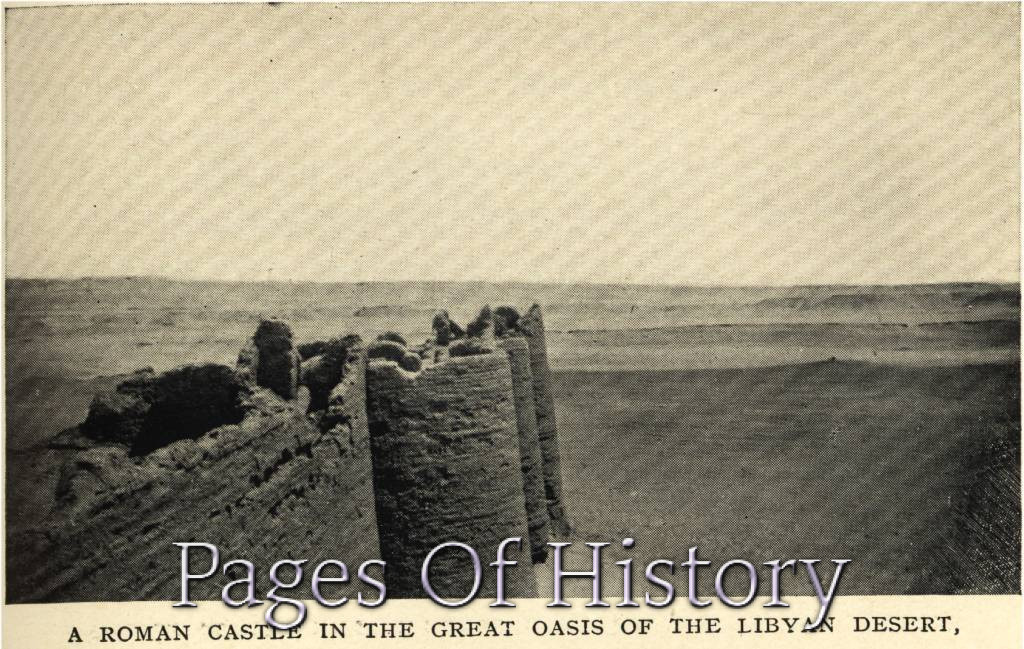
Rome never conquered the Fezzan, but it established a forward presence at the oasis of Ghadames (ancient Cydamus), roughly 350 kilometers northwest of Garama, where a Roman garrison and monumental arch were built in the first century CE. Ghadames functioned as a listening post and a checkpoint on the caravan routes. The pattern that emerged was a kind of armed coexistence: Rome held the coast and the pre-desert, the Garamantes held the deep Sahara, and both sides traded, raided, and negotiated across the divide.
Why did Rome not simply annex the Fezzan? The answer lies in logistics. Supplying a legion hundreds of kilometers into the desert was ruinously expensive; the region produced little that Rome could tax directly; and the Garamantes were capable of resisting. Roman strategy in the Sahara, as Mattingly and others have argued, was one of “forward defense” and client management rather than conquest.
Daily Life, Religion, and Society in the Garamantian Kingdom
Excavations at Garama and its hinterland paint a picture of a complex society. Houses were built of mudbrick and stone, often with multiple rooms around courtyards. The elite lived in larger compounds and were buried in monumental tombs with funerary chapels; the cemetery at Saniat Jibril contains hundreds of such structures. Ordinary people were buried in simpler graves, and the dead were sometimes accompanied by grave goods including imported pottery, glass, and metalwork.
Agriculture combined irrigated fields of wheat, barley, and dates with gardens of figs, grapes, and cotton—cotton is notable because it was rare in the ancient Mediterranean and suggests links to sub-Saharan Africa or the Nile Valley. Livestock, including cattle, sheep, goats, and horses, were kept, and camels appear in later periods. The Garamantes also mined and traded salt, a commodity essential to Saharan diets and a major source of wealth.
Religion is known mainly from burial practices and rock art. The Garamantes appear to have worshiped a pantheon of Berber deities, with a prominent role for a god associated with the dead and with water. Libyco-Berber inscriptions on tombs and stelae record names and formulae that scholars are still deciphering. The later adoption of the camel and the penetration of Islam into the Fezzan in the seventh century CE would transform the region’s religious landscape.
Decline: What Happened to the Garamantes?
The Garamantian kingdom did not fall in a single cataclysm. Its decline, spanning roughly the third to seventh centuries CE, was the product of interconnected pressures:
- Environmental stress: Over-extraction of groundwater and progressive salinization of irrigated fields undermined the agricultural base. The foggaras required constant maintenance, and as yields fell, so did the resources available to maintain them.
- Political fragmentation: Roman sources and archaeology suggest the kingdom’s central authority weakened, with power dispersing among local elites and rival groups.
- Shifting trade routes: The rise of camel caravans and the growth of trans-Saharan trade networks controlled by other groups (including the ancestors of the Tuareg and later the Sanhaja Berbers) redirected commerce away from Garamantian centers.
- The Islamic conquest: In the seventh century CE, Arab armies swept across North Africa. The Fezzan was reached by Arab forces in the late seventh century, and the Garamantian elite was absorbed into the new Islamic order. By around 700 CE, the classical Garamantian kingdom had effectively ceased to exist as a distinct political entity.
The last Garamantian king mentioned in the sources is a figure named in later Arabic accounts, and the region’s population gradually converted to Islam and merged with incoming Arab and Berber groups. The foggaras continued to be used for centuries, but the great urban civilization of Garama faded into a handful of oasis settlements.
Key Facts and Timeline of the Garamantes
| Date | Event | Significance |
|---|---|---|
| c. 500 BCE | Emergence of urban settlements in the Wadi al-Ajal | Beginning of the Garamantian kingdom; early foggara construction |
| 5th century BCE | Herodotus describes the Garamantes as a “great nation” with chariots | Earliest written reference; shows their reputation in the Mediterranean world |
| 19 BCE | Balbus’ expedition captures Garama | First Roman military penetration of the Fezzan; celebrated in a triumph |
| 70 CE | Garamantian raid on Roman Africa; Roman counter-campaign | Demonstrates the Garamantes’ military reach and Rome’s inability to subdue them |
| 1st–2nd century CE | Peak of Garamantian urbanism and foggara construction | Maximum population, agricultural output, and trade activity |
| 3rd–6th century CE | Gradual decline: environmental stress, political fragmentation | Erosion of the kingdom’s economic and political base |
| Late 7th century CE | Arab armies reach the Fezzan; Islam spreads | End of the classical Garamantian state; integration into the Islamic world |
Why the Garamantes Still Matter
The Garamantes challenge a persistent assumption about the Sahara: that it was a barrier, a void, or a place where only primitive nomads could survive. In reality, the central Sahara was a corridor and a homeland. The Garamantes built cities, engineered water systems, minted no coins but accumulated wealth through trade, and negotiated with the greatest empire of the ancient world on terms that were often their own. Their story connects the Mediterranean to sub-Saharan Africa and shows how human ingenuity can transform even the most marginal environments—and how fragile that transformation can be.
Their legacy is also a cautionary tale. The foggaras that made Garamantian civilization possible were eventually undermined by the very success they enabled: over-extraction of fossil water and salinization of soils. Modern Saharan agriculture faces strikingly similar risks. The Garamantes are thus not merely a curiosity of classical geography but a case study in sustainability, state formation, and the long history of human adaptation to climate.
Conclusion: Rome’s Rival Beyond the Frontier
The Garamantes were never a match for Rome in pitched battle on the Mediterranean coast, and they never threatened the existence of the empire. But in the Sahara—their own terrain—they were a power Rome could raid but not rule. For centuries they controlled the trade routes that linked the Mediterranean to the Sahel, defended their oases with chariots and cavalry, and maintained a civilization that classical authors admired and feared in equal measure. The Garamantes remind us that the ancient world was larger and more interconnected than the Mediterranean-centered histories of Greece and Rome suggest, and that the desert, far from being empty, was home to one of antiquity’s most remarkable and resilient societies.