
📅 Last updated: 01.11.2026
The Ninth Legion disappearance remains one of the most enduring mysteries of the Roman Empire—a story of an entire legion, roughly 5,000 soldiers, seemingly swallowed by the mists of northern Britain around the early second century AD. For centuries, historians, archaeologists, and novelists have debated whether Legio IX Hispana was annihilated in a catastrophic battle, disbanded in disgrace, or simply faded from the historical record through administrative obscurity. The Ninth Legion disappearance has become a cultural touchstone, inspiring novels, films, and endless speculation, yet the truth is far more complex and fascinating than the legend.
The Ninth Legion (Legio IX Hispana) was a Roman legion stationed in Britain during the first century AD. The Ninth Legion disappearance likely occurred around AD 120, when the unit vanishes from surviving records. Most historians now believe the legion was either destroyed during a revolt in Britain or transferred and later disbanded, rather than being annihilated in a single dramatic battle in Scotland as popular legend suggests.
- What Was the Ninth Legion and Why Was It in Britain?
- When Did the Ninth Legion Disappear from the Historical Record?
- What Are the Main Theories Behind the Ninth Legion Disappearance?
- Why Is the Ninth Legion Disappearance So Famous?
- What Does Archaeology Reveal About the Ninth Legion Disappearance?
- How Have Historians Interpreted the Evidence?
- What Are the Key Factors in the Ninth Legion Disappearance?
- What Is the Legacy of the Ninth Legion Disappearance?
- Conclusion: What Really Happened to the Ninth Legion?
What Was the Ninth Legion and Why Was It in Britain?
Legio IX Hispana was one of the oldest legions of the Roman army, with origins tracing back to the late Roman Republic. Its cognomen “Hispana” suggests it earned distinction in Hispania (modern Spain), likely during the Cantabrian Wars under Augustus (29–19 BC). By the time of the Roman invasion of Britain in AD 43 under Emperor Claudius, the Ninth was a seasoned fighting force.
The legion participated in the initial conquest of southern Britain and was later stationed in the north. Its most famous early engagement came during the Boudican revolt of AD 60–61, when the Ninth Legion, under the command of Quintus Petillius Cerialis, was ambushed and nearly destroyed by Boudica’s forces. According to Tacitus in the Annals (Book XIV), the legion’s infantry was cut to pieces, and only the cavalry managed to escape. Cerialis himself fled and later redeemed his reputation. This near-disaster is a critical reminder that the Ninth Legion had already suffered catastrophic losses before its eventual disappearance.
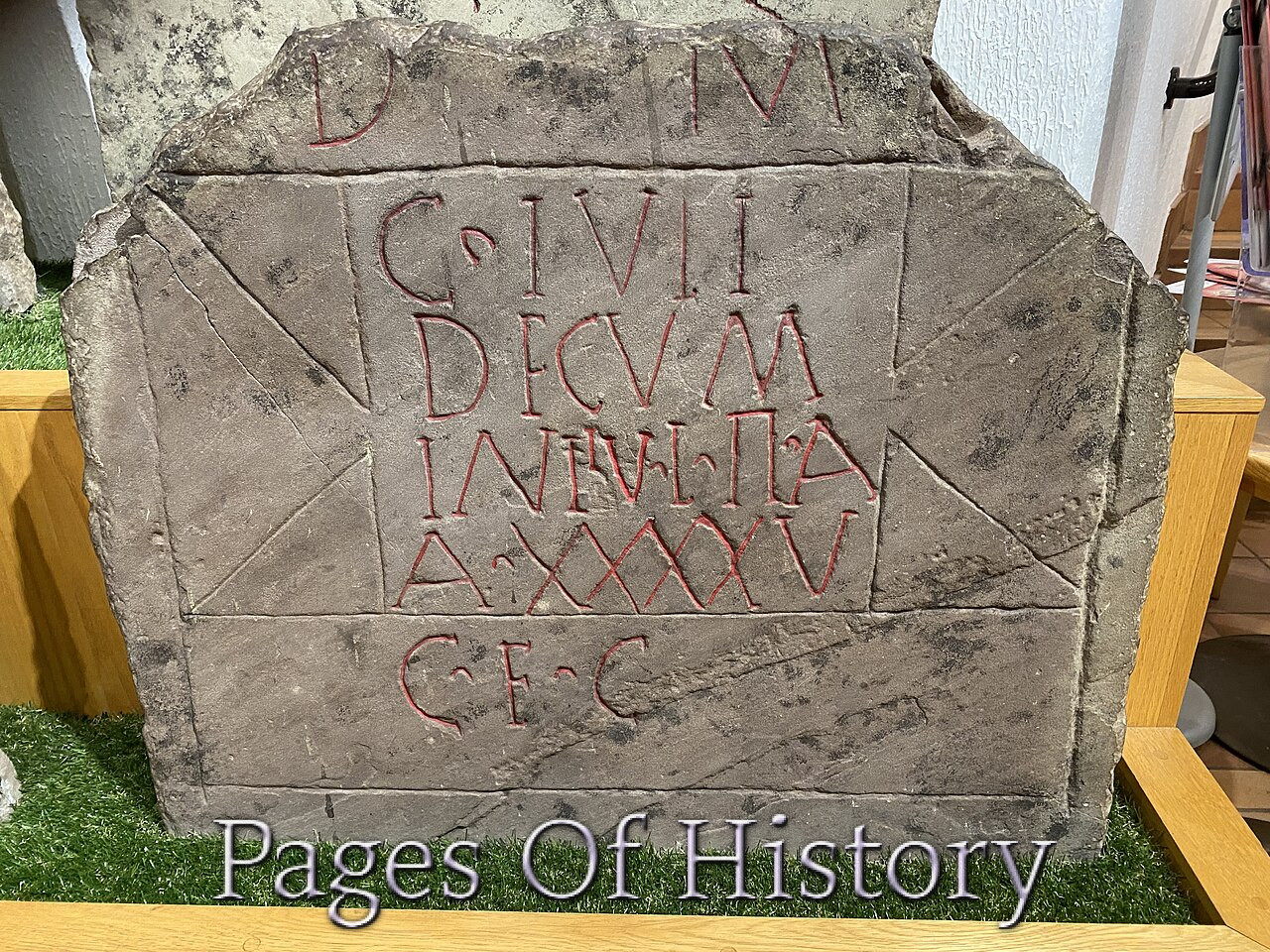
Following the Boudican revolt, the legion was rebuilt and continued to serve in Britain. By the late first century AD, it was stationed at Eboracum (modern York), a major Roman fortress in northern Britain. Its presence there is confirmed by inscriptions and archaeological evidence, including tombstones and dedicatory stones.
When Did the Ninth Legion Disappear from the Historical Record?
The Ninth Legion disappearance from written sources is the crux of the mystery. The last confirmed epigraphic evidence of Legio IX Hispana in Britain dates to around AD 108, from a dedication stone at York. After this point, references to the legion become scarce and ambiguous.
Some historians point to a tile stamp found at Nijmegen (in modern Netherlands) bearing the legion’s name, dated to around AD 104–105, suggesting the Ninth may have been transferred to the Rhine frontier. However, this evidence is contested. The legion’s name also appears in a list of legions from Rome dated to AD 130, but the entry is fragmentary and may refer to a different unit or a detachment.
The crucial gap in the record occurs around AD 120. The Roman historian Cassius Dio, writing in the early third century, mentions a serious revolt in Britain during the reign of Hadrian (AD 117–138), which required the emperor’s attention. Dio’s account, preserved in epitome form, states that Hadrian “was unable to subdue the Britons” and that the revolt was eventually quelled by a governor named Quintus Pompeius Falco. Some scholars have linked this revolt to the destruction of the Ninth Legion, arguing that the legion was annihilated during this uprising. However, Dio does not explicitly mention the Ninth Legion in this context.
The absence of the Ninth from later military records—particularly the Notitia Dignitatum, a late Roman document listing all military units—strongly suggests the legion ceased to exist by the early second century. Whether it was destroyed, disbanded, or absorbed into another unit remains unknown.
What Are the Main Theories Behind the Ninth Legion Disappearance?
The Ninth Legion disappearance has generated several competing theories, each with strengths and weaknesses. Understanding these theories requires careful attention to the available evidence and the gaps in the record.
The Destruction Theory: Annihilated in Battle
The most dramatic and popular theory holds that the Ninth Legion was annihilated in a single catastrophic battle, likely against Caledonian tribes in Scotland. This idea gained widespread traction through Rosemary Sutcliff’s 1954 novel The Eagle of the Ninth, which imagined the legion marching north of Hadrian’s Wall and vanishing into the Scottish mists. The novel inspired a 2011 film, The Eagle, further cementing the legend.
However, the destruction theory faces significant problems. First, no ancient source explicitly describes the annihilation of the Ninth Legion. Second, the legion’s last confirmed location was York, not Scotland, and there is no evidence of a major campaign north of Hadrian’s Wall during the period in question. Third, the Roman army was meticulous about recording defeats and disasters; the loss of an entire legion would have been a significant event, likely mentioned by historians such as Tacitus or Dio. The silence of the sources is telling.
The Disbandment Theory: Disgraced and Dissolved
An alternative theory suggests the Ninth Legion was disbanded due to poor performance or disloyalty. Roman legions could be disbanded for cowardice, mutiny, or political reasons. Some historians argue that the Ninth’s near-destruction during the Boudican revolt, and its subsequent rebuilding, may have left it with a tarnished reputation. If the legion performed poorly during the British revolt of AD 120, Hadrian may have ordered its disbandment as punishment.
Support for this theory comes from the fact that the Ninth Legion does not appear in later military records. Disbandment would explain the absence of the legion from the Notitia Dignitatum without requiring a dramatic battle. However, there is no direct evidence of disbandment, and the theory remains speculative.
The Transfer Theory: Relocated and Lost in the Record
A third theory proposes that the Ninth Legion was transferred from Britain to another frontier, possibly in Germania or the East, and was later destroyed or disbanded elsewhere. The tile stamp from Nijmegen supports the idea that the legion or a detachment was present on the Rhine frontier around AD 104–105. If the Ninth was transferred to Germania, its disappearance from British records would be explained by its relocation, not its destruction.
However, the Nijmegen evidence is ambiguous. Tile stamps can be misleading, as they may indicate the presence of a detachment rather than the entire legion. Moreover, the Ninth Legion’s name does not appear in later records from Germania either, suggesting that if it was transferred, it still vanished from history.
| Date | Event | Significance |
|---|---|---|
| AD 43 | Roman invasion of Britain under Claudius | Ninth Legion participates in the conquest |
| AD 60–61 | Boudican revolt | Ninth Legion nearly destroyed; rebuilt afterward |
| AD 71–74 | Campaigns of Cerialis in northern Britain | Ninth Legion stationed in the north, likely at York |
| AD 108 | Last confirmed inscription of Ninth Legion at York | Legion still active in Britain |
| AD 120 | Revolt in Britain under Hadrian | Possible context for the Ninth Legion disappearance |
| AD 130 | Fragmentary reference in Rome | Possible mention of the Ninth, but contested |
Why Is the Ninth Legion Disappearance So Famous?
The Ninth Legion disappearance has captured the popular imagination for several reasons. First, the idea of an entire legion vanishing without a trace is inherently dramatic. It evokes themes of mystery, sacrifice, and the limits of imperial power. Second, the story has been amplified by literature and film, particularly Sutcliff’s The Eagle of the Ninth, which presented the legion’s disappearance as a tragic and heroic mystery.
Third, the Ninth Legion disappearance touches on broader questions about Roman Britain and the nature of frontier warfare. The Roman Empire was vast and powerful, yet it was not invincible. The loss of a legion—whether through battle, disbandment, or transfer—would have been a significant blow to Roman prestige. The mystery of the Ninth Legion thus serves as a reminder that even the mightiest empires have their limits.
Fourth, the Ninth Legion disappearance has become a case study in how history is constructed. The absence of evidence is not evidence of absence, and the gaps in the historical record have allowed speculation to flourish. Historians must grapple with fragmentary sources, ambiguous inscriptions, and the biases of ancient writers. The Ninth Legion is a reminder that history is not a complete record but a puzzle with missing pieces.
What Does Archaeology Reveal About the Ninth Legion Disappearance?
Archaeology has played a crucial role in the study of the Ninth Legion, providing evidence that supplements and sometimes challenges the written sources. Excavations at York (Eboracum) have revealed the legionary fortress where the Ninth was stationed, including inscriptions and tombstones that confirm its presence. These finds help establish the legion’s location and activities in the late first century AD.
However, archaeology has not provided definitive evidence of the legion’s fate. No mass grave or battlefield site has been conclusively linked to the Ninth Legion’s destruction. The absence of such evidence weakens the destruction theory, though it does not rule it out entirely. Battles can leave few traces, and the remains of fallen soldiers might have been cremated or scattered.
Inscriptions and tile stamps bearing the legion’s name have been found at various sites, including Nijmegen and possibly London. These finds suggest the legion or its detachments moved around the province, but they do not resolve the mystery of its disappearance. The fragmentary nature of the evidence is a recurring theme in the study of the Ninth Legion.
How Have Historians Interpreted the Evidence?
Historians have approached the Ninth Legion disappearance with a mixture of caution and creativity. Some, like Sheppard Frere in his comprehensive study Britannia, have argued that the legion was likely destroyed in Britain during the revolt of AD 120. Others, such as Lawrence Keppie, have suggested that the legion may have been transferred to the Continent and later disbanded. The debate remains unresolved, and new evidence could shift the consensus.
The interpretation of Cassius Dio’s account is particularly important. Dio mentions a revolt in Britain during Hadrian’s reign but does not explicitly link it to the Ninth Legion. Some historians argue that Dio’s silence on the Ninth Legion is significant, suggesting the legion was not destroyed in battle. Others contend that Dio’s account is abbreviated and may have omitted details that would have clarified the legion’s fate.
The fragmentary reference to the Ninth Legion in a list from Rome dated to AD 130 is another point of contention. If the reference is genuine, it would suggest the legion still existed after AD 120, undermining the destruction theory. However, the fragment is damaged, and the reading is uncertain. Some scholars believe the reference may be to a different unit or a detachment.
What Are the Key Factors in the Ninth Legion Disappearance?
Several factors complicate the study of the Ninth Legion disappearance and must be considered in any analysis:
- Fragmentary sources: The ancient written sources are incomplete and often biased. Tacitus, Dio, and other historians wrote decades or centuries after the events they describe, and their accounts may be shaped by literary and political considerations.
- Ambiguous inscriptions: Inscriptions and tile stamps provide valuable evidence but can be misleading. A tile stamp may indicate the presence of a detachment rather than the entire legion, and inscriptions may be reused or moved.
- Lack of archaeological evidence: No battlefield or mass grave has been conclusively linked to the Ninth Legion’s destruction. The absence of such evidence does not prove the legion was not destroyed, but it weakens the case for a dramatic battle.
- Political and administrative context: The Roman army was a complex institution, and legions could be disbanded, transferred, or reorganized for a variety of reasons. The Ninth Legion’s disappearance may reflect administrative decisions rather than a single catastrophic event.
What Is the Legacy of the Ninth Legion Disappearance?
The Ninth Legion disappearance has left a lasting legacy in both history and popular culture. The story of the lost legion has inspired novels, films, and even music, becoming a symbol of mystery and the unknown. It has also stimulated archaeological and historical research, prompting scholars to re-examine the evidence and question long-held assumptions.
For historians, the Ninth Legion is a case study in the challenges of reconstructing the past from incomplete evidence. It highlights the importance of critical thinking, source analysis, and interdisciplinary approaches. The mystery of the Ninth Legion may never be fully solved, but the quest to understand its fate continues to illuminate the broader history of Roman Britain.
The Ninth Legion disappearance also serves as a reminder of the human cost of empire. The soldiers of the Ninth Legion were real people with families, hopes, and fears. Their fate—whether death in battle, disbandment, or transfer—represents the broader experience of Roman soldiers on the frontiers of the empire. The mystery of the Ninth Legion is, in the end, a human story.
Conclusion: What Really Happened to the Ninth Legion?
The Ninth Legion disappearance remains one of the most tantalizing mysteries of Roman history. The evidence is fragmentary, the sources are ambiguous, and the theories are numerous. What is clear is that the Ninth Legion ceased to exist by the early second century AD, but the exact circumstances of its disappearance remain unknown.
The most likely explanation, based on the available evidence, is that the Ninth Legion was either destroyed during a revolt in Britain around AD 120 or disbanded for poor performance. The transfer theory is also plausible, though it merely shifts the mystery to another location. The dramatic story of the legion marching into the Scottish mists and vanishing without a trace is almost certainly a myth, unsupported by the ancient sources.
The Ninth Legion disappearance is a reminder that history is not a complete record but a process of interpretation. The gaps in the evidence are not failures of history but invitations to further inquiry. The mystery of the Ninth Legion will continue to fascinate and perplex, a testament to the enduring power of the past and the human desire to understand it.