
📅 Last updated: 07.11.2026
The Battle of Agincourt, fought on 25 October 1415 in the muddy fields of northern France, stands as one of the most lopsided and consequential engagements in medieval military history. A weary, disease-ridden English army under King Henry V—outnumbered perhaps five to one and starving after a gruelling march—destroyed the flower of French chivalry in a few hours of savage fighting. The victory reshaped the Hundred Years’ War, cemented Henry’s claim to the French throne, and became a foundational legend of English national identity.
The Battle of Agincourt was fought on 25 October 1415 near the village of Azincourt in northern France. An English army of roughly 6,000–9,000 men under King Henry V defeated a French force of perhaps 20,000–30,000 under Charles d’Albret, Constable of France. English longbowmen and the confined, muddy battlefield neutralized French numerical superiority, and the French suffered catastrophic losses—thousands killed and hundreds captured, including leading nobles—while English casualties were comparatively light.
- What Caused the Battle of Agincourt? The Roots of the Hundred Years' War
- How Did the English Army March Into a Trap?
- How Did 6,000 English Defeat 30,000 French at the Battle of Agincourt?
- What Were the Casualties and Aftermath of the Battle of Agincourt?
- Why Did the Battle of Agincourt Matter So Much?
- How Has the Battle of Agincourt Been Remembered and Misremembered?
- What Can We Learn From the Battle of Agincourt Today?
What Caused the Battle of Agincourt? The Roots of the Hundred Years’ War
The battle did not erupt from nowhere. It was a chapter in the Hundred Years’ War (conventionally dated 1337–1453), a dynastic struggle triggered when the English Crown pressed its claim to the French throne. In 1415, Henry V revived that claim with unusual energy. His great-grandfather Edward III had been denied the French crown in 1337, and Henry now demanded not only the lands ceded by the 1360 Treaty of Brétigny but also the hand of Charles VI’s daughter Catherine and a substantial dowry.
France in 1415 was also fractured from within. King Charles VI suffered recurrent bouts of madness, leaving governance contested among rival noble factions—most prominently the Armagnacs and the Burgundians. The Burgundians, aggrieved by the 1407 assassination of Duke John the Fearless’s father Louis of Orléans, were willing to negotiate with the English. Henry exploited this division, opening secret channels with the Burgundians while publicly pressing his demands on the French court.
Henry landed at Chef-de-Caux near Harfleur on 13 August 1415 with an army of roughly 11,000–12,000 men. The siege of Harfleur took longer than expected, and dysentery ravaged the camp. By the time the town surrendered on 22 September, Henry’s force had shrunk to perhaps 6,000–9,000 effective soldiers. Rather than sail home, he chose to march his army overland through Normandy to Calais—a provocative demonstration of strength that would become a desperate gamble.
How Did the English Army March Into a Trap?
The march from Harfleur to Calais was a disaster in the making. Henry’s route crossed the Somme near its mouth, but French forces blocked the fords, forcing the English to march inland and search for a crossing. For days the army struggled eastward along the river, short of food and harried by French cavalry. Henry finally crossed the Somme near Voyennes and Péronne around 19–20 October, but by then a large French army had assembled and was shadowing him.
On 24 October, English scouts reported the French host blocking the road to Calais near the village of Azincourt. Henry’s men were exhausted, hungry, and outnumbered. He could have waited or sought terms, but he chose to fight—partly because retreat was impossible without battle, and partly because a victory would validate his entire expedition. That night he ordered his men to rest, hear Mass, and prepare for the fight.
The Armies at Dawn
The English deployed in a narrow gap between two woods—the woods of Tramecourt and Agincourt—which protected their flanks and forced the French into a confined front. Henry placed his dismounted men-at-arms in the center, with longbowmen on both wings and in small wedge formations between the men-at-arms. He also ordered sharpened stakes driven into the ground to blunt cavalry charges.
The French, under Charles d’Albret, Constable of France, formed a dense, deep formation of dismounted men-at-arms in the center, with cavalry on the wings. The French plan was to overwhelm the English with weight of numbers. But the terrain—recently ploughed, rain-soaked, and hemmed by woods—worked against them. Their deep ranks made it difficult to maneuver, and the confined ground meant only a fraction of their men could engage at once.
| Category | English | French |
|---|---|---|
| Commander | King Henry V | Charles d’Albret, Constable of France |
| Estimated strength | 6,000–9,000 (mostly longbowmen) | 20,000–30,000 (heavy on men-at-arms) |
| Composition | Longbowmen, dismounted men-at-arms | Dismounted men-at-arms, cavalry, crossbowmen |
| Terrain advantage | Narrow front between woods; defensive stakes | Confined, muddy field; deep ranks hard to deploy |
| Casualties (estimates) | Perhaps 100–600 killed | Several thousand killed; hundreds captured |
How Did 6,000 English Defeat 30,000 French at the Battle of Agincourt?
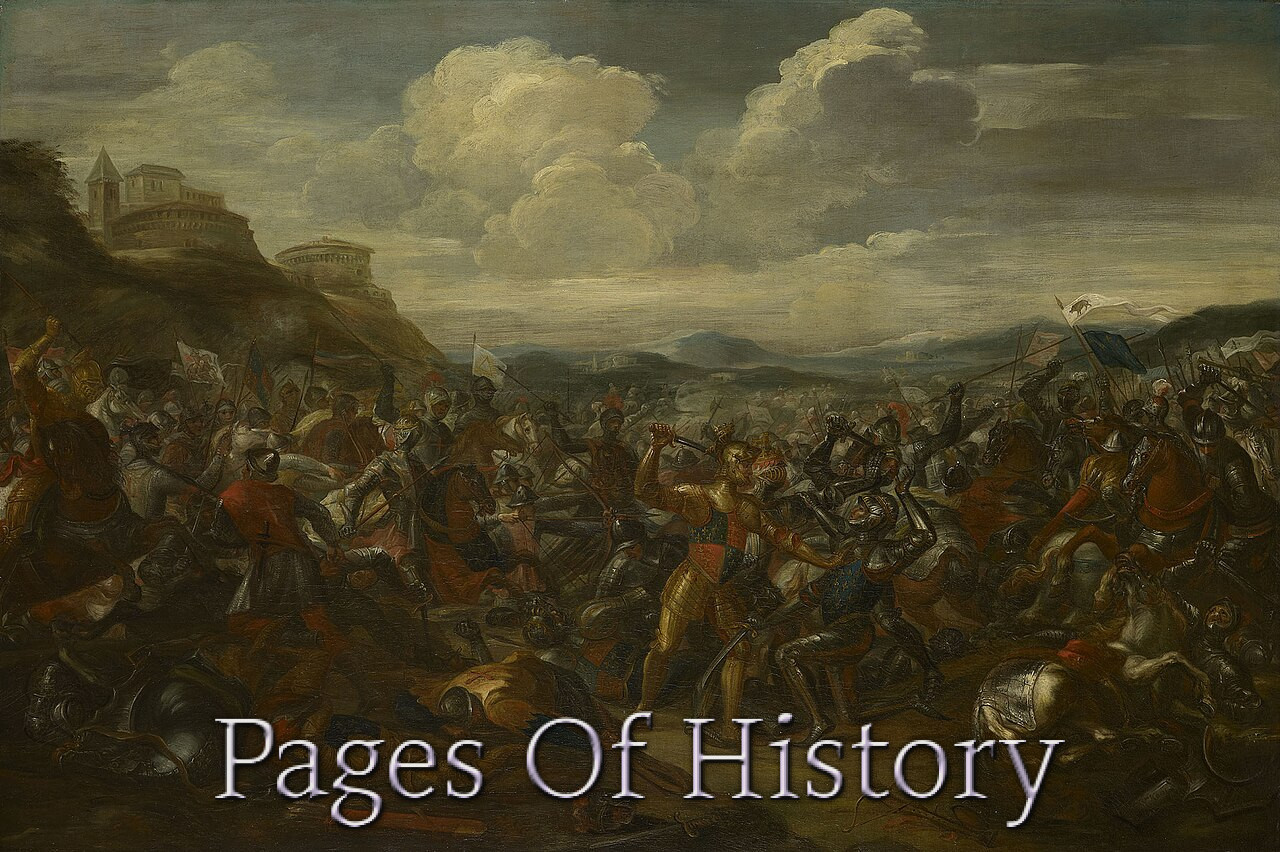
The battle opened in the late morning. The ground had been softened by heavy rain, and the French, advancing across a ploughed field, were slowed by mud and the weight of their armor. English longbowmen, positioned on the flanks and in the front ranks, loosed volleys that fell on the dense French formation. The arrows did not always pierce plate armor, but they wounded horses, disrupted ranks, and—crucially—forced the French cavalry to charge prematurely.
The French cavalry on the wings attempted to ride down the English archers, but the stakes and the muddy ground broke their charges. Those who reached the English line were met by dismounted men-at-arms and archers fighting hand-to-hand. The French center, advancing in a deep mass, became compressed in the narrow gap between the woods. Men in the front ranks were pushed forward by those behind, unable to retreat or maneuver.
The Longbow and the Mud
The longbow’s role has been debated for centuries. Modern scholarship suggests that while English archery was lethal and disruptive, the decisive factor was the combination of the confined battlefield, the muddy ground, and the French decision to dismount and advance in a dense formation. The French men-at-arms, many fighting on foot in heavy armor, tired quickly in the mud. As they reached the English line, they were met by fresh English men-at-arms and archers who attacked from the flanks.
The result was a slaughter. French knights and men-at-arms, packed together and exhausted, were cut down or taken prisoner. The English archers, lightly armored and mobile, swarmed the flanks and rear of the French formation. Within a few hours, the French army collapsed.
The Killing of the Prisoners
One of the most controversial episodes of the day came late in the battle. Henry, fearing that the large number of French prisoners might rise up and overwhelm his small army—especially after a rumored attack on the English baggage train—ordered the killing of many of the captives. Contemporary chroniclers, including the English writer Thomas Walsingham, recorded the order. The decision was brutal even by medieval standards and has been debated by historians ever since; some argue it was a necessary act of survival, others a stain on Henry’s conduct.
- Terrain: The narrow gap between the woods of Tramecourt and Agincourt forced the French into a confined front where numbers mattered less.
- Weather: Heavy rain turned the ploughed field into a muddy quagmire that exhausted and slowed the heavily armored French.
- Discipline: Henry’s men, though outnumbered and hungry, held their formation and fought as a coordinated force.
- French mistakes: The French chose to dismount and attack in dense ranks, and their cavalry charges were poorly coordinated.
- The longbow: English archery disrupted French formations and contributed to the collapse of the French advance.
What Were the Casualties and Aftermath of the Battle of Agincourt?
The scale of the French defeat was staggering. Contemporary and near-contemporary sources give wildly varying figures, but most historians estimate that several thousand Frenchmen were killed, including Charles d’Albret, the Constable of France; the Duke of Brabant; the Duke of Bar; and the Count of Nevers. Hundreds more, including the Duke of Orléans and the Marshal of France, were taken prisoner. English losses were comparatively light—perhaps a few hundred killed, though exact figures remain uncertain.
The victory had immediate strategic consequences. Henry returned to England in triumph and was greeted as a hero. In 1417 he launched a second campaign, conquering Normandy, and in 1420 the Treaty of Troyes recognized him as heir to the French throne and regent of France, and he married Catherine of Valois. For a brief moment, it seemed the English claim to France might be realized.
But the triumph was fragile. Henry died in 1422, just weeks before Charles VI, leaving an infant son, Henry VI, as king. The French resistance, galvanized by Joan of Arc from 1429, reversed the English gains. By 1453, the English had lost almost all their French territories except Calais. The Battle of Agincourt, however, remained a potent symbol.
Why Did the Battle of Agincourt Matter So Much?
Agincourt mattered because it demonstrated that a smaller, disciplined force could defeat a larger, more heavily armored one when terrain, weather, and tactics were favorable. It also exposed the weaknesses of French chivalric warfare—the reliance on heavy cavalry and dense formations—and the growing importance of infantry and missile troops.
Militarily, the battle accelerated a shift already underway in European warfare: the decline of the mounted knight as the dominant battlefield force and the rise of professional, disciplined infantry. The English longbow, though not a wonder weapon, became a symbol of English military prowess. The battle also shaped English national identity, celebrated in Shakespeare’s Henry V and in popular memory as a David-and-Goliath triumph.
How Has the Battle of Agincourt Been Remembered and Misremembered?
The battle has been mythologized almost from the day it was fought. Shakespeare’s Henry V, written around 1599, gave the world the St. Crispin’s Day speech—”We few, we happy few, we band of brothers”—and cemented the image of Henry as a heroic warrior-king. That image has been challenged by historians who note Henry’s ruthlessness, including the killing of prisoners at Agincourt and his harsh treatment of civilians during the Norman campaign.
Modern scholarship has also revised the numbers. The traditional figures of 6,000 English versus 30,000 French are probably exaggerated, though the English were certainly outnumbered. Estimates vary widely, and some historians argue the French may have had closer to 20,000–25,000 men, with many not engaged. The battle’s outcome was less a miracle than a product of specific tactical and environmental factors.
Agincourt also raises questions about the ethics of war. The killing of prisoners, the treatment of the dead, and the brutal realities of medieval combat are often glossed over in popular accounts. A balanced view acknowledges both the skill and discipline of the English army and the brutality of the age.
What Can We Learn From the Battle of Agincourt Today?
The Battle of Agincourt remains a case study in how leadership, discipline, and terrain can overcome numerical disadvantage. Henry V’s decision to fight rather than retreat, his careful deployment of his troops, and his ability to maintain morale in a starving, exhausted army were critical to the outcome. The French, by contrast, suffered from poor coordination, overconfidence, and a failure to adapt to the conditions.
The battle also reminds us that history is rarely simple. The English victory was real, but it was not inevitable, and it did not last. The Hundred Years’ War continued for decades after Agincourt, and the English ultimately lost. The battle’s legacy is a mixture of military innovation, national myth, and the sobering realities of medieval warfare.
For historians, Agincourt is a reminder to question sources, challenge legends, and appreciate the complexity of the past. For general readers, it is a gripping story of courage, folly, and the unpredictable nature of war—a story that has fascinated people for more than six centuries.