
📅 Last updated: 19.11.2026
The Indus Valley script is one of archaeology’s most stubborn mysteries: thousands of short inscriptions survive on seals, pottery, copper tablets, and ivory rods, yet not a single sign has been read with scholarly consensus. For more than a century, decipherment has resisted every technique that cracked Egyptian hieroglyphs and Mesopotamian cuneiform.
The Indus Valley script (also called the Harappan script) is a corpus of roughly 4,000–5,000 inscribed objects bearing about 400–600 distinct signs, used by the Bronze Age cities of Mohenjo-daro, Harappa, and Dholavira (c. 2600–1900 BCE). It remains undeciphered because no bilingual text exists, inscriptions are extremely short (averaging about five signs), the underlying language is unknown, and there is no confirmed link to any later writing system.
- What Exactly Is the Indus Valley Script?
- Why Has the Indus Valley Script Never Been Deciphered?
- What Do We Actually Know About the Indus Valley Script?
- Rival Theories: Dravidian, Indo-Aryan, or Neither?
- Why the Indus Valley Script Matters Beyond Decipherment
- What Would It Take to Read the Indus Valley Script?
- The Lasting Silence of the Indus Valley Script
What Exactly Is the Indus Valley Script?
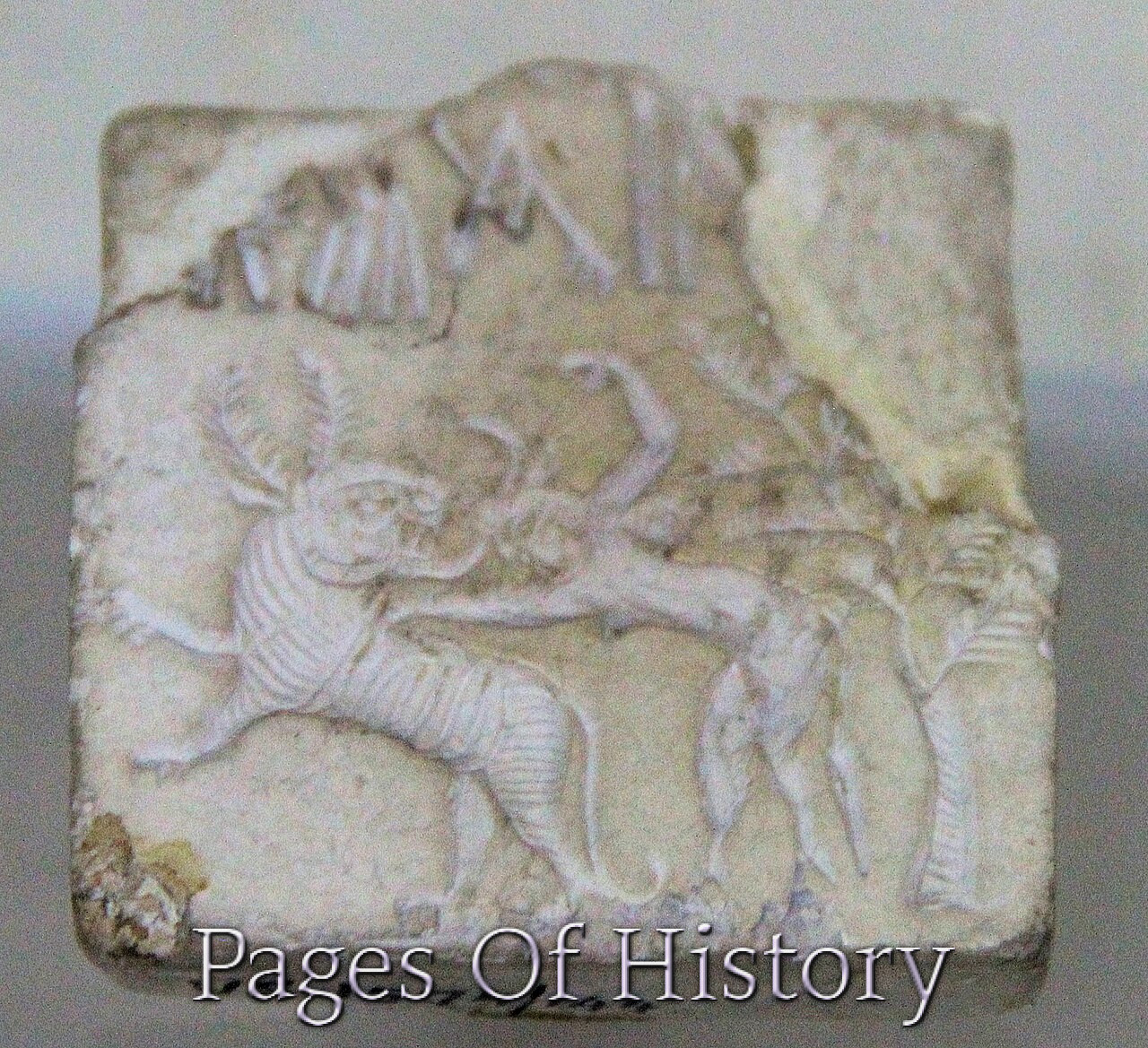
The script appears suddenly in the archaeological record around 2600 BCE, at the height of what scholars call the Mature Harappan phase, and it fades with the cities themselves by about 1900 BCE. Its signs are found on thousands of small, square steatite seals, on pottery sherds, on copper tablets, on miniature tablets, and on a handful of larger signboards—most famously the Dholavira signboard, discovered in the 1990s at the Gujarat site, whose ten large signs were once mounted on a wooden board at a city gateway.
The corpus is deceptively small. Iravatham Mahadevan’s 1977 concordance catalogued 3,700 objects and 417 distinct signs; other counts range from about 400 to over 600 depending on how variants are grouped. Most inscriptions are astonishingly brief. Roughly half consist of a single sign; the longest known single-surface inscription, on a seal from Mohenjo-daro, runs to about 17 signs. There are no long texts, no letters, no literary tablets—nothing resembling the thousands of lines of administrative records that survived from Mesopotamia.
What the signs look like
The symbols are pictorial in origin but highly stylized: a fish, a jar, a horned animal, a human figure with a bow, comb-like and ladder-like shapes, and many abstract geometric forms. Crucially, the signs were standardized across a territory larger than modern Pakistan—from Sutkagen-dor on the Iranian border to Alamgirpur in Uttar Pradesh—which strongly suggests a real, functioning writing system rather than a loose set of potters’ marks.
Why Has the Indus Valley Script Never Been Deciphered?
Decipherment of an unknown script in an unknown language is a fundamentally different problem from reading a known language in an unknown script. When Jean-François Champollion read the Rosetta Stone in 1822, he had three advantages the Indus scholar lacks: a trilingual text, a known underlying language (Egyptian, related to Coptic), and long, repetitive inscriptions. The Harappan case offers none of these.
The missing bilingual
No object has ever been found bearing the same text in both Indus script and a known script such as Akkadian cuneiform. Mesopotamian merchants traded with Meluhha—widely identified with the Indus region—and Akkadian texts from the 23rd century BCE mention Meluhhan interpreters, yet not one bilingual document has surfaced. Without a Rosetta Stone, scholars cannot anchor a single sign to a known word.
Texts too short to analyze statistically
Computational approaches depend on volume. The entire Indus corpus contains perhaps 15,000–20,000 sign occurrences—less than a single page of a modest book. Compare that to the Linear B corpus, which Michael Ventris decoded in 1952 using thousands of tablets from Knossos and Pylos. Short texts defeat frequency analysis, positional analysis, and most machine-learning methods, which need long sequences to learn patterns.
The language problem
Even if the signs were phonetically identified, scholars would still need to know what language they encode. Candidates include a Dravidian language (argued most forcefully by Asko Parpola and Iravatham Mahadevan), an early Indo-Aryan language (proposed by S. R. Rao and others), a Munda or Austroasiatic language, or a language isolate with no surviving relatives. Each hypothesis reshapes how signs are interpreted—and none has produced a generally accepted reading.
- No bilingual text links the script to a known language.
- Extremely short inscriptions (averaging about five signs) block statistical decipherment.
- Unknown underlying language means even correct phonetic values might yield gibberish.
- No confirmed descendant script provides a bridge to later writing systems.
- Limited excavation of inscribed contexts leaves sign meanings without archaeological anchors.
What Do We Actually Know About the Indus Valley Script?
Despite the failure to read it, scholarship has established a surprising amount about how the script functioned. Structural analysis shows that inscriptions follow consistent rules: certain signs cluster at the beginning of texts, others at the end, and specific sequences recur across sites hundreds of kilometers apart. This regularity is the strongest evidence that the signs encode language rather than mere symbols.
Direction of writing
Most scholars agree the script was written right to left, based on signs that appear cramped or compressed on the left edge of seals—the way a scribe runs out of space. Some longer texts show boustrophedon patterns, alternating direction line by line, as in early Greek inscriptions.
Seals and their function
Most inscriptions sit on stamp seals, which were pressed into clay to mark trade goods. The seals typically pair a short text with an animal motif—the unicorn-like one-horned beast, the zebu bull, the elephant, the rhinoceros, the tiger. Many scholars read the text as a name and title: “So-and-so, merchant of such-and-such a guild.” If so, the corpus is overwhelmingly onomastic—lists of personal names—which is precisely the genre hardest to decipher without external anchors.
Key figures and milestones
The script was first noticed in the 1870s, when Alexander Cunningham published a seal from Harappa. Excavations at Mohenjo-daro and Harappa by John Marshall, Daya Ram Sahni, and R. D. Banerji in the 1920s brought the script to worldwide attention. Since then, major contributions have come from Mahadevan’s concordance, Parpola’s decades of structural work, and the 2025 announcement by Tamil Nadu chief minister M. K. Stalin of a ₹2 crore prize for successful decipherment—a reminder of how much cultural weight the problem still carries in South Asia.
| Period / Milestone | Date | Significance for Decipherment |
|---|---|---|
| First seal published | 1875 (Cunningham) | Brings Harappan seals to scholarly attention |
| Mohenjo-daro & Harappa excavated | 1921–1927 | Establishes the civilization; thousands of inscribed objects recovered |
| Mahadevan’s concordance | 1977 | Standard catalogue of 3,700 objects and 417 signs |
| Dholavira signboard found | 1990s | Largest single inscription, ten large signs |
| Computational decipherment attempts | 2004–present | Statistical and machine-learning studies; no consensus reading |
| Tamil Nadu decipherment prize announced | 2025 | Renews public and political interest in the script |
Rival Theories: Dravidian, Indo-Aryan, or Neither?
The fiercest debates over the Indus Valley script concern the language behind it—debates inseparable from modern identity politics in India and Pakistan.
The Dravidian hypothesis
Asko Parpola, a Finnish Indologist, has argued since the 1960s that the script encodes a proto-Dravidian language, pointing to sign frequencies that match Dravidian grammar and to loanwords in later Sanskrit. Iravatham Mahadevan supported this view and proposed readings of specific sign sequences as titles such as “king” or “merchant.” The hypothesis remains the most influential but is unproven; critics note that many claimed readings rely on circular reasoning.
The Indo-Aryan hypothesis
Some Indian scholars, including S. R. Rao, have argued the script is an early form of Indo-Aryan, tying it to the Vedic tradition. Most linguists reject this on chronological grounds: the Vedic corpus is generally dated to after 1500 BCE, centuries after the script fell out of use, and no genetic link to later Brahmi has been demonstrated.
The “not a language” challenge
A minority position, argued by scholars such as Steve Farmer, Richard Sproat, and Michael Witzel in a 2004 paper, holds that the Indus signs may not encode language at all—that they are non-linguistic symbols, emblems of rank or clan, used in a way similar to heraldry. The thesis provoked sharp rebuttals from Parpola and others, who point to the script’s rigid positional structure as evidence of grammar. The debate remains unresolved.
Why the Indus Valley Script Matters Beyond Decipherment
The script’s silence has real consequences for how we understand one of the world’s great early civilizations. Unlike Egypt or Mesopotamia, the Indus cities have left us no kings’ names, no laws, no literature, and no recorded myths. We know Mohenjo-daro had grid-planned streets, covered drains, and a Great Bath, but we do not know what its inhabitants called themselves, what gods they worshipped, or how they governed.
Decipherment would not merely satisfy curiosity. It would let historians test hypotheses about Harappan administration, trade, religion, and social organization against primary testimony rather than inference from material remains. It would also clarify the relationship between the Indus cities and later South Asian cultures—a question with enormous historical and cultural stakes.
What Would It Take to Read the Indus Valley Script?
Most specialists agree that a genuine breakthrough will require new evidence rather than new cleverness. Four developments could crack the problem:
- A bilingual inscription—ideally a Harappan seal found in a Mesopotamian context with cuneiform alongside it.
- A long text—a library, archive, or monumental inscription of dozens or hundreds of signs.
- New excavations at unexcavated Harappan sites, particularly in Gujarat and the Ghaggar-Hakra region, where inscribed material may survive in waterlogged or sealed contexts.
- Rigorous computational work that treats the corpus honestly, testing hypotheses rather than confirming them.
Until then, every proposed reading—whether Dravidian, Indo-Aryan, or otherwise—remains a hypothesis. The responsible position is to say plainly what the evidence supports and what it does not.
The Lasting Silence of the Indus Valley Script
The Indus Valley script stands as a reminder that writing is not self-explanatory. A civilization can be sophisticated, literate, and urbanized—and still leave its words locked behind a code we cannot break. The Harappans built cities with standardized bricks and calibrated weights, traded across the Arabian Sea, and stamped their goods with signs used consistently for six centuries. Yet those signs remain mute.
That silence is not a failure of the Harappans but a challenge to us. It cautions against the assumption that archaeology alone can reconstruct a past society, and it shows how much of human history depends on the accident of preservation. Champollion needed a stone; Ventris needed a cache of tablets. The Indus Valley script may yet yield its secrets—but only if the ground gives up the evidence that scholars have sought for a hundred and fifty years.