
📅 Last updated: 19.11.2026
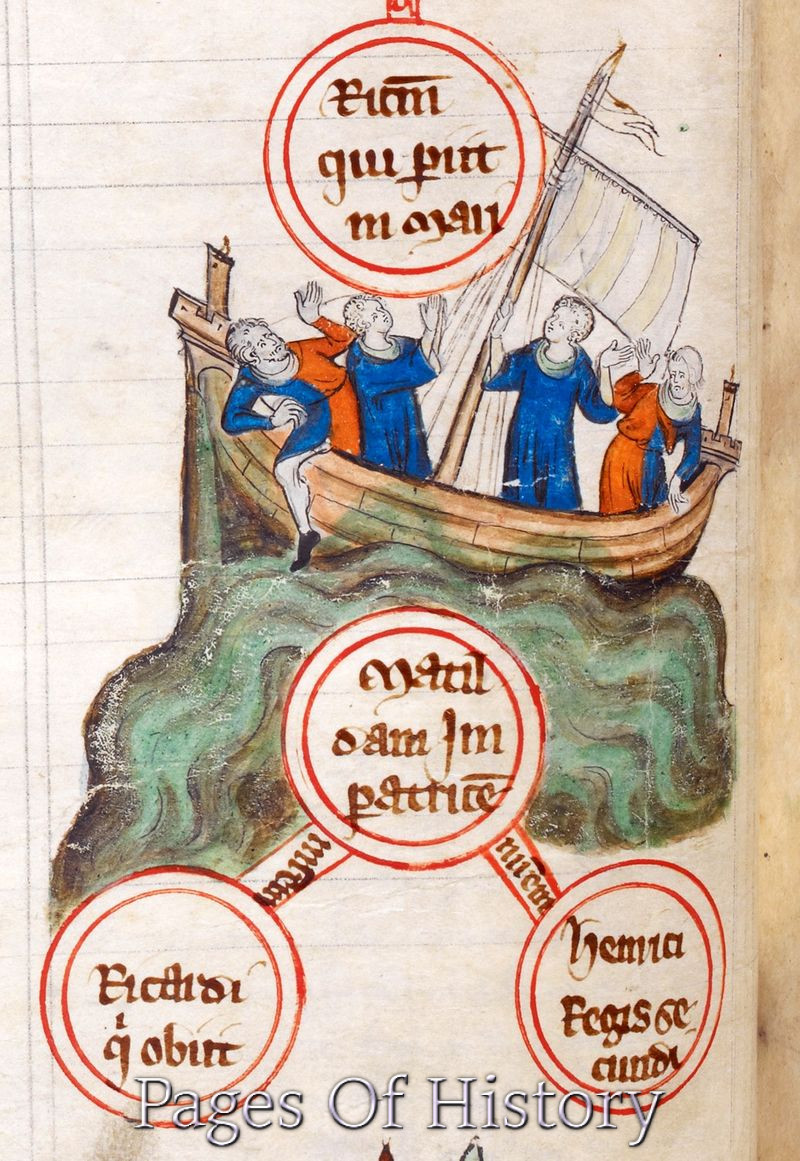
The White Ship disaster of 1120 remains one of the most consequential maritime tragedies in European history, a single night of drunken negligence that shattered a royal dynasty and set the stage for nearly two decades of civil war in England. On the evening of 25 November 1120, the finest vessel in the Anglo-Norman fleet struck a submerged rock off the coast of Normandy and sank within minutes, drowning nearly everyone aboard—including William Ætheling, the only legitimate son of King Henry I. The catastrophe did not merely claim a prince; it severed the direct male line of the Norman dynasty and plunged England into the anarchy that followed Henry’s death in 1135.
The White Ship disaster occurred on 25 November 1120 when the vessel carrying William Ætheling, heir to the English throne, sank off Barfleur in Normandy. Approximately 300 passengers and crew drowned, leaving King Henry I without a legitimate male heir. The succession crisis that followed led directly to the period of civil war known as The Anarchy (1135–1154) between Stephen of Blois and Empress Matilda.
- What Was the White Ship Disaster?
- Why Did the White Ship Sink? Causes and Culpability
- The White Ship Disaster and the Succession Crisis
- Contemporary Accounts: The Chroniclers' Testimony
- Why Did the White Ship Disaster Matter So Much?
- What Can We Learn from the White Ship Disaster?
- The White Ship Disaster in Memory and Myth
- Conclusion: A Night That Changed England
What Was the White Ship Disaster?
The White Ship (Blanche Nef in Norman French) was a sleek, newly refitted vessel commanded by Thomas FitzStephen, a skilled mariner whose father had served William the Conqueror. The ship belonged to the Anglo-Norman royal fleet and was considered among the finest vessels of its day. On 25 November 1120, it was moored at the port of Barfleur on the Cotentin Peninsula in Normandy, prepared to carry the royal household back to England after a successful campaign to suppress rebellion among Norman barons.
King Henry I had already departed aboard a separate ship earlier that evening, leaving his son and heir, William Ætheling, to follow with a younger cohort of nobles and courtiers. What unfolded next was a catastrophe born of celebration, alcohol, and youthful recklessness. The ship’s crew and passengers—estimated at around 300 by most chroniclers—demanded wine and drank heavily while still in port. When the vessel finally departed after nightfall, the pilot misjudged the treacherous waters of the Barfleur roads, and the port side of the ship struck a submerged rock known as the Quillebœuf. The hull was breached, and the White Ship went down in minutes.
The Key Figures Aboard
The loss extended far beyond the heir to the throne. Among the drowned were some of the most prominent figures of the Anglo-Norman aristocracy:
- William Ætheling – The only legitimate son of Henry I and his queen, Matilda of Scotland, born in 1103 and married to Matilda of Anjou just months before the disaster.
- Richard of Lincoln – An illegitimate son of Henry I, half-brother to William.
- Richard d’Avranches, 2nd Earl of Chester – A leading magnate of the Welsh Marches.
- Ottuel d’Avranches – The earl’s brother and a royal tutor.
- Geoffrey Ridel – A royal justice and close advisor to the king.
- William Bigod – Son of the Earl of Norfolk.
Only one man survived: Berold, a butcher from Rouen, who clung to the ship’s mast through the night and was rescued the following morning. His testimony, preserved in the chronicles of Orderic Vitalis and William of Malmesbury, provides the most detailed account of the tragedy.
Why Did the White Ship Sink? Causes and Culpability
The causes of the White Ship disaster were multiple and interlocking, but contemporary chroniclers placed the heaviest blame on drunkenness and the breakdown of discipline aboard the vessel. Orderic Vitalis, writing in his Historia Ecclesiastica, records that the young nobles “drank and made merry” and that the crew joined them, demanding three measures of wine each. By the time the ship departed, the sailors were intoxicated and the passengers were in no condition to assist with navigation.
The Role of Alcohol and Overcrowding
The White Ship was designed to carry a large complement, but the passengers aboard that night exceeded safe limits. The vessel was packed with nobles, their retainers, and crew, all celebrating the end of the Norman campaign. The combination of alcohol-impaired judgment and a crowded deck made the ship difficult to maneuver. When the pilot attempted to steer away from the rocky shoreline, the vessel’s port side scraped the Quillebœuf rock, opening a fatal breach in the hull.
The Pilot’s Fatal Error
Thomas FitzStephen, the ship’s captain, had a reputation for skill, but he made a critical navigational error. Rather than following the king’s ship safely out to open water, he attempted to overtake it—a decision likely fueled by pride and the urging of the drunken passengers. The White Ship was rowed hard toward the open sea, but the tide and the darkness conspired against it. The rock of Quillebœuf lay just beneath the surface, invisible in the night, and the ship struck it with devastating force.
The Failed Rescue Attempt
According to Berold’s account, as the ship began to sink, a small boat was launched and William Ætheling was pulled aboard. He might have survived. But when he heard the cries of his half-sister, Matilda, Countess of Perche, begging for help, he ordered the boat to turn back. The overloaded skiff capsized, and all aboard were lost. This act of chivalric devotion—however noble—sealed the fate of the dynasty.
The White Ship Disaster and the Succession Crisis
The immediate aftermath of the White Ship disaster was a period of profound grief and political uncertainty. Henry I, who had already lost his wife Matilda in 1118, was devastated by the death of his son. The Anglo-Saxon Chronicle records that “no ship ever brought so much misery to England.” The king reportedly never smiled again after receiving the news.
The longer-term consequences were even more severe. Henry I had fathered numerous illegitimate children, but only one legitimate son. With William dead, the succession was thrown into doubt. Henry’s only remaining legitimate child was his daughter Matilda (sometimes called Maud), who had been married to the Holy Roman Emperor Henry V and was now the widow of the Count of Anjou, Geoffrey Plantagenet. In 1127, Henry compelled his barons to swear allegiance to Matilda as his heir, but the oath was deeply unpopular. The Norman barons were unaccustomed to female rule, and Matilda’s marriage to Geoffrey of Anjou—a traditional enemy of Normandy—made her doubly suspect.
The Path to The Anarchy
When Henry I died in December 1135, the carefully constructed oath collapsed. Stephen of Blois, Henry’s nephew and a grandson of William the Conqueror, seized the throne with the support of the English barons and the Church. Matilda, backed by her half-brother Robert of Gloucester and a faction of Norman nobles, contested the succession. The result was nearly two decades of civil war, known to historians as The Anarchy, characterized by sieges, raids, and the breakdown of royal authority. The White Ship disaster was the spark that ignited this conflagration.
| Date | Event | Significance |
|---|---|---|
| 25 November 1120 | The White Ship strikes the Quillebœuf rock and sinks | William Ætheling and ~300 others drown; Henry I loses his only legitimate son |
| 1121–1126 | Henry I searches for a new heir | His daughter Matilda is recalled to England and named successor |
| 1 January 1127 | Barons swear allegiance to Matilda | The oath is later broken, leading to civil war |
| 1 December 1135 | Henry I dies at Lyons-la-Forêt | Stephen of Blois seizes the throne, triggering The Anarchy |
| 1135–1154 | The Anarchy | Nineteen years of civil war between Stephen and Matilda |
| 1153 | Treaty of Wallingford | Stephen recognizes Matilda’s son Henry as heir, ending the conflict |
Contemporary Accounts: The Chroniclers’ Testimony
The primary sources for the White Ship disaster are remarkably detailed, thanks to the survival of several contemporary chronicles. Orderic Vitalis, an Anglo-Norman monk writing at Saint-Évroult in Normandy, provides the most comprehensive narrative. His account emphasizes the moral dimension of the tragedy—a cautionary tale about the sins of pride, drunkenness, and youthful folly. William of Malmesbury, writing in England, offers a more restrained but equally poignant account, focusing on the political consequences.
Henry of Huntingdon, another Anglo-Saxon chronicler, records the grief of the king and the sense of national calamity. The Anglo-Saxon Chronicle, the great vernacular record of English history, notes simply that “the sea was calm and the ship was new,” underscoring the preventable nature of the loss. These accounts, though written with moral and political agendas, converge on the essential facts: the ship sank due to navigational error compounded by drunkenness, and the heir to the throne perished.
Berold’s Eyewitness Testimony
The butcher Berold’s account, preserved through Orderic Vitalis, provides a rare glimpse into the human experience of the disaster. He recalled hearing the cries of the drowning nobles, the panic on deck, and the desperate scramble for the ship’s mast. His survival—clinging to the mast through the cold November night—was considered miraculous. His testimony confirms the drunkenness of the crew and passengers and the failure of the rescue attempt.
Why Did the White Ship Disaster Matter So Much?
The significance of the White Ship disaster lies not only in the loss of life but in its dynastic and political consequences. The death of William Ætheling eliminated the direct male line of the Norman dynasty established by William the Conqueror in 1066. This created a succession vacuum that no amount of oath-taking could fill. The Norman and Anglo-Norman barons, accustomed to strong male leadership, were unwilling to accept a female ruler, especially one married to an Angevin—a traditional rival.
The disaster also exposed the fragility of medieval royal succession. Henry I had spent decades consolidating his power, building a sophisticated administrative system, and securing the loyalty of his barons. Yet all of this was undone in a single night. The White Ship disaster demonstrated that even the most powerful medieval monarch could be brought low by chance and the recklessness of his heirs.
The Long-Term Legacy: The Plantagenet Dynasty
The ultimate irony of the White Ship disaster is that it paved the way for the Plantagenet dynasty, one of the most powerful royal houses in English history. Matilda’s son by Geoffrey of Anjou, Henry FitzEmpress, eventually succeeded to the throne as Henry II in 1154, ending The Anarchy and founding the Plantagenet line. Henry II’s descendants would rule England for over three centuries, transforming the kingdom and shaping its legal and political institutions. The White Ship disaster, in a profound historical irony, ensured that the English crown would pass to a new and more dynamic dynasty.
What Can We Learn from the White Ship Disaster?
The White Ship disaster offers several enduring lessons for historians and general readers alike. First, it illustrates the vulnerability of medieval monarchy to accidents of fate. The loss of a single heir could destabilize an entire kingdom. Second, it highlights the dangers of alcohol and indiscipline in high-stakes situations—a lesson as relevant today as it was in 1120. Third, it demonstrates how political decisions—such as the oath to Matilda—can be undone by self-interest and prejudice.
- The fragility of dynastic succession: A single accident can alter the course of history.
- The consequences of negligence: Drunkenness and overconfidence led to a preventable tragedy.
- The limits of royal authority: Even a powerful king could not control the actions of his heirs or the loyalty of his barons.
For historians, the White Ship disaster is a case study in how to reconstruct a historical event from fragmentary and sometimes contradictory sources. The chronicles of Orderic Vitalis, William of Malmesbury, and Henry of Huntingdon each offer different perspectives, shaped by their authors’ moral and political concerns. Together, they provide a rich and nuanced picture of a night that changed English history.
The White Ship Disaster in Memory and Myth
The White Ship disaster has resonated through English literature and culture for centuries. It has been the subject of poems, novels, and historical studies, each exploring different aspects of the tragedy. The image of the drunken young nobles, the desperate rescue attempt, and the grief-stricken king has captured the imagination of generations. The disaster has also been used as a moral parable, warning against the dangers of pride and excess.
In modern times, the White Ship disaster has been the subject of archaeological and historical research, though no wreck has ever been conclusively identified. The site of the sinking, off the coast of Barfleur, remains a place of historical interest. The disaster continues to be studied by scholars of medieval England, who see it as a pivotal moment in the transition from Norman to Plantagenet rule.
Conclusion: A Night That Changed England
The White Ship disaster was a tragedy of Shakespearean proportions: a single night of drunken revelry, a navigational error, and the loss of a dynasty’s future. The death of William Ætheling in the cold waters off Barfleur on 25 November 1120 set in motion a chain of events that led to civil war, the rise of the Plantagenets, and the transformation of English monarchy. The White Ship disaster remains a powerful reminder that history can turn on the smallest of moments—a pilot’s miscalculation, a drunken cheer, a prince’s chivalric impulse. For England, the cost of that night was measured not only in lives lost but in the decades of conflict that followed. The White Ship disaster stands as one of the most consequential maritime tragedies in history, a single event that reshaped the destiny of a nation.