
📅 Last updated: 29.08.2026
The Terracotta Army purpose was not merely decorative; it was a profoundly functional, spiritual, and political undertaking designed to replicate and secure an entire imperial existence for eternity. Buried approximately 1.5 kilometers east of the tomb mound of Qin Shi Huang, the first Emperor of China, near the modern city of Xi’an in Shaanxi Province, this vast necropolis of over 8,000 life-sized soldiers, 130 chariots, and 670 horses was a microcosm of the emperor’s earthly power, meticulously engineered to serve him in the afterlife. It was a declaration that his rule, which had unified a fractured land through brutal conquest and draconian law, would extend indefinitely beyond the veil of death, a silent, clay-bound army standing sentinel for over two millennia.
- The Cosmic Blueprint: Aligning the Tomb with the Universe
- An Army for Eternity: The Composition and Hierarchy of the Pits
- The Political Imperative: Legitimacy and the Unification of China
- Technological and Artisanal Marvels: How the Army Was Built
- The Violent Aftermath: Destruction, Defacement, and the Fall of Qin
- Unfinished Business: The Incomplete Sections and Imperial Obsession
- The Modern Discovery and a New Purpose
- The Eternal Sentinel: Power, Belief, and the Legacy of the Clay Warriors
The Cosmic Blueprint: Aligning the Tomb with the Universe
To understand the Terracotta Army purpose, one must first understand the cosmological framework of the Qin state. The First Emperor did not view his tomb as a simple burial site, but as an entire cosmos, a reflection of the world he had conquered and the celestial order he believed he embodied. The Records of the Grand Historian (Shiji), written by Sima Qian in the 1st century BC, provides the crucial textual evidence. Sima Qian describes a tomb complex that was a veritable underground palace:
“They built models of palaces, pavilions, and offices, and filled the place with fine vessels, precious stones, and rare objects. They had artisans construct crossbows and arrows rigged to shoot anyone who attempted to break in. They made rivers and seas of mercury and had them mechanically pumped to flow into one another. The ceiling was decorated with astronomical patterns, and the floor with geographical formations.”
This description reveals a critical dimension of the Terracotta Army purpose: it was part of a grand, unified scheme to recreate the known universe beneath the earth. The tomb mound itself, called Lishan, was designed to mimic the sacred mountains of the mortal realm, while the interior with its mercury rivers and jeweled ceiling replicated the geography and the heavens above. In this context, the army was not an isolated feature; it was the imperial guard for this cosmic palace. They were the soldiers who would protect the emperor’s soul in this meticulously crafted microcosm, ensuring that the order of his reign—the strict hierarchy of Qin law—was maintained in the world beyond. The positioning of the pits, east of the tomb, was also symbolic. The east was the direction of the sunrise and origin of the emperor’s ancestral homeland, and it was also the direction from which his primary enemies, the other six warring states, had historically launched their attacks. The army was thus a defensive bulwark, facing the most significant directional threat to his eternal sovereignty.
An Army for Eternity: The Composition and Hierarchy of the Pits
The Terracotta Army purpose becomes even clearer when examining the meticulous organization of the archaeological pits themselves. The army is not a chaotic mob of clay figures; it is a highly structured military force, mirroring the actual Qin military organization that had proven so effective during the unification campaigns (230-221 BC).
Pit 1: The Main Force
Pit 1, the largest and most dramatic, covers an area of over 14,000 square meters. It contains the main body of the army: an estimated 6,000 infantrymen and archers arranged in a rectangular battle formation. The front line consists of archers and crossbowmen, deployed in three rows, unprotected by armor, suggesting a formation meant to unleash a devastating initial volley. Behind them stand the main infantry force, heavily armored and armed with spears, halberds, and swords. The flanks and rear are guarded by outward-facing soldiers, a defensive detail that proves the entire formation was designed for actual tactical deployment. This was not a mere parade ground assembly; it was a living battle plan frozen in clay.
Pit 2: The Mobile Strike Force
Located to the northeast of Pit 1, Pit 2 is smaller but more tactically complex. It contains a more mixed force, including cavalry, chariots, and archers. Archaeologists have identified four distinct military units within this pit: a unit of archers, a chariot unit, a mixed unit of chariot and infantry, and a cavalry unit. This pit appears to represent the more flexible, mobile elements of the Qin army—the reserve forces that could be deployed to exploit a breakthrough or respond to a flanking maneuver. The presence of cavalrymen with their distinctive caps and tighter-fitting tunics, and the detailed horses with their braided tails and flared nostrils, shows the immense skill of the imperial artisans who sought to capture every nuance of military life.
Pit 3: The Command Center
Pit 3 is the smallest of the three main pits, but for historians, it is perhaps the most revealing. It is shaped like a “U” and contains a single chariot, 68 soldiers, and a set of deer antlers and animal bones, which are likely the remains of a divination ritual performed before battle. This pit is widely considered to be the command headquarters, the “head” of the army. The soldiers here are officers, distinguished by their more elaborate armor and headwear. The presence of the ritual remains underscores that the Qin military operated not only on strategy but also on a belief in the need for spiritual guidance and divine sanction. The Terracotta Army purpose here was to provide the emperor with his general staff, the brain to direct the muscle of Pits 1 and 2 in the next world.
The differences in rank and role are physically encoded in the statues. Generals wear a distinctive cap with a pheasant feather and armor composed of small, overlapping plates. Officers wear a different style of cap and a tunic with a more complex pattern. The common infantryman is depicted in simpler, more practical garb. This strict hierarchy is a direct reflection of the Qin legalist philosophy, which prized order, discipline, and clearly defined roles. The army was a perfect machine, and in death, as in life, every soldier had his place.
| Pit Number | Estimated Size (Area) | Primary Contents | Military Function |
|---|---|---|---|
| Pit 1 | 14,260 sq meters | ~6,000 infantry and archers | Main battle formation (front-line force) |
| Pit 2 | 6,000 sq meters | ~1,300 figures, cavalry, chariots, archers | Mobile strike force and reserve units |
| Pit 3 | 520 sq meters | 68 officers, 1 chariot, ritual objects | Command headquarters (the “brain” of the army) |
The Political Imperative: Legitimacy and the Unification of China
Beyond the spiritual and military considerations, the Terracotta Army purpose was intensely political. Qin Shi Huang, born Ying Zheng in 259 BC, had achieved what no ruler before him had managed: the complete and total subjugation of the six other major Chinese states (Han, Zhao, Wei, Chu, Yan, and Qi) by 221 BC. This unification was a monumental achievement, but it was also fragile. The conquered peoples, who had centuries-old cultural and political identities, did not simply dissolve overnight. The emperor needed to project an image of absolute, unassailable power to quell any thoughts of rebellion.
The army served as a permanent, silent testament to that power. It was a form of “propaganda in clay,” a visual reminder of the immense military might that had brought the empire into being. The sheer scale of the project—requiring an estimated 700,000 laborers working for decades—was a demonstration of the emperor’s ability to command the resources and manpower of the entire nation. This was state power made tangible. The statues were not just for the emperor’s use in the afterlife; they were also for the living, a monument built to intimidate and awe his subjects. The fact that they were buried in a massive pit next to his tomb was meant to be a public spectacle, a final, grand statement of his enduring authority. The Terracotta Army purpose was to ensure that the emperor’s mandate, his right to rule under the cosmos, was seen as absolute and eternal, leaving no room for doubt or dissent.
Furthermore, the army was a crucial element in the emperor’s quest for immortality. Having sought out the legendary islands of the immortals and dispatched expeditions for the elixir of life, Qin Shi Huang was obsessed with transcending death. When physical immortality proved elusive, he created a substitute: an eternal, spiritual imperium. The army was the guarantor of that imperium. It was the force that would protect him in the afterlife and allow him to continue his rule in a parallel dimension. This was not a humble act of burial; it was a continuation of his imperial project by other means. The Terracotta Army purpose was to make the emperor’s power truly absolute, extending his authority beyond the limits of mortality itself.
Technological and Artisanal Marvels: How the Army Was Built
The construction of the Terracotta Army was an unprecedented logistical and artistic feat. The Terracotta Army purpose demanded an equally extraordinary execution, and the methods used reveal a sophisticated, industrialized approach to art and manufacture. The figures were not carved from single blocks of stone; they were assembled from individual components using a combination of molding and hand-sculpting techniques.
The process began with the creation of the legs and torso, which were often formed from coils of clay, a technique similar to that used in pottery. The heads, arms, and hands were typically made using molds, which allowed for a degree of mass production. However, the real genius lay in the subsequent individualization. After the basic components were assembled, artisans added the fine details by hand. They sculpted facial features, hairstyles, beards, and mustaches, ensuring that no two figures were exactly alike. The mustaches, sideburns, and intricate hair knots (a sign of rank and ethnicity) were all painstakingly applied. This combination of assembly-line efficiency and individual artistry allowed the Qin workshops to produce thousands of figures while maintaining a startling degree of realism and uniqueness.
Recent archaeological work has revealed that the figures were originally painted in vibrant colors. Traces of lacquer and pigments have been found, including purples, reds, greens, and blues. The flesh tones were varied, suggesting that the artisans attempted to depict the diverse populations of the empire. The armor straps were painted in red or brown, and the armor plates themselves were often covered with colorful patterns. The paint was applied over a layer of lacquer, which acted as a primer. Unfortunately, this lacquer is extremely fragile and begins to curl and flake off within seconds of exposure to the dry air after excavation. This is one of the greatest challenges facing conservators today, as preserving the original colors is an ongoing battle against time.
The bronze weapons found with the army are equally impressive. They were cast with a high degree of precision and then sharpened to a razor’s edge. Some swords were coated with a thin layer of chromium dioxide, a technology that was not developed in the West until the 20th century, which prevented rust and kept the blades shiny. The crossbow triggers are carefully machined, with a level of standardization that suggests they were manufactured from mass-produced, interchangeable parts. This standardization was a hallmark of the Qin state, which had standardized weights, measures, and even the axle width of chariots to build a cohesive empire. The army was, therefore, not just a military force; it was a demonstration of the empire’s technological superiority and organizational genius.
The Violent Aftermath: Destruction, Defacement, and the Fall of Qin
The story of the Terracotta Army is not one of undisturbed peace. The pits show clear evidence of a violent destruction that occurred not long after the emperor’s death in 210 BC. The figures were smashed, the weapons looted, and the wooden ceilings of the pits were burned, collapsing and crushing the clay soldiers beneath. The cause of this devastation is believed to be the chaos that engulfed the empire in the years immediately following Qin Shi Huang’s demise.
The Qin dynasty, for all its military might and centralized power, was profoundly unstable. The harsh legalist policies, crushing taxes, and brutal labor conscription had created immense resentment among the population. The emperor’s death removed the iron will that held the system together, and it quickly splintered. In 209 BC, uprisings erupted across the empire, led by figures like Chen Sheng and Wu Guang, and later by the aristocrat Xiang Yu and the peasant-turned-general Liu Bang.
Historical accounts and archaeological evidence suggest that the destruction of the Terracotta Army was likely carried out by the rebel forces, most probably under the command of Xiang Yu, who sacked the Qin capital of Xianyang in 206 BC. The burning of the pits was an act of profound symbolic and political violence. It was not merely vandalism; it was an attempt to destroy the very legitimacy of the Qin emperor. To the rebels, the army was the embodiment of the tyranny they were fighting to overthrow. By smashing the soldiers and burning the site, they were “killing” the emperor’s eternal power and erasing his claim to divine rule. The Terracotta Army purpose had failed in the face of mortal rebellion, demonstrating that even the most grandiose attempts to secure immortality can be undone by the turbulence of the living world.
Despite the destruction, the army was not completely annihilated. Many figures were shattered, but they were not removed. The site was eventually abandoned and covered by silt and earth over the centuries, which ironically served to preserve the fragments for future discovery. It was not until March 1974, when a group of farmers digging a well in the village of Xiyang, near Lintong, stumbled upon the first fragments of the terracotta warriors, that this ancient army was reborn into the modern world. The discovery was accidental, but its impact was immediate and global, revealing a lost chapter of human history and confirming the awe-inspiring scale of Qin Shi Huang’s ambition.
Unfinished Business: The Incomplete Sections and Imperial Obsession
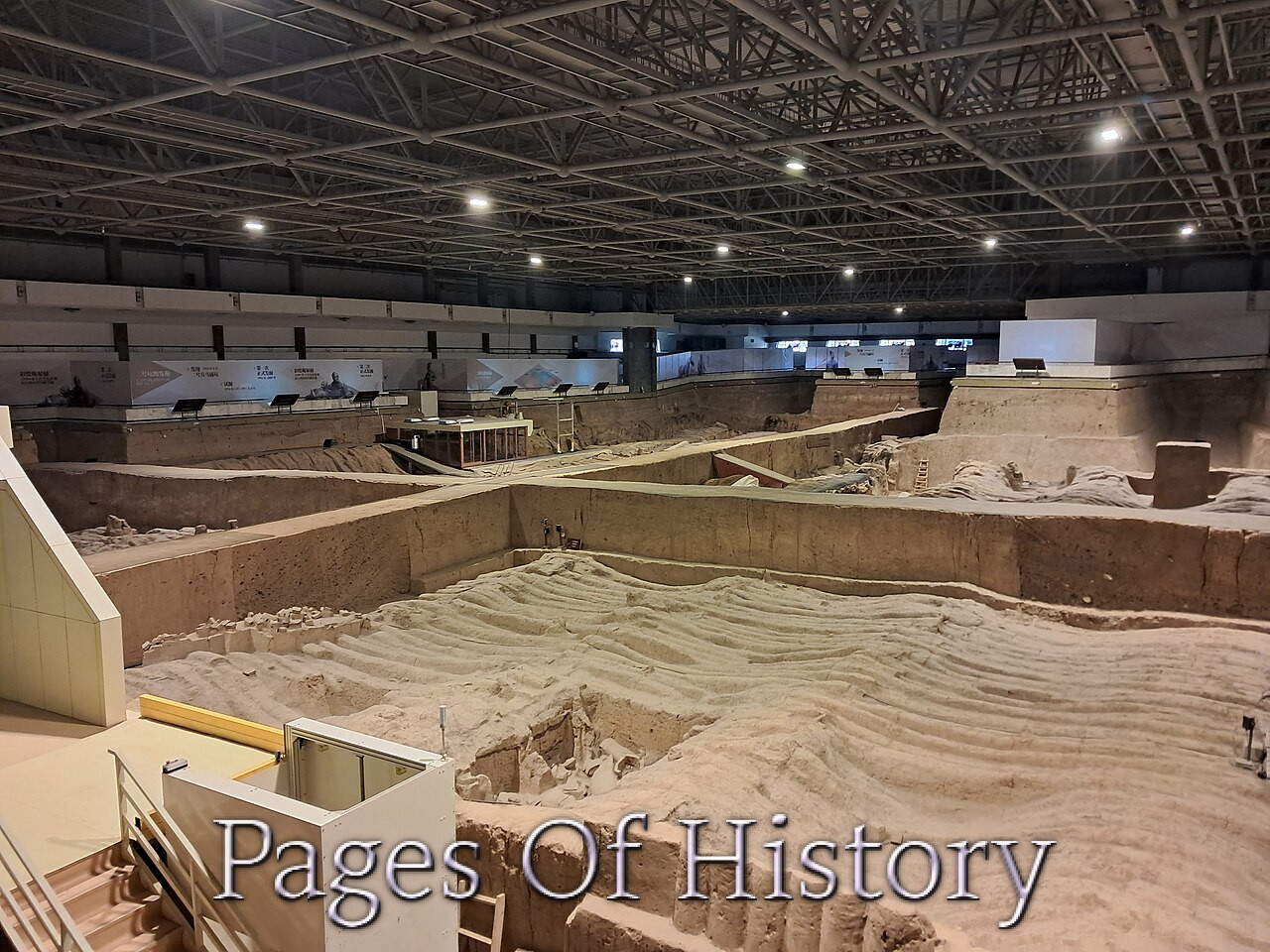
One of the most telling aspects of the Terracotta Army is that it was never finished. The project was an enormous undertaking, and the death of the emperor in 210 BC brought work to a halt. The unfinished sections provide a unique and poignant insight into the Terracotta Army purpose and the limits of even absolute power. In Pit 1, for example, there are areas that remain empty, devoid of figures. In other places, the artisans left the work in various states of completion, allowing archaeologists to reconstruct the manufacturing process with remarkable clarity.
The discovery of these unfinished figures is crucial. They show that the Terracotta Army purpose was a work in progress, a project so vast that it consumed the resources of the empire until the very moment of the emperor’s death. The sudden abandonment is a powerful metaphor for the fragility of the Qin state itself. The emperor’s obsession with his own immortality and the construction of his necropolis was a contributing factor to the empire’s downfall. The massive expenditure of labor and resources diverted focus from the pressing needs of the living, and the brutal conditions of the work camps fueled the resentments that would eventually erupt into open revolt. The unfinished pits are a silent reminder that the emperor’s grand vision was ultimately a burden too heavy for the empire to bear. The army that was meant to protect him forever was left incomplete, a monument to a dream that died with its creator.
The Modern Discovery and a New Purpose
Since the discovery in 1974, the Terracotta Army purpose has evolved. While it was originally built to serve the emperor in the afterlife, it now serves a different function in the modern world. It has become a symbol of China’s ancient glory, a major tourist destination attracting millions of visitors annually, and a subject of intense international archaeological and historical research. The site, now known as the Museum of the Terracotta Army, is a UNESCO World Heritage Site and is often described as the “Eighth Wonder of the World.”
The excavation and conservation efforts have become a global collaborative project. Scientists from around the world are working to solve the puzzle of the ancient pigments, to understand the metallurgy of the bronze weapons, and to piece together the thousands of shattered fragments. The army has given historians an unparalleled glimpse into the military, social, and artistic life of the Qin dynasty. The individual faces, the details of armor and weaponry, and the sheer scale of the undertaking have transformed our understanding of one of the most pivotal periods in Chinese history. The Terracotta Army purpose is now one of education and cultural exchange, a tangible link to a past that continues to shape the present. It is a testament to the enduring power of human creativity and ambition, even when that ambition was directed toward a goal as elusive as eternal life.
The Eternal Sentinel: Power, Belief, and the Legacy of the Clay Warriors
The Terracotta Army stands as a monumental intersection of belief, politics, and artistry. Its Terracotta Army purpose was multifaceted, serving as a spiritual guard for the afterlife, a political statement of absolute power, a tactical replica of a fearsome military machine, and a testament to the organizational genius of the Qin state. It was built on the foundation of a profound belief in the continuity of existence after death, a belief that the emperor’s authority and needs did not cease with his final breath. The clay soldiers were his guarantee that his cosmic order would be maintained, that his enemies would be held at bay, and that his rule would remain unchallenged for eternity.
Yet, the army also tells a more human story. It speaks of immense ambition and the willingness of a state to dedicate its entire resources to a single, monumental project. It also speaks of the fragility of that ambition. The destruction of the pits and the fall of the Qin dynasty just a few years after the emperor’s death serve as a stark reminder that no power, however absolute, can truly command the future. The unfinished sections and the broken figures are not failures; they are evidence of a human story that includes both incredible achievement and sudden, violent collapse.
Today, the warriors are silent witnesses to the passage of time, their original purpose lost to the ages but their new purpose found in the awe and wonder they inspire. They are a bridge across two millennia, allowing us to stand face-to-face with the soldiers of a long-dead emperor and to contemplate the eternal human desires for power, order, and immortality. The Terracotta Army is more than just a collection of statues; it is a profound reflection on the human condition, a frozen moment of history that continues to speak to us with remarkable clarity and force. Its legacy is not just the story of one man’s obsession, but a window into the very soul of an ancient civilization.