
📅 Last updated: 06.07.2026
- The People Behind the Anasazi Cliff Dwellings: A Name and a Legacy
- The Golden Age: Construction and Purpose of the Anasazi Cliff Dwellings
- A Detailed Look at a Masterpiece: Mesa Verde’s Cliff Palace
- Life, Death, and Society in the Anasazi Cliff Dwellings
- The Great Abandonment: Why Did They Leave the Anasazi Cliff Dwellings?
- Myth vs. Reality: The Anasazi Cliff Dwellings in Popular Imagination
- Preserving the Legacy: Modern Challenges and Lessons
- What the Anasazi Cliff Dwellings Teach Us About Human Resilience
The Anasazi cliff dwellings of the American Southwest represent one of the most remarkable and enigmatic achievements of pre-Columbian North America. Carved into the sheer sandstone faces of canyons in present-day Colorado, Utah, Arizona, and New Mexico, these structures were not merely homes; they were carefully engineered urban centers that housed hundreds of people, complete with granaries, kivas, and defensive towers. For centuries, the Ancestral Puebloans—the people once erroneously labeled “Anasazi” by the Navajo—built and abandoned these architectural marvels, leaving behind a rich material record that continues to provoke debate among archaeologists. The story of these dwellings is not one of a lost civilization, but of a dynamic, adaptive society that faced profound environmental and social challenges, ultimately making a strategic decision to move rather than collapse.
The People Behind the Anasazi Cliff Dwellings: A Name and a Legacy
The term “Anasazi” itself is a loaded label, a Navajo word often translated as “ancient enemies” or “ancestors of the enemy.” Modern descendants, including the Hopi, Zuni, and Rio Grande Pueblo peoples, prefer the term Ancestral Puebloans. This shift is not mere political correctness; it reflects a deep cultural continuity. The Hopi, for instance, consider these cliff dwellings to be the homes of their direct ancestors, the Hisatsinom (“the ancient ones”). The use of “Anasazi” in popular culture has long perpetuated a myth of a mysterious, vanished race, when in reality, the people simply relocated. The Anasazi cliff dwellings are therefore a testament not to extinction, but to resilience and adaptation.
The Ancestral Puebloan culture did not appear overnight. It evolved from earlier Archaic hunter-gatherer societies who inhabited the Colorado Plateau as early as 7000 BCE. By around 500 CE, these groups had adopted maize agriculture, leading to a more settled lifestyle. The Basketmaker III period (500–750 CE) saw the construction of semi-subterranean pithouses, the precursors to the later cliff dwellings. The transformation from these humble beginnings to the multi-storied apartment complexes of the 12th and 13th centuries was a gradual process driven by population growth, agricultural intensification, and increasing social complexity.
The Golden Age: Construction and Purpose of the Anasazi Cliff Dwellings
The classic period of the Anasazi cliff dwellings—the Pueblo III era (1150–1300 CE)—was a time of both architectural brilliance and profound stress. It was during this era that the most iconic sites, such as Mesa Verde’s Cliff Palace and Colorado’s Balcony House, were built. But why did these people abandon their open mesa-top villages and build their homes into the sides of canyons? The answer is multifaceted.
Defense and Security
One of the most compelling reasons for the move to cliff faces was defense. The late 12th and 13th centuries were not peaceful. Evidence of violent conflict, including burned villages, defensive walls, and human remains with unhealed trauma, has been found across the region. The cliff dwellings offered a natural fortress. Access to sites like Mesa Verde’s Cliff Palace required climbing hand-and-toe-hold trails or ladders that could be easily pulled up. A small group of defenders could hold off a much larger force. This was not a paranoid fantasy; the archaeological record shows that the Ancestral Puebloans were competing for dwindling resources, and raiding was a grim reality.
Climate and Resource Management
The “Mega-droughts” of the 12th and 13th centuries were the primary driver of this societal pressure. Tree-ring data (dendrochronology) from beams used in the cliff dwellings reveals a devastating pattern. The period from 1130 to 1180 CE saw a severe, prolonged drought. This was followed by a brief respite, and then an even more catastrophic drought from 1276 to 1299 CE, known as the Great Drought. These climatic events made dryland farming on the mesa tops increasingly unreliable. The cliff dwellings, often situated near seeps and springs at the base of the canyon walls, allowed residents to maximize access to water. The south-facing alcoves provided passive solar heating in winter and shade in summer, creating a microclimate that was more forgiving than the exposed mesa tops.
Social and Ceremonial Centers
The Anasazi cliff dwellings were not just defensive and agricultural outposts; they were vibrant social and ceremonial hubs. Each major dwelling contained multiple kivas—circular, subterranean chambers used for religious rituals, political meetings, and family gatherings. The construction of a large kiva was a community effort, reflecting social cohesion. For example, the Great Kiva at Aztec Ruins National Monument (in New Mexico, a major Chacoan outlier) was over 40 feet in diameter. These structures were the spiritual and political heart of the community. The very act of building a cliff dwelling was a collective project that reinforced social bonds and shared identity.
A Detailed Look at a Masterpiece: Mesa Verde’s Cliff Palace
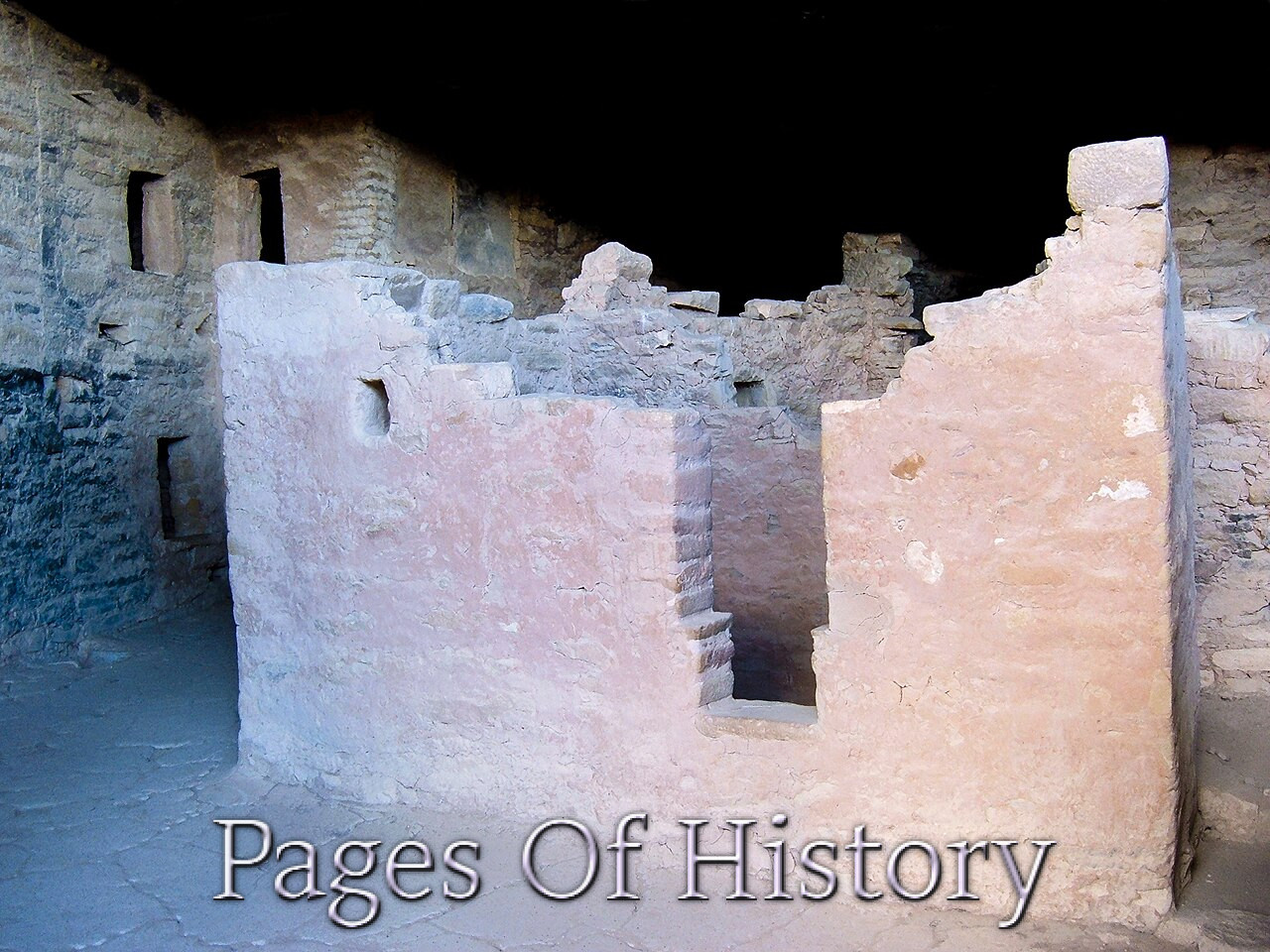
No discussion of the Anasazi cliff dwellings is complete without a deep dive into the most famous of them all: Cliff Palace at Mesa Verde National Park in Colorado. Built between 1190 and 1260 CE, it is the largest cliff dwelling in North America, containing over 150 rooms and 23 kivas. It was home to an estimated 100 to 125 people, though it likely served as a regional center for a much larger population.
The structure is a marvel of pre-modern engineering. Builders used sandstone blocks, which they shaped with harder stones, and mortared them with a mixture of mud, ash, and water. They employed wooden beams—often from ponderosa pine or Douglas fir—to support roofs and floors. Remarkably, they did not use the wheel, metal tools, or draft animals. Everything was done by hand, using local materials.
The layout of Cliff Palace was carefully planned. The rooms were multi-storied, with the back walls formed by the natural curve of the alcove. The front was a sheer wall of stone, creating a formidable facade. The kivas were sunk into the floors of the courtyards, their roofs flush with the ground level. A series of narrow passageways, tunnels, and stairways connected the different levels. One of the most stunning features is the Square Tower House, a four-story tower that rises to the roof of the alcove. Its purpose is debated—was it a watchtower, a ceremonial structure, or simply a prestigious residence? Most likely, it served all three functions.
Life, Death, and Society in the Anasazi Cliff Dwellings
Life in these cliff dwellings was rigorous, communal, and highly structured. The inhabitants were skilled farmers, growing the “Three Sisters”—maize, beans, and squash—on the mesa tops above. They also hunted deer, rabbit, and turkey, and gathered wild plants like pinyon nuts and cactus fruits. They were expert weavers and potters, creating intricate black-on-white pottery that was both functional and artistic.
Diet and Daily Routine
A typical day began at dawn. Women would grind maize on stone metates (grinding slabs) to make flour for bread and porridge. Men would tend to the fields or go hunting. Children would help with chores, such as collecting firewood or water. The diet was predominantly vegetarian, with meat being a less common luxury. Analysis of human remains from the period shows a high incidence of dental caries (cavities) due to the reliance on maize, a carbohydrate-rich food. It also shows evidence of arthritis and other physical stresses from a life of hard labor.
Social Hierarchy and Violence
While the Ancestral Puebloans were not a highly stratified empire like the Aztecs or Incas, there was clearly a social hierarchy. The presence of large, elaborate kivas and high-status burials (with grave goods like turquoise jewelry and finely crafted pottery) indicates the existence of leaders, likely a combination of religious elites (shamans or priests) and successful clan leaders. However, the 13th century brought increasing violence. At sites like Castle Rock Pueblo (Colorado), archaeologists have found evidence of a massacre: the remains of 41 people, including women and children, showing signs of blunt-force trauma and scalping. Such violence was not random; it was likely the result of competition for land and water during the Great Drought.
The Great Abandonment: Why Did They Leave the Anasazi Cliff Dwellings?
By 1300 CE, the Anasazi cliff dwellings were largely empty. A region that had supported tens of thousands of people for centuries was depopulated. This “Great Abandonment” is one of the most enduring mysteries of archaeology, but the evidence points to a convergence of factors, not a single cause.
The Perfect Storm: Drought, Deforestation, and Depletion
The Great Drought of 1276–1299 was the final blow. For over two decades, rainfall was insufficient to support dryland farming. But the crisis was deeper than just a lack of rain. Centuries of intensive occupation had led to severe deforestation. The Ancestral Puebloans had cut down millions of trees for construction and firewood. This deforestation led to soil erosion, making the land less productive. The combination of drought and environmental degradation created a food crisis. People were starving.
Social Collapse and Migration
When the food ran out, the social fabric tore. The religious leaders who had promised rain through their rituals lost their authority. People stopped building new kivas. The defensive structures became traps rather than havens. The people did not vanish; they migrated. They moved south and east, to the Rio Grande Valley in New Mexico, to the Zuni River area, and to the Hopi mesas in Arizona. They joined existing communities or founded new ones. These are the ancestors of today’s Pueblo peoples. The Anasazi cliff dwellings were not a failed civilization; they were a strategic retreat. The people chose to adapt by moving to more reliable water sources and less defensible, but more sustainable, locations.
| Period | Approximate Dates | Key Characteristics | Major Sites |
|---|---|---|---|
| Basketmaker III | 500–750 CE | Early agriculture, pithouse villages, first use of pottery | Shabik’eshchee Village (NM) |
| Pueblo I | 750–900 CE | Large above-ground roomblocks, first kivas, population growth | Dolores River Valley (CO) |
| Pueblo II | 900–1150 CE | Chacoan “Great Houses,” road systems, regional trade networks | Pueblo Bonito (NM), Chaco Canyon |
| Pueblo III | 1150–1300 CE | Cliff dwellings, defensive sites, peak population, megadroughts | Cliff Palace, Long House, Spruce Tree House (CO) |
| Pueblo IV | 1300–1600 CE | Post-abandonment migration, large plaza-oriented villages | Pecos Pueblo (NM), Awatovi (AZ) |
Myth vs. Reality: The Anasazi Cliff Dwellings in Popular Imagination
The popular image of the Anasazi cliff dwellings is often distorted. They are frequently described as a “lost civilization” that “mysteriously vanished.” This is romantic but inaccurate. As we have seen, the people did not vanish; they moved. Another persistent myth is that they were a peaceful, harmonious society. The evidence of violence, fortifications, and burned villages contradicts this. They were as capable of conflict as any other society facing resource scarcity.
A third myth is that the cliff dwellers were primitive. In reality, they were sophisticated astronomers, engineers, and artists. The Sun Dagger petroglyph at Fajada Butte in Chaco Canyon is a precise solar and lunar calendar, marking the solstices and equinoxes with a beam of light. Their road systems, some over 30 feet wide, connected Chaco Canyon to over 150 outlier communities, facilitating trade in turquoise, macaws from Mexico, and seashells from the Pacific. The Anasazi cliff dwellings were not the work of a simple people; they were the product of a complex, interconnected world.
Preserving the Legacy: Modern Challenges and Lessons
Today, the Anasazi cliff dwellings are protected within national parks and monuments like Mesa Verde, Chaco Culture National Historical Park, and Canyon de Chelly National Monument. They are UNESCO World Heritage Sites, recognized for their universal value. However, they face significant threats. Climate change is accelerating erosion. Increased visitation—over 500,000 people visit Mesa Verde annually—can damage fragile structures. Looting remains a persistent problem; even in the 21st century, people illegally dig for artifacts.
For the modern Pueblo peoples, these sites are not just archaeological curiosities; they are sacred ancestral places. The Hopi, for example, conduct pilgrimages back to Mesa Verde to pray and leave offerings. There is a growing movement to repatriate human remains and funerary objects from museums back to the tribes. The story of the Anasazi cliff dwellings is a living story, one that continues to shape the identity of Native American communities today.
What the Anasazi Cliff Dwellings Teach Us About Human Resilience
The real story of the Anasazi cliff dwellings is not a simple tale of rise and fall. It is a complex narrative of human ingenuity, adaptation, and ultimately, strategic abandonment. These were not a people who failed; they were a people who made a difficult choice. When their environment could no longer support their way of life, they did not cling to their spectacular homes and perish. They left. They migrated to new lands, merged with new communities, and carried their culture forward. The cliff dwellings are not tombs; they are monuments to a successful survival strategy.
The lessons are profound. The Ancestral Puebloans remind us that no society is immune to environmental change. Their story is a cautionary tale about the dangers of over-exploiting natural resources and the fragility of complex societies in the face of climate shocks. But it is also a story of hope. It shows that adaptation, mobility, and community can overcome even the most severe crises. The Anasazi cliff dwellings stand as a silent, enduring testament to the resilience of the human spirit—a people who, when the world they knew crumbled, had the wisdom to build a new one.