
📅 Last updated: 22.07.2026
- The Rise of a Desert Metropolis: Chaco Canyon's Golden Age
- The Cracks Appear: Environmental Stress and the First Signs of the Chaco Canyon Abandonment
- Political and Social Upheaval: The Failure of the Elite
- The Great Dispersal: Where Did the People Go?
- Beyond Drought: The Spiritual and Cosmic Crisis
- A Comparative Timeline: Chaco's Life and Death
- The Enduring Legacy: What Chaco Teaches Us
- Conclusion: The Silence of the Stones
For centuries, the sheer scale and eerie silence of the great houses have haunted the American imagination, but the true story of the Chaco Canyon abandonment is far more complex than a simple collapse. It is a story not of a single disaster, but of a slow, grinding unraveling of a sophisticated civilization that had mastered a hostile landscape. The Ancestral Puebloans, once misnamed the “Anasazi” (a Navajo term often translated as “ancient enemies” or “ancestors of our enemies”), built a world in the high desert of northwestern New Mexico that was a marvel of engineering, astronomy, and social organization. Yet, by the end of the 12th century, their great metropolis of stone was largely empty, its inhabitants scattered across the Colorado Plateau. To understand this exodus, we must look beyond simple drought and examine the deep fractures in their society—environmental, political, and spiritual—that made their magnificent experiment unsustainable.
The Rise of a Desert Metropolis: Chaco Canyon’s Golden Age
The story of Chaco Canyon is one of improbable ambition. Beginning around 850 CE, a people who had lived in small, scattered pit houses began an extraordinary building project. Over the next three centuries, they constructed a series of monumental “great houses” like Pueblo Bonito, Chetro Ketl, and Pueblo del Arroyo, which rose four and five stories high and contained hundreds of rooms. These were not simple villages. They were engineered with precise core-and-veneer masonry, using over 200,000 expertly shaped sandstone blocks in the largest structures. The buildings were aligned to solar and lunar cycles, with windows and doors that marked the solstices and equinoxes, demonstrating a profound understanding of celestial mechanics.
This was the ceremonial, political, and economic heart of a vast region. Chaco was a hub in a network of “great roads”—straight, engineered causeways that radiated out into the surrounding lands for hundreds of miles. Along these roads, timber for roofs—ponderosa pine and spruce from mountains 50 miles away—was carried by hand. Turquoise from the Cerrillos Hills, copper bells from Mexico, macaws from the tropics, and seashells from the Gulf of California flowed into the canyon. This trade was not just economic; it was a ritual economy. The leaders of Chaco, likely a combination of priestly elites and powerful clans, controlled the distribution of these exotic and sacred goods, reinforcing their authority. The canyon was a pilgrimage center, a place where people from hundreds of small farmsteads and outlier great houses (like Aztec Ruins and Salmon Ruins) gathered for feasts, ceremonies, and the redistribution of resources.
The Engine of Power: Water and Maize
At its peak (roughly 1020-1120 CE), Chaco Canyon may have supported a population of 5,000 to 6,000 people within the canyon itself, with tens of thousands more in the surrounding region. This density was only possible through intense agricultural engineering. The canyon floor, a narrow floodplain, was transformed. The Chacoans built a sophisticated system of check dams, headgates, and stone-lined canals to capture and divert the infrequent but violent summer monsoon rains and spring snowmelt from the sandstone cliffs above. They also built extensive “grid gardens”—low stone borders called grid gardens to slow runoff and trap moisture and silt. Maize, beans, and squash were the staples, but maize was the real engine. It was the caloric foundation of their society, and its surplus allowed for the specialization of labor—masons, astronomers, traders, and priests.
The Cracks Appear: Environmental Stress and the First Signs of the Chaco Canyon Abandonment
The system was brilliant, but it was fragile. The environment of the Colorado Plateau is characterized by extreme variability. A tree-ring record (dendrochronology) from the region, painstakingly assembled by scientists, reveals a terrifying story. Starting around 1090 CE, a series of severe, multi-decade droughts struck. The most crushing was the “Great Drought” of 1130-1180 CE. But drought alone is not the full answer. The Chacoans had survived droughts before. What made this period different was a combination of environmental degradation and social inflexibility.
The evidence from packrat middens and pollen cores shows that the Chacoans had been systematically deforesting the landscape for centuries. Every roof beam, every fire, every tool required wood. By the mid-1100s, the piñon-juniper woodlands surrounding the canyon for miles were gone. This had catastrophic knock-on effects. Without tree cover, the soil eroded faster. The water table dropped. The carefully engineered irrigation systems began to silt up and fail. The deep, fertile topsoil that had been built up over millennia was washed away in flash floods.
Furthermore, a period of prolonged arroyo-cutting (gullying) made the canyon floor less arable. The Chacoans responded by building more dams and digging deeper canals, but these efforts required increasing amounts of labor and organization. The law of diminishing returns had set in. The very success of Chaco—its high population density—had made it brittle. When the rains failed, there was no slack in the system. The land could no longer support the people it had once sustained.
Political and Social Upheaval: The Failure of the Elite
The environmental crisis did not occur in a vacuum. It was amplified by a parallel crisis of leadership. The elite class in Chaco derived its power from its ability to manage the sacred and the secular: they controlled the ritual calendar, the distribution of exotic goods, and the storage of surplus maize. Their authority was validated by their success. When the rains failed repeatedly, that validation evaporated.
Evidence of Turmoil: Violence and Depopulation
The archaeological record of the late Chacoan period (1150-1200 CE) is grim. There is a sharp increase in evidence of violence. At sites like Pueblo Bonito, rooms were sealed off, and bodies were found in contorted positions, some with signs of scalping or blunt-force trauma. This was not the orderly burial of a stable society. It suggests internal factional violence, perhaps between competing lineages or religious sects. The carefully maintained ritual order was breaking down.
The massive, centralized storage rooms in the great houses—once symbols of the community’s wealth and the elite’s power—became targets. People began to build defensive structures. The classic Chacoan great house, with its open plazas and wide doorways, was replaced by smaller, more defensible pueblos built on mesa tops or in cliff alcoves (like those at Mesa Verde or Bandelier). This was a literal and symbolic retreat. The people were turning their backs on the grand vision of Chaco. They were abandoning the central authority that had failed them.
A key piece of evidence is the sudden cessation of construction. After 1100 CE, very few new great houses were built in Chaco Canyon. The last major addition to Pueblo Bonito was a wall hastily built to block off a section of the great kiva. The flow of exotic goods—macaws, copper bells, turquoise—dried up. The trade network that had been Chaco’s lifeblood collapsed. The great pilgrimage center was becoming a ghost town.
The Great Dispersal: Where Did the People Go?
The Chaco Canyon abandonment was not a sudden, dramatic event like the fall of Rome. It was a gradual, multi-generational exodus. People left in family groups and small clans, not all at once. By 1150 CE, the canyon’s population had plummeted. By 1200 CE, it was functionally empty, a place of ruins and memory.
The question of “where” has been answered by tracing the distinctive pottery styles and architectural techniques of the Chacoans. They did not vanish. They moved.
- To the North: A significant number moved to the Mesa Verde region of southwestern Colorado and the Aztec Ruins area near the Animas River. Sites like Aztec Ruins were actually built as a direct successor to Chaco, with a great kiva (the “Great Kiva”) nearly identical to the one at Pueblo Bonito. This was a deliberate attempt to recreate the Chacoan world. However, this northern enclave itself collapsed by the late 1200s.
- To the South and East: Other groups moved to the Rio Grande Valley, to places like Bandelier National Monument and the Pajarito Plateau. Here, they built smaller, aggregated pueblos carved into the soft volcanic tuff. This was a more defensible, less centralized way of life.
- To the West: Groups migrated to the Hopi Mesas in Arizona. The Hopi people today trace their lineage directly back to the Chacoan world. Their oral traditions speak of a time of great upheaval and a “broken” world that their ancestors left behind.
This dispersal created a new cultural landscape. The unified, hierarchical society of Chaco fragmented into a mosaic of smaller, more autonomous communities. The great kivas were replaced by smaller, clan-based kivas. The long-distance trade in exotics was replaced by a more localized exchange. The people had learned a hard lesson about the dangers of over-centralization.
Beyond Drought: The Spiritual and Cosmic Crisis
To truly understand the Chaco Canyon abandonment, we must consider the spiritual dimension. For the Ancestral Puebloans, the world was a living, breathing entity. The landscape was sacred. The mountains, springs, and celestial bodies were all part of a cosmic order that the leaders were supposed to maintain through ritual. The great houses themselves were not just buildings; they were cosmological maps, aligned with the movement of the sun and moon.
When the rains failed year after year, when the maize withered in the fields, it was not just an agricultural failure. It was a spiritual failure. The priests and leaders had lost their connection to the powers that gave life. The elaborate ceremonies, the processions along the great roads, the sacrifices of turquoise and macaws—they had stopped working. The people’s faith in the entire system was shattered.
This is powerfully reflected in the material remains. In the final years of Chaco, there is evidence of ritual destruction. Some kivas were deliberately burned. Precious objects—pots, beads, ceremonial staffs—were broken or cached in a way that suggests a deliberate closing of a sacred space. It seems that the people did not just leave; they consciously decommissioned their ceremonial center. They sealed the kivas, blocked the doors, and walked away, leaving the great houses to the wind and the sand. It was an act of profound disillusionment.
A Comparative Timeline: Chaco’s Life and Death
To see the pattern clearly, it helps to look at the key milestones in a single view.
| Period (CE) | Phase | Key Characteristics & Events |
|---|---|---|
| 850 – 1020 | Formative Period | Construction of early great houses (Pueblo Bonito begins). Development of core-and-veneer masonry. Establishment of long-distance trade networks. |
| 1020 – 1120 | Chacoan Florescence | Peak of construction and population. Refinement of celestial alignments. Vast road system in use. Strong central authority. High agricultural output. |
| 1090 – 1130 | First Major Droughts | Series of severe dry spells. Deforestation becomes critical. First signs of stress in the system. Construction slows dramatically. |
| 1130 – 1180 | The Great Drought & Collapse | Unprecedented multi-decade drought. Arroyo-cutting and soil loss. Evidence of violence and internal conflict. Cessation of all major construction. Chaco Canyon abandonment begins in earnest. |
| 1180 – 1300 | Dispersal & Aftermath | Population moves to Mesa Verde, Rio Grande, Hopi. Defensive cliff dwellings become common. The centralized Chacoan system is replaced by smaller, autonomous communities. |
The Enduring Legacy: What Chaco Teaches Us
The ruins of Chaco Canyon are not a monument to failure. They are a monument to human ambition, ingenuity, and resilience—and to the hard limits of that ambition. The story of the Chaco Canyon abandonment is a cautionary tale for our own time. It is a stark lesson in the dangers of exceeding the carrying capacity of a fragile environment. The Chacoans were brilliant engineers, but they could not engineer their way out of a climate crisis that was compounded by their own ecological footprint.
Their world was built on a delicate balance of social hierarchy, ritual authority, and environmental stewardship. When that balance was broken by drought and deforestation, the entire edifice—both physical and social—crumbled. The people did not die out; they adapted, but at a tremendous cost. They lost their great cities, their trade networks, and their old gods. They rebuilt their lives in smaller, harder, more isolated communities.
Conclusion: The Silence of the Stones
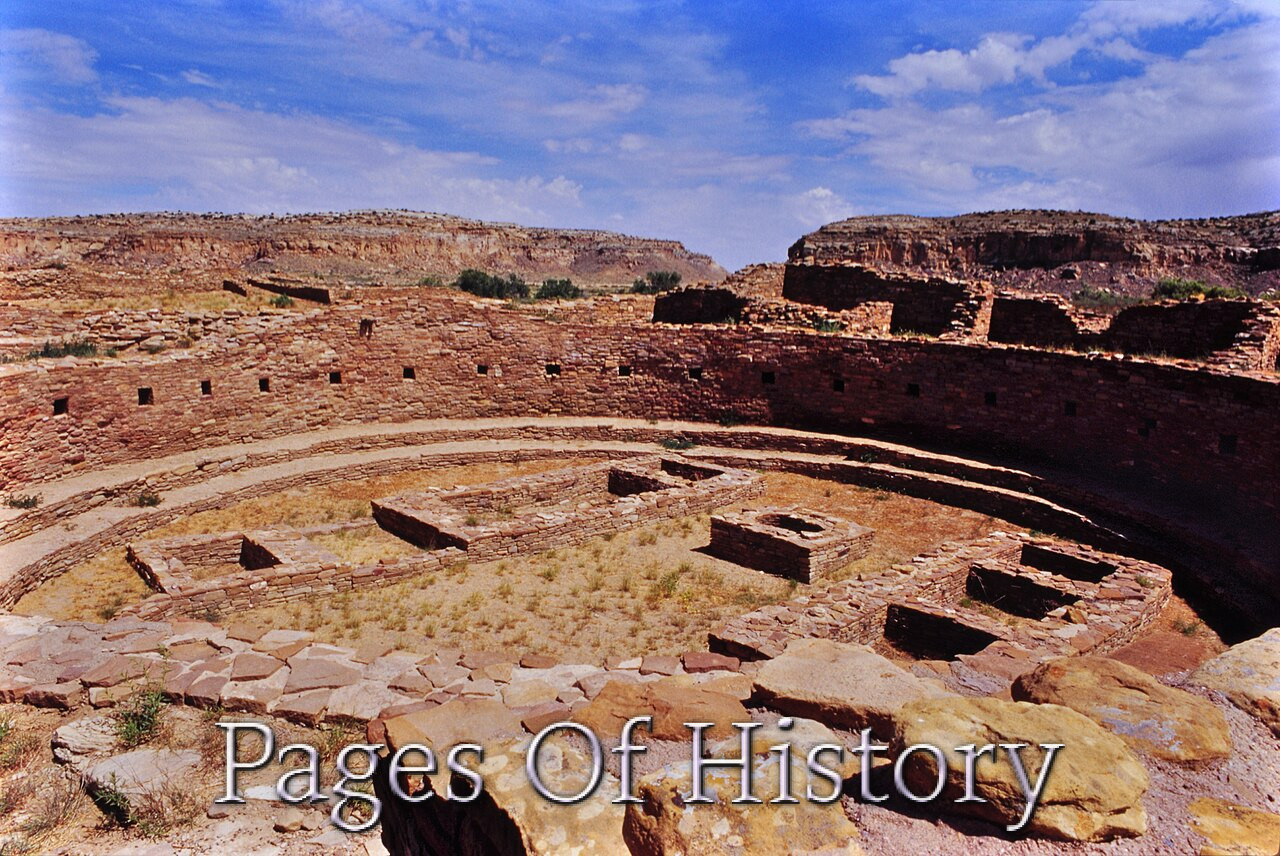
Today, when you walk through the silent rooms of Pueblo Bonito, you feel the weight of that history. The wind whistles through the empty doorways. The great kiva is a dark, circular void. The stones are perfectly cut, the walls still straight after 900 years. It is a place of immense beauty and profound sadness. The people who built this place did not simply vanish; they made a choice. Faced with a failing environment, a broken spiritual order, and a crumbling social system, they chose to leave.
They left behind a powerful message written in stone. It says that no civilization, no matter how sophisticated, is immune to the consequences of its own success. The Chaco Canyon abandonment is not a mystery. It is a story written in tree rings, in packrat middens, in the careful alignment of a window to the solstice sun, and in the final, desperate act of sealing a sacred kiva. It is the story of a people who reached for the sky, built a world of stone and light, and then, when that world could no longer hold, they let it go. Their descendants—the Hopi, the Zuni, the Pueblo peoples of the Rio Grande—remember. And in that memory, the story of Chaco lives on, not as a ruin, but as a warning and a testament to the enduring human spirit.