
📅 Last updated: 23.07.2026
The question of whether the Great Zimbabwe China trade relationship existed is one that has captivated historians, archaeologists, and the public for over a century. It forces us to reconsider the narrative of a pre-colonial Africa isolated from the global currents of commerce and culture. The answer, supported by a growing body of concrete evidence, is a definitive yes—though it was not a direct, face-to-face exchange. Instead, it was a sophisticated, multi-layered network of indirect trade that connected the granite walls of Great Zimbabwe to the porcelain kilns of the Ming Dynasty, a journey of thousands of miles across oceans and continents. This connection was not a mere curiosity; it was a testament to the empire’s power, its strategic control of resources, and its integration into the Indian Ocean world system, a globalized economy centuries before the term was coined.
- The Rise of an Empire: Great Zimbabwe in its Golden Age
- Evidence of the Great Zimbabwe China Connection: The Porcelain Trail
- How Did the Trade Work? The Middlemen and the Monsoon
- What Did Great Zimbabwe Export? Gold, Ivory, and More
- The Role of the Ming Dynasty: Zheng He and the Imperial Demand
- The Decline of the Empire and the End of the Direct Link
- Conclusion: A Globalized World Before Globalization
The Rise of an Empire: Great Zimbabwe in its Golden Age
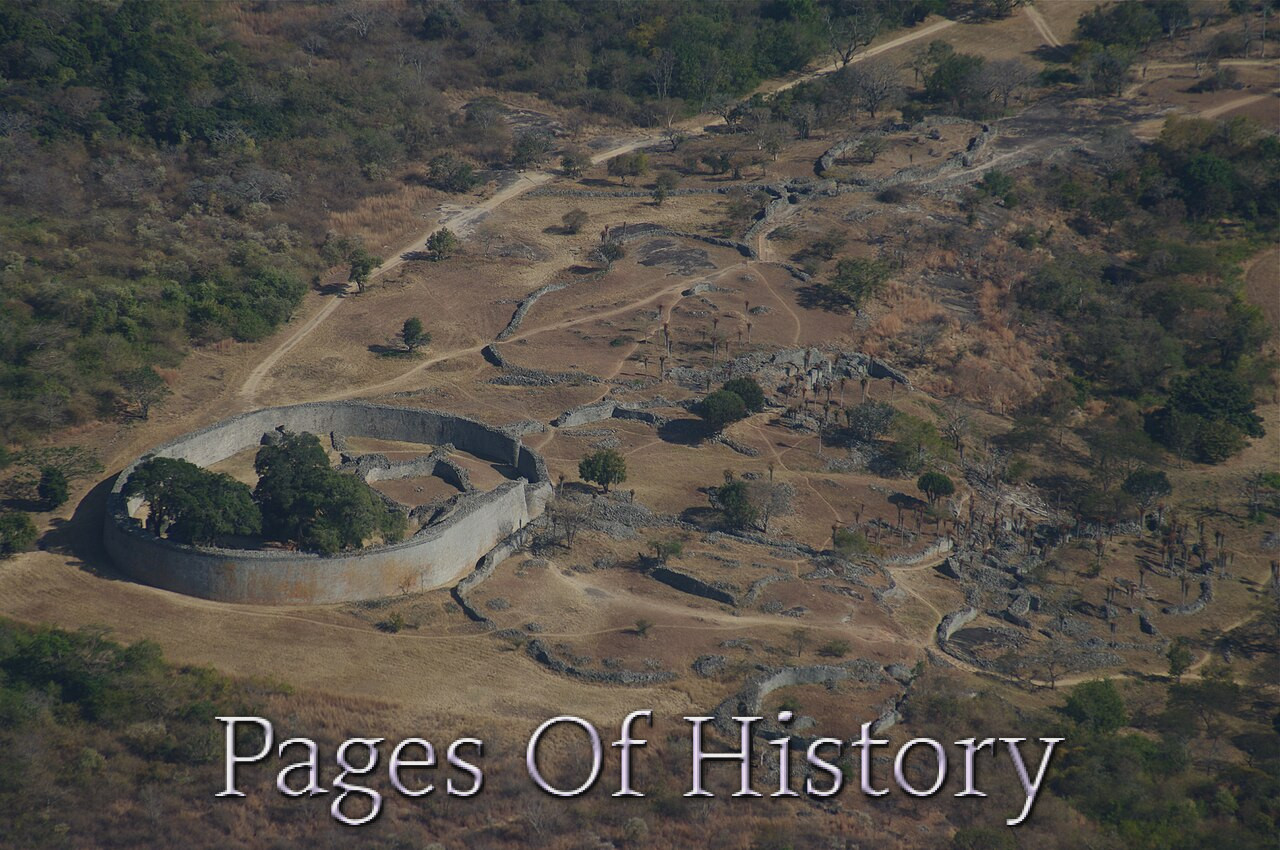
To understand the nature of the Great Zimbabwe China connection, one must first appreciate the scale and sophistication of the empire itself. At its zenith, between roughly 1300 and 1450 CE, Great Zimbabwe was the capital of a powerful Shona kingdom that dominated the Zimbabwe Plateau in southeastern Africa. The city was not a collection of huts; it was a sprawling urban center of perhaps 18,000 to 20,000 people, a figure that made it one of the largest cities in sub-Saharan Africa at the time.
The architectural marvel at its heart is the Great Enclosure, a massive, elliptical stone structure built without mortar. Its walls, rising up to 11 meters (36 feet) in places, and its famous conical tower, remain a symbol of the state’s ingenuity and centralized authority. This was not a primitive fortress but a carefully designed complex, likely used for ritual purposes and as a royal residence. The construction of such a monument required immense labor, sophisticated engineering, and the resources to feed and organize a large workforce.
The Source of Wealth: Gold and Cattle
The foundation of Great Zimbabwe’s economic power was twofold: cattle and gold. The surrounding plateau was excellent grazing land, and cattle were a primary measure of wealth and social status. More critically for long-distance trade, the region was rich in alluvial gold. The Shona people became expert gold miners and smiths, extracting the metal from rivers and shallow mines. This gold was not merely for local prestige; it was the empire’s primary export commodity.
This gold was funneled into an existing trade network that connected the interior of Africa to the Swahili city-states on the Indian Ocean coast, such as Kilwa, Sofala, and Mombasa. These coastal cities were themselves cosmopolitan hubs, linked by monsoon winds to the markets of Arabia, Persia, India, and, most importantly, China. The rulers of Great Zimbabwe, who controlled the gold-producing regions, did not sail the Indian Ocean themselves. Instead, they acted as the ultimate producers and middlemen, trading their gold and ivory for the exotic goods that arrived on the coast from across the sea.
Evidence of the Great Zimbabwe China Connection: The Porcelain Trail
The most irrefutable evidence for the Great Zimbabwe China trade link is not a written document, but a physical one: Chinese porcelain. For over a century, archaeologists have been unearthing thousands of shards of celadon and blue-and-white porcelain from the ruins of Great Zimbabwe and other related sites on the plateau. These are not random, isolated finds; they are numerous and concentrated in elite contexts, providing a clear material signature of high-value trade.
Two main types of Chinese porcelain have been found in significant quantities:
- Celadon (Longquan) Ware: This green-glazed stoneware, produced in the Longquan kilns of Zhejiang province, was the most common type of Chinese export porcelain during the 13th and 14th centuries. Its jade-like color was highly prized across Asia and Africa.
- Blue-and-White (Jingdezhen) Ware: The iconic blue-and-white porcelain, fired at the imperial kilns of Jingdezhen in Jiangxi province, began arriving in East Africa in the early 15th century, during the Ming Dynasty. These pieces, with their cobalt-blue designs under a clear glaze, were even more prestigious and expensive.
The presence of this porcelain at Great Zimbabwe is profoundly significant. It was not cheap trade goods. Porcelain was a luxury item, a durable, beautiful, and exotic status symbol. To own a celadon bowl or a blue-and-white vase was to display immense wealth and global connections. The shards found at Great Zimbabwe are almost exclusively from elite areas—the Hill Complex (the royal residence) and the Great Enclosure—suggesting that access to these goods was tightly controlled by the ruling class.
Quantifying the Finds: A Table of Key Evidence
The following table summarizes some of the key archaeological sites and the types of Chinese porcelain found there, providing a clear picture of the trade’s scope.
| Site | Location / Context | Type of Chinese Porcelain Found | Date Range (Approx.) |
|---|---|---|---|
| Great Zimbabwe | Hill Complex, Great Enclosure | Celadon (Longquan), Blue-and-White (Jingdezhen) | 14th – 15th Century |
| Mapungubwe | Predecessor state, Limpopo Valley | Celadon (Longquan) | 13th Century |
| Ingombe Ilede | Zambezi Valley trading site | Celadon, Blue-and-White, Stoneware | 14th – 15th Century |
| Swahili Coast (e.g., Kilwa) | Coastal trading cities | Massive quantities: Celadon, Blue-and-White, Martaban jars | 13th – 16th Century |
This table demonstrates a clear pattern. The earlier site of Mapungubwe, which declined around 1300 CE, shows a connection to the earlier celadon trade. Great Zimbabwe, at its peak, received both celadon and the later, more prestigious blue-and-white ware. The massive quantities found on the Swahili Coast confirm that these cities were the primary entrepôts where Chinese goods were landed before being traded inland.
How Did the Trade Work? The Middlemen and the Monsoon
It is crucial to clarify that no Chinese ship ever sailed up the Save or Limpopo Rivers to dock at the foot of Great Zimbabwe. The trade was a multi-stage process, a relay race across thousands of miles.
The Coastal Link: Swahili City-States
The direct trading partners of the Chinese were the Swahili city-states. Chinese fleets, most famously the treasure voyages of Admiral Zheng He between 1405 and 1433, did visit the East African coast. Zheng He’s massive armada, with ships far larger than anything in Europe at the time, reached ports like Malindi (in modern Kenya) and Mogadishu (in modern Somalia). The Chinese exchanged silks, porcelains, and lacquerware for African luxuries: ivory, rhinoceros horn, tortoiseshell, and most importantly, gold and frankincense. The Ming Shi (Official History of the Ming Dynasty) records embassies from the “country of Malin” (Malindi) bringing giraffes to the Chinese emperor, a stunning symbol of this contact.
The Inland Link: African Entrepreneurs
The goods from the coast then moved inland. This was not a simple process. It involved a chain of African intermediaries—Shona traders, and probably other ethnic groups like the Venda and the Kalanga—who traveled along established routes. They would carry goods like salt, copper, and perhaps cowrie shells (used as currency) from the coast, along with the precious Chinese porcelain. In return, they would bring gold, ivory, and animal skins from the interior. The final leg of the journey, from the coast to the Zimbabwe Plateau, was the most difficult and most profitable. The rulers of Great Zimbabwe controlled the flow of gold to these inland traders, ensuring that their elite were the primary beneficiaries of the system.
“The discovery of Chinese celadon and blue-and-white porcelain at Great Zimbabwe is not a story of accidental drift. It is the signature of a deliberate, organized, and highly profitable trade network that linked the Shona kingdom to the global economy of the Indian Ocean.” — Dr. Innocent Pikirayi, archaeologist and historian of Great Zimbabwe.
What Did Great Zimbabwe Export? Gold, Ivory, and More
If Chinese porcelain was the primary import, what did Great Zimbabwe send in return? The answer is a triad of high-value commodities that were in constant demand across the Indian Ocean world.
- Gold: This was the engine of the entire system. The gold from the Zimbabwe Plateau was famous for its purity. It was not just a raw material; it was also worked into intricate beads and ornaments. This gold flowed to the coast and then to the markets of India, the Middle East, and ultimately China, where it was used for currency, jewelry, and gilding.
- Ivory: The region was teeming with elephants. Ivory was a highly prized luxury good for carving, decoration, and even for making combs and buttons. Chinese records from the 15th century note the import of massive elephant tusks from the “country of the Moors” (the Swahili Coast).
- Copper and other Goods: While less famous than gold, copper was also a significant export. It was sourced from the northern reaches of the Zimbabwe Plateau and the Zambezi Valley. Other goods included animal skins, and possibly slaves, though the scale of the slave trade at this time was far smaller than the later Atlantic trade.
The Role of the Ming Dynasty: Zheng He and the Imperial Demand
The timing of Great Zimbabwe’s peak is no coincidence. It coincided with the explosion of Chinese maritime trade under the Ming Dynasty (1368-1644). The early Ming emperors, particularly the Yongle Emperor (r. 1402-1424), were not isolationists. They actively sponsored massive state-sponsored trade missions to project Chinese power and acquire exotic goods. The most famous of these were the seven voyages of Admiral Zheng He (1405-1433).
Zheng He’s fleet, which included hundreds of ships and tens of thousands of sailors, was a floating city. Its primary goal was to bring the “barbarian” kingdoms of the Indian Ocean into a tributary relationship with China. But a powerful secondary goal was trade. The Chinese state was a massive consumer of luxury goods. The imperial court, the bureaucracy, and the wealthy elite had an insatiable appetite for ivory, rhinoceros horn (used in traditional medicine), and, most of all, gold.
This imperial demand created a powerful economic pull. The Swahili city-states, eager to please the Chinese and profit from the trade, actively sought out the gold and ivory of the interior. This, in turn, increased the value and demand for the goods coming from Great Zimbabwe. The Great Zimbabwe China connection was therefore not a passive one; it was actively stimulated by the geopolitical and economic ambitions of the Ming Dynasty. The arrival of blue-and-white porcelain at Great Zimbabwe in the early 15th century is a direct result of Zheng He’s voyages making these goods more available and prestigious on the African coast.
The Decline of the Empire and the End of the Direct Link
The great age of Great Zimbabwe did not last forever. By the mid-15th century, the city began a slow decline. Several factors contributed to this, and the disruption of the trade network with China was both a symptom and a cause.
Internal Factors: Overpopulation and Resource Depletion
One of the leading theories for the decline is environmental degradation. A city of 18,000 people, with vast herds of cattle, placed immense pressure on the local environment. Deforestation for construction and fuel, overgrazing, and soil erosion likely made it difficult to sustain the population. The gold mines in the immediate vicinity may have also become exhausted, forcing the rulers to look further afield for resources.
External Factors: The Shift in Chinese Policy
The most significant external factor was the abrupt end of the Ming treasure voyages. After the death of the Yongle Emperor and the subsequent rise of a conservative Confucian bureaucracy, the voyages were deemed too expensive and ideologically impure. In the 1430s, the policy of active maritime expansion was reversed. The great fleets were dismantled, shipbuilding was restricted, and China effectively turned inward. This did not stop all trade, but it dramatically reduced the scale and prestige of the Chinese presence in the Indian Ocean.
This shift had a direct impact on the Swahili coast and, by extension, on Great Zimbabwe. The demand for gold from the Chinese court plummeted. The Swahili cities, no longer receiving the same level of Chinese goods or prestige, saw their own trade networks contract. The flow of porcelain to Great Zimbabwe dried up. The rulers of the empire, who had built their power on controlling this trade, found their revenue stream cut. This loss of economic power, combined with internal environmental pressures, likely accelerated the decline of Great Zimbabwe as a political and commercial center. The population dispersed, and the capital moved north to the Mutapa Empire, which would continue to trade gold with the Portuguese when they arrived on the coast in the 16th century.
Conclusion: A Globalized World Before Globalization
The evidence for a Great Zimbabwe China trade connection is overwhelming, not in the form of a single letter or contract, but in the countless shards of celadon and blue-and-white porcelain that litter the site. This was not a trivial or accidental link. It was the material expression of a sophisticated, multi-ethnic, and multi-continental economic system that operated for centuries. The Shona rulers of Great Zimbabwe were not isolated monarchs; they were savvy participants in a globalized world, managing a complex supply chain that connected their gold mines to the imperial kilns of China.
This history matters profoundly today. It shatters the old, colonial-era myths of a “Dark Continent” untouched by the outside world before European arrival. Great Zimbabwe was a powerful, urban, and internationally connected state. Its story is not one of passive reception of foreign goods, but of active agency—of a kingdom that leveraged its natural resources to become a major node in a network stretching from the Indian Ocean to the Pacific. The ruins of Great Zimbabwe are not just a monument to a lost civilization; they are a monument to a lost world of global trade, a world that the Shona people helped to build. The porcelain shards are not just broken pottery; they are the enduring, tangible proof of a conversation between two great civilizations, a conversation carried out not in words, but in gold, ivory, and the finest ceramics the world had ever seen.