
📅 Last updated: 20.10.2026
The Berlin Wall fell on the night of 9 November 1989 not because of a single heroic push or one decisive treaty, but because a convergence of economic collapse, imperial overreach, and a fateful bureaucratic slip made the barrier untenable. For 28 years the Wall had stood as the concrete embodiment of the Cold War divide, and its sudden collapse stunned the world. What follows traces the real causes behind that extraordinary night and the forces that had been eroding the Wall’s foundations long before the first hammer swung.
The Berlin Wall fell because the East German state had become economically and politically unsustainable, Mikhail Gorbachev refused to prop it up with Soviet tanks, mass protests and emigration hollowed out the regime’s legitimacy, and a confused press conference on 9 November 1989 led border guards to open the crossings. The Wall’s collapse was the product of long-term structural decay triggered by a short-term accident.
- What Actually Happened on the Night the Berlin Wall Fell?
- Why Was the Berlin Wall Built in the First Place?
- What Long-Term Forces Made the Berlin Wall's Collapse Inevitable?
- How Did the Protest Movement and Emigration Crisis Undermine the Berlin Wall?
- Key Events That Led to the Fall of the Berlin Wall
- Why Did the Soviet Union Not Intervene?
- What Role Did Ordinary Citizens Play in Bringing Down the Berlin Wall?
- What Were the Consequences of the Berlin Wall's Collapse?
- Frequently Asked Questions About the Berlin Wall's Fall
- Why the Berlin Wall Fell: A Lasting Perspective
What Actually Happened on the Night the Berlin Wall Fell?
At around 6:53 p.m. on 9 November 1989, East German Politburo spokesman Günter Schabowski held a televised press conference in East Berlin to announce new travel regulations. The new rules were supposed to take effect “immediately, without delay,” according to a note Schabowski had received but not fully read. When Italian journalist Riccardo Ehrman asked when the regulations would come into force, Schabowski shuffled his papers and said: “As far as I know, effective immediately, without delay.”
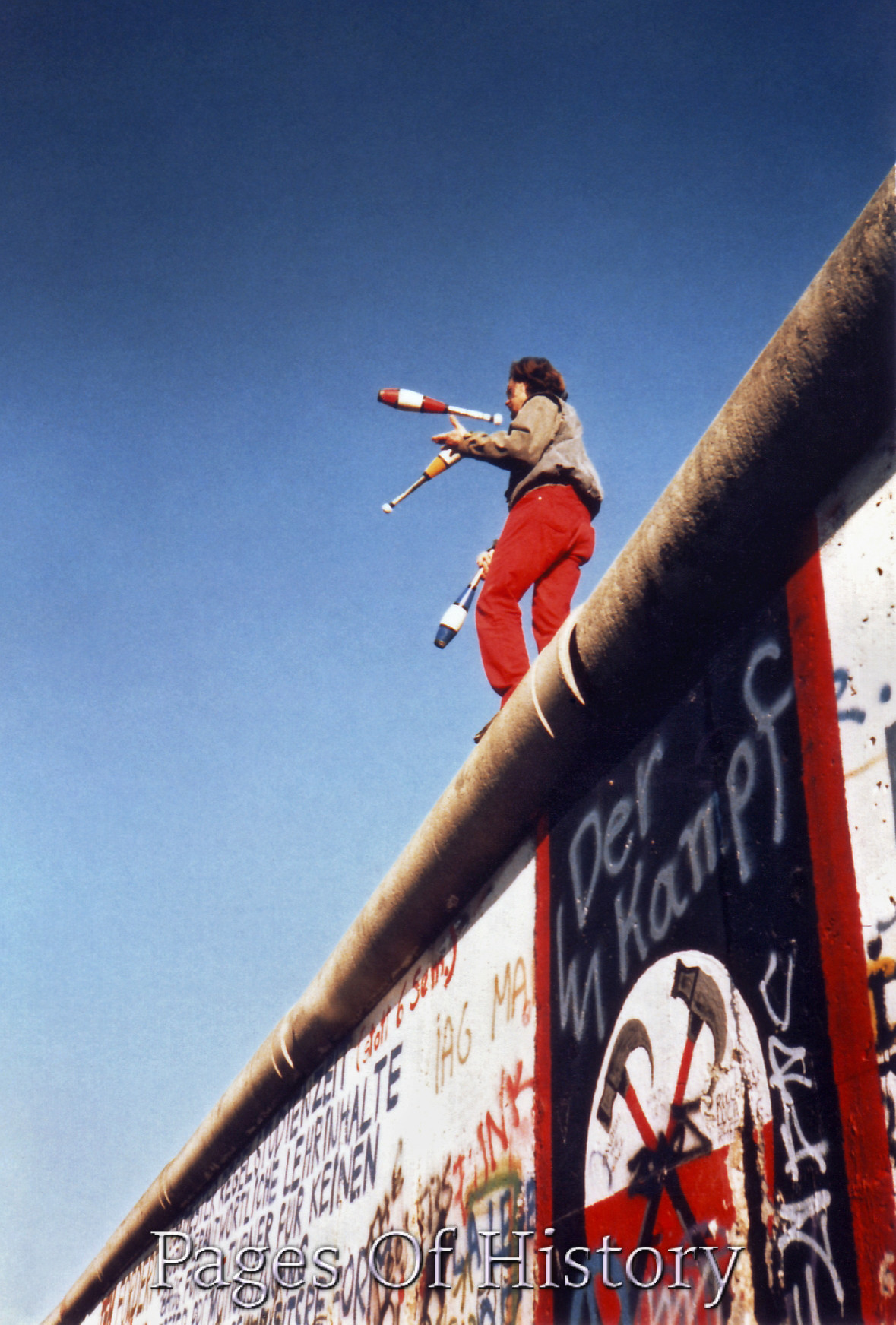
That phrase detonated a chain reaction. West German television broadcast the statement within minutes. Thousands of East Berliners converged on the Bornholmer Straße, Bornholmer Straße, and other checkpoints demanding passage. The border guards at Bornholmer Straße, commanded by Lieutenant Colonel Harald Jäger, had received no orders. Facing an ever-growing crowd and unable to reach superiors, Jäger eventually ordered the barriers lifted around 11:30 p.m. Other crossings followed. By midnight, East and West Berliners were dancing on top of the Wall.
This was not a planned opening. It was the accidental breach of a dam already weakened by months of pressure. The Wall’s physical demolition—by official cranes and by citizens with hammers, the so-called “Mauerspechte” or wall woodpeckers—began in the following days and continued for months.
Why Was the Berlin Wall Built in the First Place?
To understand why the Berlin Wall fell, it helps to recall why it existed. Between 1949 and 1961, roughly 2.7 million East Germans fled to the West through the open sector border in Berlin—a hemorrhage of skilled labor, professionals, and young people that threatened to bankrupt the German Democratic Republic (GDR). On the night of 12–13 August 1961, East German leader Walter Ulbricht ordered the border sealed with barbed wire and later concrete. The Wall was, from its first day, a confession of weakness: a state that had to imprison its own citizens to survive.
Over the decades the barrier evolved into a complex system of concrete walls, watchtowers, “death strips” (Todesstreifen), floodlights, and dog runs. At least 140 people died attempting to cross the Berlin Wall, according to the Berlin Wall Foundation’s research, though some estimates run higher. The Wall became the most potent symbol of the Iron Curtain described by Winston Churchill in his 1946 Fulton speech.
What Long-Term Forces Made the Berlin Wall’s Collapse Inevitable?
The Wall did not fall in a vacuum. Four structural pressures had been building for years, and each one mattered.
1. Economic Stagnation and Debt
By the 1980s the East German economy was hollow. The GDR had borrowed heavily from West Germany and Western banks to fund consumer subsidies and its welfare state, accumulating debts of roughly 49 billion Deutsche Marks by 1989. Productivity lagged, factories were obsolete, and the country depended on West German loans—arranged partly by Bavarian minister-president Franz Josef Strauss—to stay afloat. When Hungary began dismantling its border fence with Austria in May 1989, East Germans flooded westward, and the GDR’s financial lifeline began to fray.
2. The Gorbachev Factor and the End of the Brezhnev Doctrine
Mikhail Gorbachev, who became Soviet leader in March 1985, introduced glasnost (openness) and perestroika (restructuring). More importantly for Berlin, he abandoned the Brezhnev Doctrine—the Soviet principle, invoked to justify the 1968 invasion of Czechoslovakia, that Moscow would intervene to preserve socialist regimes. In a July 1989 speech to the Council of Europe in Strasbourg, Gorbachev explicitly disavowed interference in the internal affairs of Eastern Bloc states. East German leader Erich Honecker, who had resisted reform, could no longer count on Soviet tanks. When the Wall fell, the Soviet Union stood aside.
3. The Rise of Civil Society
Throughout the 1980s, East German citizens found courage in unexpected places: the Protestant churches, environmental groups, and peace movements. The Monday demonstrations in Leipzig, which began in September 1989 and grew from a few hundred to over 70,000 by 9 October, chanted “Wir sind das Volk” (“We are the people”). The regime, unwilling to repeat the Tiananmen Square massacre of June 1989, did not fire on the crowds. This restraint proved fatal to its authority.
4. The Emigration Crisis
When Hungary opened its border with Austria on 10 September 1989, tens of thousands of East Germans fled through it. Others occupied West German embassies in Prague and Warsaw. On 30 September, West German Foreign Minister Hans-Dietrich Genscher announced from the balcony of the Prague embassy that the refugees could leave for the West—a moment of enormous symbolic weight. The mass exodus stripped the GDR of its young and skilled, and it demonstrated that the Wall’s logic was breaking down across the entire Eastern Bloc.
How Did the Protest Movement and Emigration Crisis Undermine the Berlin Wall?
The autumn of 1989 was a cascade of events. On 7 October, the GDR celebrated its 40th anniversary with military parades while Gorbachev stood beside Honecker and reportedly told him that “life punishes those who come too late.” Two days later, on 9 October, 70,000 protesters marched in Leipzig. The regime, expecting a crackdown, instead saw security forces stand down. On 18 October, Honecker was ousted by the Politburo and replaced by Egon Krenz, a man seen as a reformer but who was largely a continuity figure.
Krenz’s government tried to buy time. It drafted a new travel law intended to ease restrictions and reduce pressure. The draft was botched, and the announcement on 9 November was a public-relations disaster. The result was the night the Berlin Wall fell—an outcome no one in the East German government had planned.
Key Events That Led to the Fall of the Berlin Wall
| Date | Event | Significance |
|---|---|---|
| March 1985 | Mikhail Gorbachev becomes Soviet leader | Introduces glasnost and perestroika; signals end of Brezhnev Doctrine |
| May 1989 | Hungary begins dismantling its border fence with Austria | Opens first crack in the Iron Curtain |
| 10 September 1989 | Hungary formally opens border with Austria | Tens of thousands of East Germans flee westward |
| 9 October 1989 | 70,000 protesters march in Leipzig | Regime does not use force; authority crumbles |
| 18 October 1989 | Erich Honecker resigns; Egon Krenz takes over | Attempted reform fails to restore control |
| 9 November 1989 | Schabowski’s press conference; border opens | The Berlin Wall falls |
Why Did the Soviet Union Not Intervene?
The single most decisive external factor was Moscow’s refusal to act. In 1953, Soviet tanks had crushed an East German uprising. In 1956, they had invaded Hungary. In 1968, they had invaded Czechoslovakia. But in 1989, Gorbachev made clear that the Soviet Union would not repeat those interventions. His reasons were pragmatic: the Soviet economy was in crisis, the war in Afghanistan was draining resources, and Gorbachev sought better relations with the West. On 28 October 1989, Soviet foreign ministry spokesman Gennady Gerasimov joked about the “Sinatra Doctrine”—allowing Eastern Bloc states to “do it their way.”
This shift was decisive. Without Soviet backing, the East German regime had no credible means of enforcing its will. The Wall’s guards could shoot individuals, but they could not stop a nation.
What Role Did Ordinary Citizens Play in Bringing Down the Berlin Wall?
The story of the Berlin Wall fell is often told through the lens of great men—Gorbachev, Reagan, Kohl. But ordinary citizens were the engine. The “Wir sind das Volk” chant, the candlelit vigils, the Monday demonstrations, the embassy occupations, the mass exodus through Hungary—all of these were acts of collective courage. When the moment came on 9 November, it was ordinary East Berliners who surged toward the checkpoints and forced the guards to choose between violence and surrender. The guards chose surrender.
- Emigration: Hundreds of thousands left, demonstrating that the Wall could not contain the population.
- Protest: The Monday demonstrations in Leipzig and elsewhere showed the regime’s isolation.
- Symbolic defiance: Candlelight vigils and chants of “We are the people” undermined the state’s claim to represent the people.
- Spontaneous action: On the night of 9 November, crowds at the checkpoints forced the opening.
What Were the Consequences of the Berlin Wall’s Collapse?
The immediate consequences were breathtaking. Within days, millions of East Germans visited the West. On 22 December 1989, the Brandenburg Gate was reopened. On 1 July 1990, the two German states entered a monetary union. On 3 October 1990, German reunification was formally completed. The Cold War, which had defined global politics since 1945, ended not with a bang but with a bureaucratic slip and a crowd of people walking through a gate.
The longer-term consequences reshaped Europe. NATO expanded eastward, the Warsaw Pact dissolved in 1991, and the Soviet Union itself collapsed in December 1991. The Berlin Wall fell became the emblem of 1989, the year of revolutions that swept through Eastern Europe. Yet the transition was not painless: East Germany’s economy collapsed, unemployment soared, and many East Germans felt like second-class citizens in the reunified state—a legacy that still shapes German politics.
Frequently Asked Questions About the Berlin Wall’s Fall
Who was responsible for the Berlin Wall falling?
No single person was responsible. The collapse resulted from the interaction of Gorbachev’s refusal to intervene, East Germany’s economic failure, mass protests, and the accidental opening of the border on 9 November 1989. Günter Schabowski’s misstatement was the proximate trigger, but the underlying causes were structural.
Was the Berlin Wall torn down or opened?
It was opened first. On the night of 9 November 1989, border guards lifted the barriers. Physical demolition followed over the next months, both by official cranes and by citizens with hammers. Most of the Wall was gone by the end of 1990.
How many people died at the Berlin Wall?
According to the Berlin Wall Foundation, at least 140 people died at the Berlin Wall between 1961 and 1989. Some estimates are higher, but the figure of 140 is the most widely accepted scholarly count.
Why the Berlin Wall Fell: A Lasting Perspective
The Berlin Wall fell because it was built on a lie: that a state could survive by imprisoning its own people. The events of 9 November 1989 were not inevitable in their timing, but they were inevitable in their direction. The Wall’s collapse was the product of economic decay, imperial retreat, and the courage of ordinary citizens who refused to accept that a concrete barrier could define their lives. The night the Berlin Wall fell remains a reminder that even the most formidable structures of oppression can crumble when the people who live behind them decide to walk through.