
📅 Last updated: 17.09.2026
The tulip bubble of the 1630s is the world’s most famous financial mania — the story everyone “knows” about Dutch burghers trading their homes for a single flower bulb before the market collapsed overnight in February 1637. The only problem is that much of that story is wrong. The real collapse was slower, stranger, and far more interesting than the legend, and understanding why it happened requires looking past the tulip to the plague, the politics, the plague of paperwork, and the peculiar economics of a flower that takes seven years to grow from seed.
- What Actually Happened: A Short History of the Tulip Bubble
- Why Tulips Were So Expensive: The Biology of Scarcity
- How the Market Worked: Colleges, Paper Contracts, and Windhandel
- The Mechanics of the Crash: January 1637 and the February Collapse
- The Real Causes: Why the Tulip Bubble Burst When It Did
- What the Aftermath Revealed
- Why the Legend Grew: Mackay, Moralism, and the Uses of the Tulip Bubble
- The Lasting Lessons of the Tulip Bubble
What Actually Happened: A Short History of the Tulip Bubble
The tulip arrived in the Dutch Republic by a circuitous route. Native to the mountains of Central Asia, it was cultivated by the Ottomans, who prized it so highly that the reign of Sultan Ahmed III (1703–1730) would later be called the “Tulip Era.” The Flemish diplomat Ogier Ghiselin de Busbecq, ambassador to the court of Suleiman the Magnificent in Constantinople, sent bulbs west in the 1550s, and the flower reached the Low Countries through botanical gardens in Leiden and Antwerp by the 1590s. Its novelty, its vivid colors, and — crucially — its genetic instability made it irresistible to a newly wealthy merchant republic.
The Dutch Republic in the early seventeenth century was the richest society in Europe. The Dutch East India Company (VOC), founded in 1602, was pulling in staggering profits from the spice trade; Amsterdam had become the continent’s financial capital, home to the world’s first modern stock exchange and the Wisselbank, established in 1609. This was a society with surplus capital, a taste for luxury, and an emerging speculative culture. Tulips were the perfect vehicle for that culture: scarce, beautiful, and — because of how they reproduced — inherently limited in supply.
The most valuable tulips were not the solid-colored flowers we buy today. They were “broken” tulips — bulbs infected with the mosaic virus, which produced spectacular flame-like streaks of color on the petals. The most famous was the Semper Augustus, a white flower streaked with deep red, so rare that only a handful of bulbs existed. Prices for such bulbs rose steadily through the 1620s and early 1630s, driven by genuine scarcity and genuine demand from wealthy collectors.
Why Tulips Were So Expensive: The Biology of Scarcity
To understand the tulip bubble, you have to understand the tulip. Unlike stocks or gold, tulips reproduce slowly and unpredictably. A bulb grown from seed takes seven to twelve years to flower. A mature bulb produces offsets — “daughter” bulbs — but only one or two per year, and the mother bulb often dies in the process. This meant supply could not expand quickly to meet demand, no matter how many people wanted in.
Worse, the mosaic virus that made the most prized tulips beautiful also weakened them, reducing their reproduction further. The Semper Augustus was notoriously difficult to propagate. So the market for the rarest tulips was genuinely tight: a small number of extraordinary bulbs, a growing pool of wealthy buyers, and no way to manufacture more at scale. Prices rose for real reasons before they rose for speculative ones.
The trade also had a seasonal rhythm that shaped everything. Tulips were traded by weight — the unit was the aas, roughly one-twentieth of a gram — and the bulbs themselves were only visible and physically transferable during a brief window in summer, when they were lifted from the ground and stored before replanting in autumn. For the rest of the year, traders were buying and selling promises: contracts for bulbs that were still in the ground, or bulbs that had not yet been dug. This is the crucial detail. The Dutch tulip trade was, from very early on, a futures market.
How the Market Worked: Colleges, Paper Contracts, and Windhandel
By the mid-1630s, tulip trading had moved beyond gardeners and connoisseurs into the hands of merchants, innkeepers, weavers, and artisans. The trade organized itself into colleges — informal clubs that met in taverns in towns like Haarlem, Amsterdam, Alkmaar, Hoorn, and Leiden. Each college had its own rules, its own membership, and its own clearing arrangements. Haarlem, a prosperous brewing and textile town, became the epicenter of the trade.
What the colleges traded was mostly paper. A buyer would sign a contract to purchase a specified bulb, by weight, at a specified price, to be delivered at the next digging season. No money changed hands at signing; a small fee or a deposit might be paid, and the contract could be sold on to another trader before delivery ever occurred. This was windhandel — “wind trade” — a term the Dutch themselves used, with more than a little irony, to describe speculation in goods that never physically changed hands.
The system had no central clearinghouse, no margin requirements, no regulator, and no legal enforceability worth the name. Dutch courts had repeatedly declined to enforce tulip futures contracts, treating them as wagers rather than commercial obligations. That legal vacuum did not stop the trade; it simply meant the market ran on reputation, club discipline, and the assumption that everyone would honor their word because everyone wanted to keep trading.
The Tulip Price Table: What Things Actually Cost
Contemporaries left detailed price records, and the numbers are startling — but they need context. Here are some representative prices from the peak of the market, along with what the same money could buy.
| Item | Approximate Price (1636–37) | Comparable Purchase |
|---|---|---|
| Common tulip bulb (by weight) | A few stuivers | A loaf of bread |
| Admiral van der Eijck (prized variety) | 1,000–2,000 guilders | A modest house in a Dutch town |
| Semper Augustus (peak asking price) | Up to 5,500–6,000 guilders | A grand canal house in Amsterdam |
| Skilled artisan’s annual wage | 250–350 guilders | — |
| VOC ship’s cargo of spices (typical) | Tens of thousands of guilders | — |
The famous “house for a bulb” stories are real but selective. The highest prices were paid for a tiny handful of the rarest bulbs, and many of those transactions were paper contracts between speculators rather than cash sales. Still, the scale of the mania is not invented: by late 1636, ordinary people were mortgaging land, selling livestock, and pooling money to buy contracts on bulbs they would never plant.
The Mechanics of the Crash: January 1637 and the February Collapse
The tulip bubble did not burst in a single dramatic day. It deflated in stages, and the first cracks appeared in the winter of 1636–37, during the height of the trading season. In December 1636, prices for some varieties began to wobble. By early January 1637, the Haarlem colleges were reporting that buyers were failing to show up to settle contracts. On 3 February 1637, a routine auction in Haarlem — one of the regular sales where bulbs were offered to the highest bidder — drew almost no bids. The market had gone quiet.
Within days, the collapse was general. Prices for even the most prized bulbs fell by 90 percent or more. Contracts signed at 5,000 guilders were worthless; buyers refused to pay, sellers refused to deliver, and the whole edifice of paper obligations came apart. The wind trade had lived up to its name.
What is often missed is that the crash was not caused by any single event. There was no equivalent of a stock market crash or a bank failure. Instead, a market that had been running on confidence, credit, and the expectation of ever-higher prices simply ran out of new buyers. When the marginal speculator stopped believing he could sell his contract at a profit, the chain of obligations broke — and it broke everywhere at once, because the same handful of bulbs were being traded back and forth among the same interconnected clubs.
The Real Causes: Why the Tulip Bubble Burst When It Did
Historians have argued for centuries about the causes of the collapse. The traditional story — popularized by Charles Mackay in his 1841 book Extraordinary Popular Delusions and the Madness of Crowds — blames irrational exuberance and a sudden panic. That is part of the truth, but it is not the whole truth. Several specific factors converged in 1636–37 to make the market fragile at exactly the moment it peaked.
1. The Bubonic Plague of 1635–1637
This is the most underrated factor. A severe outbreak of bubonic plague struck the Dutch Republic in 1635 and raged through 1637, killing tens of thousands in Haarlem, Leiden, and Amsterdam. Haarlem lost a substantial fraction of its population. The plague disrupted everything: it closed markets, scattered trading communities, killed merchants and their debtors, and — critically — destroyed the social trust on which the unregulated tulip trade depended. A market built on handshake deals and club membership cannot survive when a third of your counterparties are dead or fleeing the city. The plague did not cause the bubble, but it fatally weakened the informal institutions that held the market together.
2. The Shift from Bulbs to Paper
As long as tulips were traded as physical bulbs among gardeners and collectors, prices were anchored to a real good with real uses. Once the trade shifted to futures contracts on bulbs that would not be delivered for months or years, the link between price and underlying value stretched thin. By late 1636, the volume of paper contracts vastly exceeded the number of bulbs that actually existed. There were only so many Semper Augustus bulbs in the world — perhaps a dozen — but hundreds of contracts claiming to represent them. When buyers began to ask for delivery, the impossibility of honoring all the contracts became obvious.
3. The Absence of Enforcement
Dutch courts had consistently refused to enforce tulip futures contracts, and when the crash came, the States of Holland — the provincial government — effectively confirmed that refusal. In the aftermath, the province declined to compel payment on the collapsed contracts, and many towns simply voided them. This sounds like mercy, but it was poison in advance: because traders knew contracts might not be enforced, the market relied entirely on reputation. Once reputations failed, there was no backstop. A modern exchange has clearinghouses and margin calls; the Dutch colleges had tavern rules and social pressure.
4. The Structure of the Trade Itself
The tulip trade had a built-in fragility: the same bulbs were traded repeatedly among a small network of dealers. Each trader held contracts to buy and contracts to sell, often on the same bulbs, with the expectation that the difference would net out. This is fine when prices rise and everyone can settle. It is catastrophic when prices fall, because every trader is simultaneously a debtor and a creditor, and the failure of one triggers the failure of the next. There was no netting, no central counterparty, no way to untangle the web except by letting it collapse.
What the Aftermath Revealed
The collapse did not ruin the Dutch economy. That is one of the great myths of the tulip bubble. The Republic’s wealth rested on trade, shipping, finance, and industry — not on flowers. The VOC continued to prosper; the Amsterdam exchange kept functioning; the Golden Age rolled on for decades. What the crash ruined was individual speculators, particularly the small ones who had mortgaged farms and homes to buy contracts at the top.
The social aftermath was messy. Debtors and creditors litigated for years. Some towns, like Haarlem, set up arbitration panels to settle disputes at a fraction of face value. Others simply let the contracts die. The most enduring consequence was reputational: “tulip mania” became a byword for financial folly, cited by everyone from eighteenth-century moralists to modern economists warning about dot-com stocks and cryptocurrency.
But the moralizing often misses the point. The Dutch tulip trade was not simply a frenzy of greedy fools. It was a sophisticated, if unregulated, futures market that developed real instruments, real pricing, and real risk — and then discovered, painfully, what happens when a market has no institutional foundation to catch it when it falls.
Why the Legend Grew: Mackay, Moralism, and the Uses of the Tulip Bubble
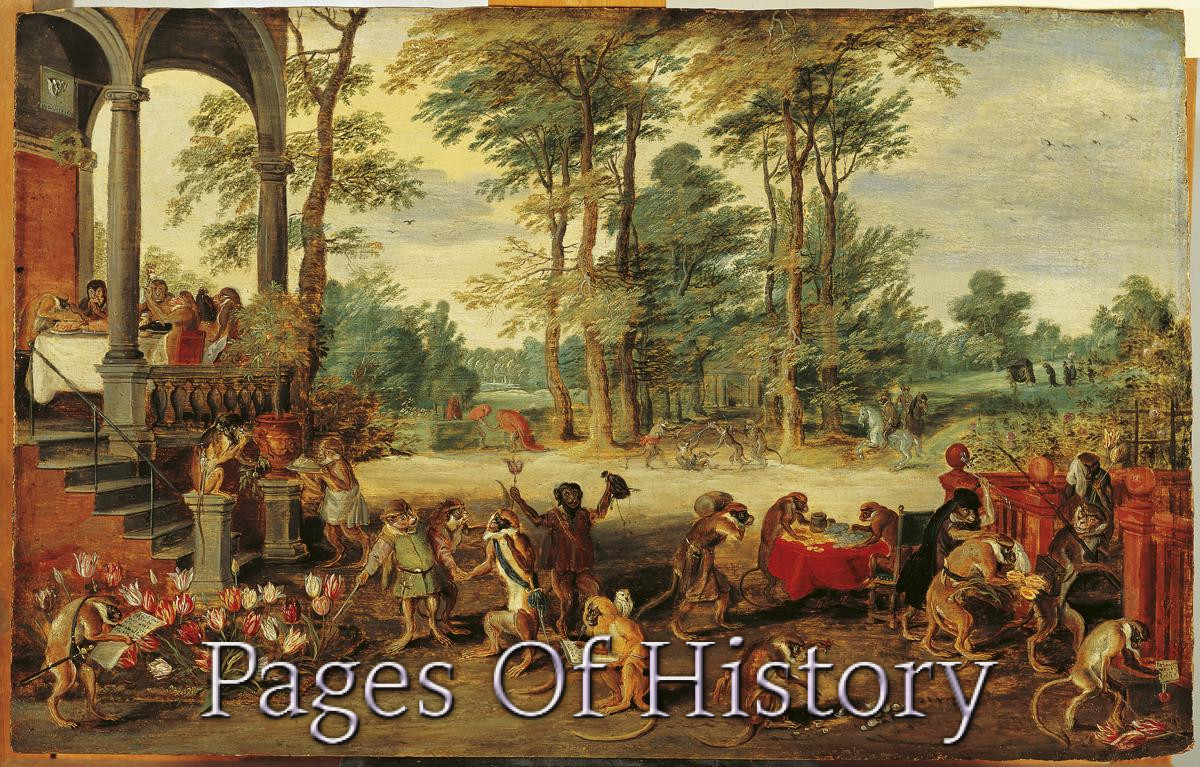
The modern image of tulip mania owes more to Victorian moralists than to Dutch sources. Charles Mackay’s 1841 chapter on the subject — written from secondary accounts, with embellishments — gave the world the image of sober Dutch burghers trading their homes for single bulbs and then weeping in the streets. Later writers added details: the sailor who ate a priceless bulb thinking it was an onion, the chimney sweep who mistook a Semper Augustus for a common tulip. Some of these stories have a kernel of truth; most are apocryphal or exaggerated.
Academic historians, notably Peter Garber in Famous First Bubbles (2000) and Anne Goldgar in Tulipmania (2007), have carefully reconstructed what actually happened from notarial records, price lists, and court documents. Their conclusion is nuanced: there was a real speculative episode, real price spikes, and a real crash — but it was confined to a relatively small network of traders, and it did not devastate the Dutch economy. The tulip bubble was a genuine mania, but a smaller and more contained one than the legend suggests.
“The tulip mania was not a case of a whole nation losing its mind. It was a case of a small, interconnected group of merchants and artisans creating a market in paper promises — and then discovering that paper promises are only as good as the people who sign them.”
— A summary of Anne Goldgar’s argument in Tulipmania: Money, Honor, and Knowledge in the Dutch Golden Age (2007)
The Lasting Lessons of the Tulip Bubble
Why does the tulip bubble still matter nearly four centuries later? Because it is the first well-documented speculative mania in modern history, and its anatomy has repeated itself ever since. The South Sea Bubble of 1720, the railway mania of the 1840s, the dot-com crash of 2000, the housing bubble of 2008, and the cryptocurrency cycles of the 2010s and 2020s all share features with the Dutch tulip trade: a genuinely scarce or novel asset, a rush of easy credit, a shift from ownership to leveraged paper claims, and a collapse triggered when new buyers stop arriving.
The tulip bubble also illustrates a subtler point that economists still debate: bubbles are not always irrational. Tulips really were scarce. Prices really did rise for decades before the mania. The problem was not that people believed tulips were valuable; it was that they believed the price would keep rising forever, and they borrowed against that belief. The distinction between an asset’s value and its price trajectory is the oldest lesson in finance, and the Dutch learned it the hard way in the winter of 1637.
Finally, the story is a reminder that markets are social institutions, not just price mechanisms. The Dutch tulip colleges worked because their members trusted each other. When the plague killed those members, when contracts outran bulbs, and when courts refused to enforce obligations, the trust evaporated — and with it, the market. Modern finance has built elaborate machinery — exchanges, clearinghouses, regulators, deposit insurance — precisely to replace that fragile trust with enforceable rules. Whether that machinery is sufficient is a question every generation gets to answer for itself.
So why did the Dutch tulip bubble really burst in 1637? Not because tulips stopped being beautiful, and not because the Dutch suddenly came to their senses. It burst because a market built on paper, reputation, and unlimited optimism met a winter of plague, legal uncertainty, and the simple fact that there were never enough bulbs to honor the promises made about them. The flower was real. The fortune was not. And that, more than any apocryphal story about a sailor eating a priceless onion, is the enduring lesson of the tulip bubble.