
📅 Last updated: 10.07.2026
- The Myth of the “White God” and the Reality of Moctezuma’s Paralysis
- The Masterstroke: Cortés the Diplomat and the Alliance System
- The Massacre at Cholula: A Strategic Terror
- The Entry into Tenochtitlan and the Fatal Hospitality
- The *Noche Triste* and the Siege of Tenochtitlan
- The Decisive Factor: Smallpox and the Demographic Catastrophe
- The Siege and the Final Collapse
- The Lasting Impact: A World Transformed
- Conclusion: The Real Reason
The story of the Aztec Empire collapse is often reduced to a simple narrative of steel-clad Spaniards versus superstitious natives, a tale of guns, germs, and steel. While these elements were undeniably present, they are insufficient to explain the sudden and total annihilation of one of the world’s most powerful empires in just over two years. To understand the real reason the Aztec Empire fell, we must look beyond the conquistadors and their arquebuses. The true explanation lies in a perfect storm of geopolitical genius, catastrophic miscommunication, a devastating smallpox pandemic, and the fatal exploitation of pre-existing hatreds. The Aztec Empire did not fall because it was weak; it fell because its enemies, led by a brilliant Spanish tactician, learned to dismantle it from the inside out.
The Myth of the “White God” and the Reality of Moctezuma’s Paralysis
For centuries, a popular myth held that the Aztecs believed Hernán Cortés was the returning god Quetzalcoatl. This story, originating in post-conquest Spanish chronicles, has been largely debunked by modern historians. Moctezuma II was not a superstitious fool waiting for a deity. He was a seasoned ruler, a *tlatoani* (“speaker”) who had expanded the empire through war and diplomacy. However, his actions in 1519 reveal a man caught in a profound strategic dilemma, not religious awe.
When Cortés landed on the Gulf Coast near what is now Veracruz in April 1519 with roughly 500 soldiers, 16 horses, and a few cannons, Moctezuma received detailed intelligence. The *pipiltin* (nobles) reported everything: the pale skin, the “deer” that carried men, the thunderous weapons. Moctezuma’s response was not to worship, but to gather information and attempt bribery. He sent emissaries laden with magnificent gifts—gold disks, feathered headdresses, jade jewelry—to persuade Cortés to leave. This was standard diplomatic practice for a powerful ruler dealing with an unknown, potentially hostile force.
The real reason for Moctezuma’s paralysis was political, not theological. The Aztec Empire was a tribute-based hegemony, not a unified nation-state. It was held together by fear and the constant extraction of tribute from conquered city-states. Moctezuma understood that any sign of weakness—such as a foreign army marching unopposed into the Valley of Mexico—could shatter the fragile loyalty of his vassals. His strategy was to contain and observe, to use his vast network of spies and governors to manage the threat without committing to a war that might reveal the empire’s internal fractures. He underestimated Cortés’s audacity. Cortés, for his part, understood that his only chance of survival was to find and exploit those fractures.
The Masterstroke: Cortés the Diplomat and the Alliance System
Cortés was not merely a soldier; he was a master of political warfare. He arrived on the coast with a clear mandate from the governor of Cuba to trade, but he quickly exceeded his orders. He founded the town of Veracruz, creating a legal basis for his authority, and then famously burned his ships (or scuttled them) to prevent desertion. This act was symbolic, but his true genius lay in his diplomacy with the indigenous peoples.
The Totonac and the Tlaxcalans
Cortés’s first major success came with the Totonac people of Cempoala. They were subjects of the Aztec Empire, resentful of the heavy tribute demands. Cortés recognized their discontent and offered an alliance against Moctezuma. By August 1519, he had secured a vital coastal base and thousands of Totonac warriors. But the real prize lay inland: the Republic of Tlaxcala.
The Tlaxcalans were the Aztecs’ most bitter and enduring enemies. A confederation of four city-states, they had maintained their independence for decades, surrounded by the Aztec Empire. They had fought the *Flower Wars* (ritualized battles to capture prisoners for sacrifice) against the Aztecs for generations. When Cortés entered their territory, they initially attacked him. After several bloody skirmishes, Cortés demonstrated his military value. The Tlaxcalan leaders, particularly the four lords—Xicotencatl the Elder, Maxixcatzin, and others—made a calculated decision. They saw in the Spanish a potential weapon to finally break Aztec power.
“The Tlaxcalans were not conquered by Cortés; they conquered *with* him. They provided the vast majority of the manpower, supplies, and local knowledge that made the conquest possible. Without Tlaxcala, the Spanish expedition would have been annihilated.” — Adapted from the *Florentine Codex* accounts.
This alliance was the single most important factor in the Aztec Empire collapse. Cortés’s army of a few hundred Spaniards became an army of tens of thousands of indigenous warriors. The Tlaxcalans provided porters, guides, and a disciplined infantry that understood the terrain and the tactics of their Aztec foes.
The Massacre at Cholula: A Strategic Terror
Before entering Tenochtitlan, Cortés stopped at Cholula, a major religious center allied with the Aztecs. According to Spanish accounts and indigenous testimony, Cortés discovered a plot (possibly real, possibly fabricated) to ambush and destroy his army once inside the city. His response was brutal and calculated.
In October 1519, the Spanish and their Tlaxcalan allies surrounded the central plaza of Cholula and massacred thousands of unarmed nobles, priests, and warriors. The *Cholula Massacre* was a deliberate act of psychological warfare. It sent a clear message to the entire region: resistance meant annihilation. It also severed one of Moctezuma’s key alliances, as Cholula had been a loyal tributary. The news of the massacre raced ahead of Cortés, paralyzing potential resistance and ensuring that many other city-states would either submit or remain neutral.
The Entry into Tenochtitlan and the Fatal Hospitality
On November 8, 1519, Cortés and his army—now numbering perhaps 300 Spaniards and thousands of Tlaxcalans—entered Tenochtitlan. The city was a marvel, larger than any European city of the time, with a population of over 200,000. It sat on an island in the middle of Lake Texcoco, connected to the mainland by four great causeways. Moctezuma received Cortés at the southern causeway, exchanging gifts and formal greetings.
Moctezuma’s strategy was still one of containment. He lodged the Spanish in the former palace of his father, Axayacatl, a fortified complex in the heart of the city. He provided them with food, gold, and women. But he had made a fatal error: he had allowed a hostile, armed force into his capital. Cortés, sensing Moctezuma’s hesitation, soon took the emperor prisoner in his own palace, holding him as a hostage to control the empire. This humiliating act shattered the mystique of the *tlatoani*’s divine authority. The Aztec nobility was now divided between those who wanted to resist and those who counseled patience.
The *Noche Triste* and the Siege of Tenochtitlan
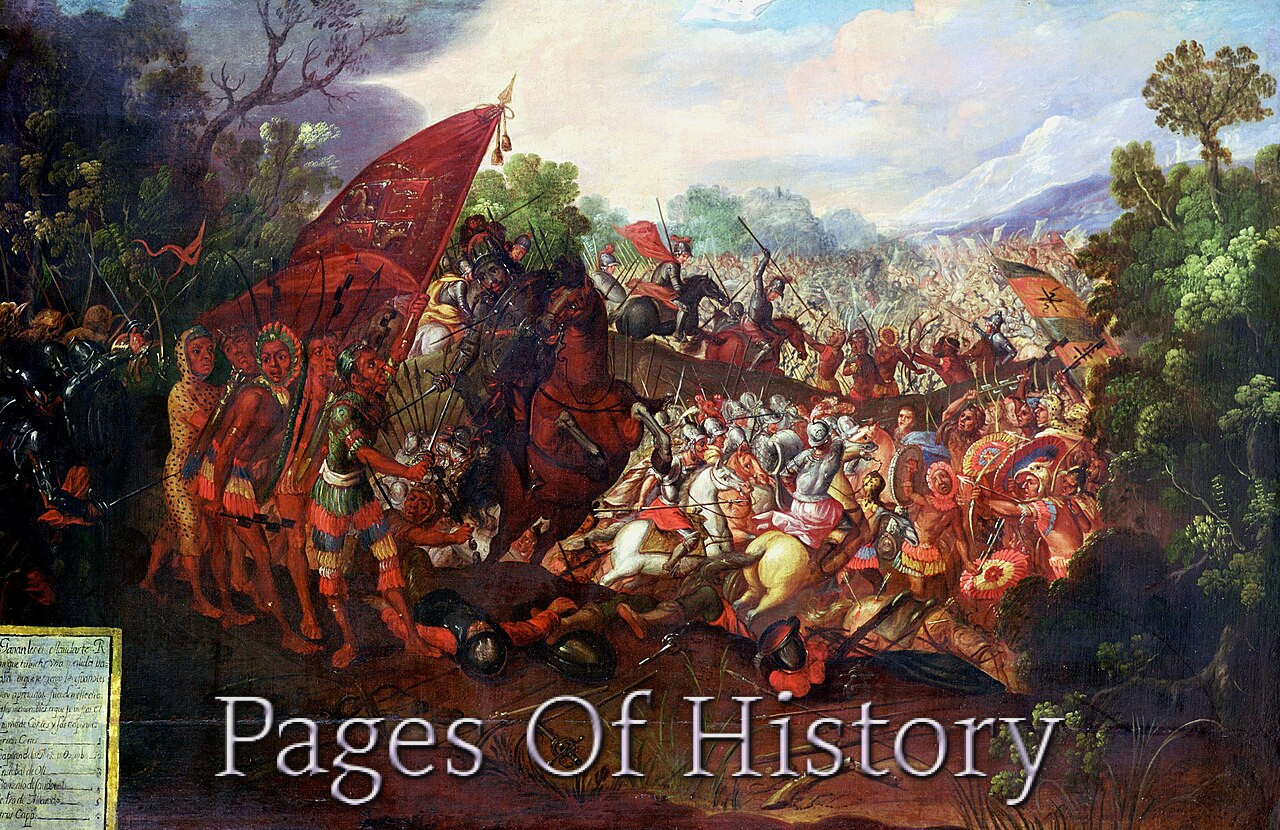
The fragile peace shattered when Cortés was forced to return to the coast to face a Spanish expedition sent by his rival, Governor Velázquez of Cuba. He defeated them at the Battle of Cempoala and convinced the survivors to join him. But during his absence, his lieutenant, Pedro de Alvarado, committed a catastrophic error. During the festival of Toxcatl in May 1520, Alvarado and his men massacred hundreds of unarmed Aztec nobles and warriors in the Great Temple, suspecting a plot. The city rose in fury.
Cortés returned to find Tenochtitlan in open revolt. Moctezuma, now a puppet, was sent to the roof to calm his people. He was struck by stones and a javelin—whether killed by his own people or by the Spanish remains debated—and died shortly after. His brother, Cuitláhuac, was elected the new *tlatoani*, and he immediately organized a full-scale assault.
On the night of June 30, 1520, the *Noche Triste* (Sad Night), the Spanish and Tlaxcalans attempted to flee the city. They were ambushed on the Tacuba causeway. Hundreds of Spaniards and thousands of Tlaxcalans were killed, drowned under the weight of the gold they had looted, or captured and sacrificed atop the Templo Mayor. Cortés himself wept under a *ahuehuete* tree, a moment famously recorded in the chronicles. The Aztec Empire collapse seemed impossible; the empire had struck back and nearly annihilated the invaders.
The Decisive Factor: Smallpox and the Demographic Catastrophe
But the Aztecs’ victory was short-lived. Among the Spanish survivors of the *Noche Triste* was a slave from the Cuban expedition who carried a deadly passenger: smallpox. The disease had been present in the Caribbean for decades, but the Aztecs had no immunity. By the time Cortés regrouped in Tlaxcala, smallpox had exploded in the Valley of Mexico.
The results were apocalyptic. The disease killed an estimated 25–50% of the population of central Mexico within months. It did not discriminate. It killed commoners and nobles alike. Crucially, it killed the newly elected emperor, Cuitláhuac, who died of smallpox in December 1520, after only 80 days in power. His death left the Aztec leadership in chaos. He was succeeded by his young nephew, Cuauhtémoc, a brilliant military leader, but he inherited a shattered army and a society in collapse.
This table summarizes the key leaders and their fates:
| Ruler | Reign | Role During Conquest | Fate |
|---|---|---|---|
| Moctezuma II | 1502–1520 | Hesitant diplomat, hostage, puppet emperor | Killed under disputed circumstances, June 1520 |
| Cuitláhuac | 1520 (80 days) | Organized the victory of the Noche Triste | Died of smallpox, December 1520 |
| Cuauhtémoc | 1520–1521 | Led the heroic defense of Tenochtitlan | Captured, tortured, executed by Cortés, 1525 |
Smallpox did not win the war for Cortés, but it made victory possible. It demoralized the defenders, disrupted command, and created a psychological crisis. The Aztecs had no explanation for a disease that killed only them, leaving the Spanish untouched. Many believed the gods had abandoned them.
The Siege and the Final Collapse
With his base in Tlaxcala, Cortés launched a methodical campaign of reconquest. He understood that Tenochtitlan was an island fortress. To take it, he needed to control the lake. He ordered the construction of thirteen *bergantines* (brigantines)—small, flat-bottomed warships—built in Tlaxcala by Spanish shipwrights with indigenous labor, and then transported in pieces over the mountains to the lake.
The siege of Tenochtitlan began in May 1521 and lasted 93 days. It was one of the most brutal and decisive military campaigns in world history. Cortés divided his forces into three commands, each assigned to attack one of the three causeways leading into the city. His strategy was to cut off all supply routes, particularly the aqueduct from Chapultepec that provided fresh water to the city.
The Tactics of Attrition
The Aztecs, under Cuauhtémoc, fought with desperate courage. They used canoes to harass the brigantines, and they fought house-to-house, forcing the Spanish to demolish every building as they advanced. Cortés realized that street fighting was too costly. He changed tactics: he would level the city, block by block, filling canals with rubble to create a path for his cavalry.
The siege became a war of attrition. The Aztecs faced:
– Starvation: Food supplies were cut off.
– Thirst: The aqueduct was destroyed; the lake water was brackish and contaminated.
– Disease: Smallpox continued to ravage the defenders.
– Lack of allies: The Tlatelolco market, the last stronghold, was isolated.
The Spanish and their indigenous allies, who now numbered over 100,000, methodically tightened the noose. The final assault came in August 1521. The defenders retreated to Tlatelolco, where they made their last stand. On August 13, Cuauhtémoc was captured while attempting to flee by canoe. The city fell.
Cortés later wrote to King Charles V: “I assure your Majesty that there is no more terrible sight in the world than this.” The city he conquered was a field of corpses, rubble, and silence. The Aztec Empire collapse was complete.
The Lasting Impact: A World Transformed
The fall of Tenochtitlan did not end resistance. The conquest of the rest of Mesoamerica took decades, and indigenous revolts continued for generations. But the capture of the capital marked the end of the Aztec Empire as a political entity. The consequences were world-altering.
The Spanish established the Viceroyalty of New Spain, and the immense wealth of the Aztec treasury—gold, silver, and tribute—began to flow to Europe. This wealth financed the Spanish Empire and fueled the rise of global capitalism. The indigenous population of central Mexico collapsed from an estimated 15–25 million in 1519 to just over 1 million by 1600, a demographic catastrophe caused by a combination of disease, warfare, forced labor, and social disruption.
The cultural and religious transformation was equally profound. The Spanish systematically destroyed Aztec temples, codices, and religious icons. They built churches on the foundations of pyramids, and they imposed a new social hierarchy based on race and birth. The memory of the Aztec Empire was suppressed, but it never died. In the centuries that followed, the Aztecs—or Mexica—became a symbol of indigenous resistance, pride, and a lost golden age. The eagle and the serpent, once symbols of Tenochtitlan’s founding, became the center of the modern Mexican flag.
Conclusion: The Real Reason
The Aztec Empire collapse was not inevitable. It was not the result of superior Spanish technology or divine intervention. It was the product of a specific, contingent series of events. The real reason the Aztec Empire fell was a convergence of three critical factors:
1. Strategic Indigenous Alliances: Cortés did not conquer the Aztecs; he led a coalition of indigenous peoples who hated Aztec rule. The Tlaxcalans, Totonacs, and others provided the overwhelming majority of the fighting force. They fought not for Spain, but for their own liberation from Aztec tribute and terror.
2. Biological Catastrophe: Smallpox struck at the worst possible moment, decimating the leadership and population of the empire just as it was preparing for a final, desperate defense. It was the silent, invisible ally that tipped the scales.
3. Aztec Political Fragility: The empire was a tribute state, not a nation. It had no unifying ideology beyond fear and conquest. When the center weakened, the periphery did not rally to defend it. The Aztec elite’s failure to unite and their initial hesitation allowed Cortés to establish an unbreakable foothold.
The story of the Aztec Empire’s fall is a lesson in the power of alliances, the fragility of empires built on coercion, and the devastating impact of disease on a population with no immunity. It is a story of courage and cruelty, of misunderstanding and calculation, of a world that was literally unmade and remade in a few short years. The Aztec Empire collapsed not because it was outmatched, but because it was outmaneuvered, outlasted, and overwhelmed by forces it could not have imagined.