
📅 Last updated: 23.07.2026
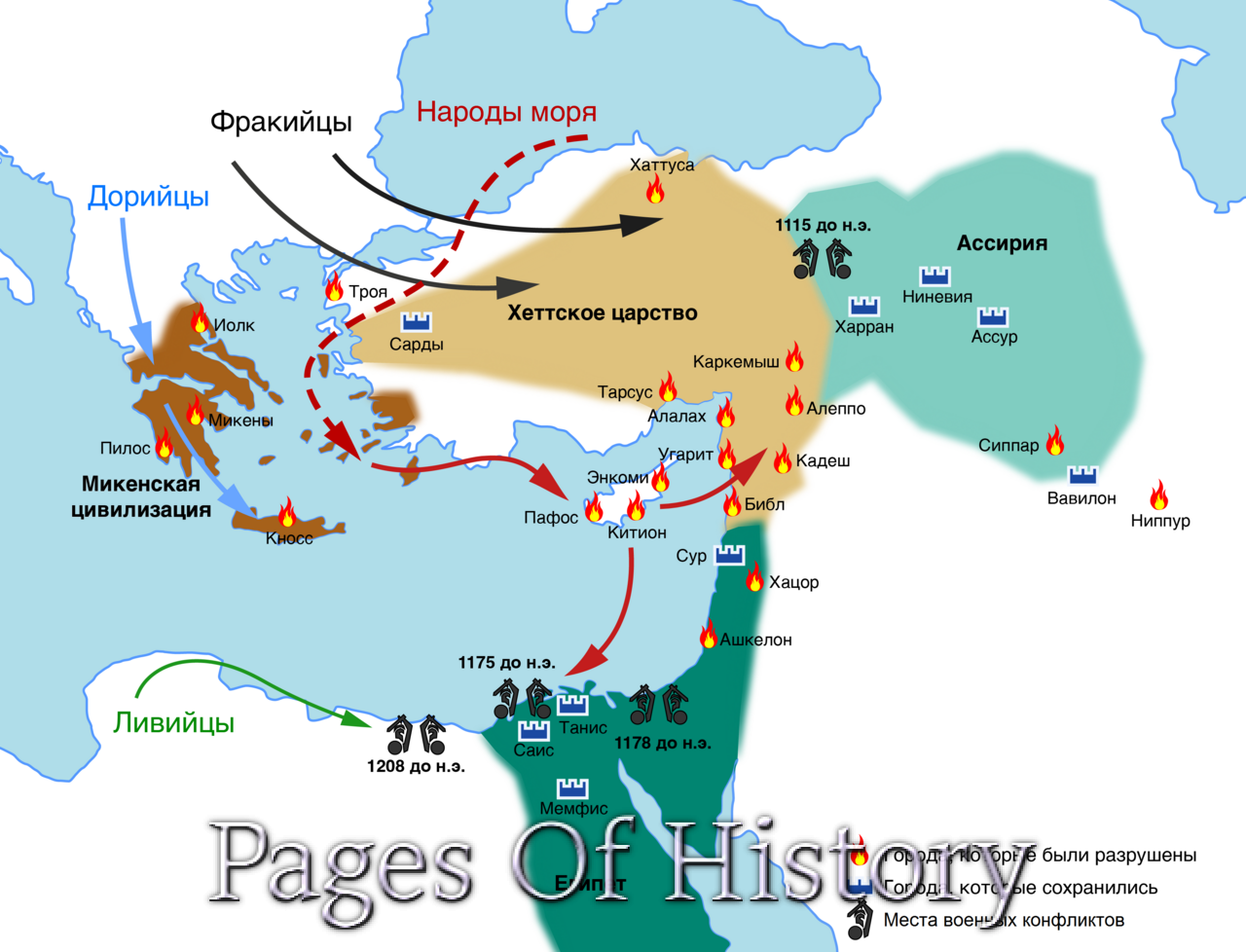
The Bronze Age collapse is one of history’s most dramatic and debated turning points, a period around 1200–1150 BCE when a network of advanced civilizations stretching from Greece to Egypt suddenly disintegrated. For decades, scholars attributed this downfall to a single “Sea Peoples” invasion, but new archaeological evidence—from underwater excavations off the coast of Cyprus to high-resolution climate data from Israeli caves—paints a far more complex picture. This article explores the real reason the Bronze Age collapse unfolded, revealing a perfect storm of systemic failures where climate change, economic disruption, and cascading political crises converged to bring an entire era to its knees.
The Late Bronze Age World: A House of Cards
To understand why the Bronze Age collapse was so catastrophic, we must first appreciate the intricate system it destroyed. By 1300 BCE, the Eastern Mediterranean was a tightly interconnected world of palace-based economies, where kings controlled every aspect of production and trade.
The Major Players
The key civilizations included:
- The Late Bronze Age World: A House of Cards
- New Evidence: Climate Change as the First Domino
- The Collapse of International Trade
- The Domino Effect of Military Collapse
- New Evidence from Cyprus: The Copper Connection
- The Human Cost: Famine, Disease, and Mass Migration
- Why the Bronze Age Collapse Matters Today
- Conclusion: The Lesson of Systemic Fragility
- The Hittite Empire (central Anatolia, modern Turkey) — a militaristic state ruled from Hattusa, with King Suppiluliuma I (r. c. 1344–1322 BCE) expanding its reach into Syria.
- Mycenaean Greece (mainland Greece and Crete) — a collection of fortified citadels like Mycenae, Pylos, and Tiryns, ruled by wanax (kings) who controlled vast stores of grain, olive oil, and luxury goods.
- New Kingdom Egypt (the Nile Valley) — under Pharaohs like Ramesses II (r. 1279–1213 BCE) and Ramesses III (r. 1186–1155 BCE), Egypt was the era’s superpower, dominating trade routes and maintaining a professional army.
- The Kingdom of Ugarit (on the Syrian coast) — a wealthy trading city-state whose clay tablets provide our most detailed records of international diplomacy and commerce.
- The Cypriot kingdoms (Cyprus) — the primary source of copper, the essential metal for the era’s bronze weapons and tools.
These states were not isolated. They exchanged ambassadors, royal brides, and goods through a complex web of treaties. The Amarna Letters (c. 1350 BCE), a cache of clay tablets found in Egypt, reveal kings addressing each other as “brothers,” negotiating marriages, and shipping gold, copper, and timber across the sea. This interdependence was the system’s greatest strength—and its fatal weakness.
The Fragile Foundation
The entire system rested on a single, non-renewable resource: tin. Bronze, the alloy that gave the age its name, is made of copper (about 90%) and tin (about 10%). While copper was relatively abundant in Cyprus and the Sinai, tin was scarce. The only known major sources were in distant Afghanistan (the Badakhshan mines) and possibly Cornwall, England. This meant that every sword, spearhead, and chariot fitting depended on long-distance trade routes that stretched thousands of miles. A disruption to tin supplies would not just inconvenience armies—it would paralyze them.
New Evidence: Climate Change as the First Domino
For decades, the “Sea Peoples” theory dominated explanations for the Bronze Age collapse. Inscriptions from Medinet Habu (Egypt, c. 1180 BCE) describe a coalition of mysterious raiders who “came from the sea” and devastated the Hittites, Alashiya (Cyprus), and other lands. But new climate data has fundamentally shifted the narrative.
The Drought That Changed History
In 2013 and 2018, teams led by paleoclimatologist David Kaniewski (University of Toulouse) and Brandon Drake (University of New Mexico) published high-resolution pollen and sediment core analyses from Cyprus, the Dead Sea, and the Nile Delta. Their findings were stark: between 1250 and 1100 BCE, the Eastern Mediterranean experienced a prolonged, severe drought—the worst in 900 years.
Key evidence includes:
- Pollen records from Cyprus show a dramatic decline in oak and pine pollen, replaced by drought-resistant plants like sagebrush. This indicates a 30–50% reduction in precipitation.
- Stalagmite data from Soreq Cave (Israel) reveals a sharp spike in oxygen-18 isotopes, a marker for extreme aridity, precisely during the collapse period.
- Nile flood records from Egyptian inscriptions show that the annual inundation failed repeatedly in the 1190s BCE, leading to widespread famine. One text from the reign of Ramesses III laments: “The land of Egypt was in great distress; no one was able to plant grain.”
This drought was not a minor inconvenience. The Late Bronze Age kingdoms were heavily dependent on agriculture—wheat, barley, olives, and grapes—for both subsistence and taxation. When harvests failed, the palace economies could not collect the grain they needed to pay scribes, soldiers, and craftsmen. The entire administrative apparatus began to crumble.
The Hittite Starvation
No civilization suffered more than the Hittite Empire. The capital Hattusa (near modern Bogazkale, Turkey) was an inland city with limited water resources. Hittite king Šuppiluliuma II (r. c. 1207–1178 BCE) left desperate inscriptions describing how he “went to the land of Lukka” (Lycia) to secure grain shipments, but the ships never arrived. The Hittite heartland depopulated rapidly; by 1180 BCE, Hattusa was abandoned and burned, its royal archives left to crumble into dust. The empire that had fought Egypt to a standstill at the Battle of Kadesh (1274 BCE) simply starved to death.
The Collapse of International Trade
As climate stress mounted, the intricate trade networks that had sustained the Bronze Age world began to unravel. This is where the “Sea Peoples” enter the story—not as the primary cause, but as a symptom of a deeper crisis.
The Shipwreck at Uluburun
One of the most revealing pieces of new evidence is the Uluburun shipwreck, discovered off the coast of Turkey in 1982 and excavated through the 1990s. Dating to around 1320 BCE, this wreck represents a typical Late Bronze Age merchant vessel. Its cargo included:
- 10 tons of copper ingots from Cyprus (shaped like ox-hides)
- 1 ton of tin ingots (likely from Afghanistan)
- Canaanite jars containing terebinth resin (used as incense)
- Ivory from African elephants, hippopotamus teeth
- Glass ingots from Egypt (cobalt-blue and turquoise)
- Mycenaean pottery and Cypriot oil lamps
This single ship carried goods from at least seven different cultures, showing how deeply integrated the economy was. But by 1200 BCE, such voyages became increasingly dangerous. New evidence from the Cape Gelidonya shipwreck (c. 1200 BCE) shows a different story: this vessel carried only scrap metal—broken tools and weapons—suggesting that merchants were now scavenging for raw materials rather than trading finished goods. The system was breaking down.
The Ugarit Letters: A Civilization’s Last Words
Perhaps the most poignant evidence comes from the clay tablets of Ugarit (modern Ras Shamra, Syria). This wealthy trading city was destroyed around 1185 BCE, but its royal archives survived, baked hard by the fire that consumed the palace. The tablets record a desperate correspondence between King Ammurapi of Ugarit and his allies.
One letter, sent to the king of Alashiya (Cyprus), reads:
“My father, behold, the enemy’s ships came here; my cities were burned, and they did evil things in my country. Does not my father know that all my infantry and chariotry are stationed in Hatti, and that all my ships are stationed in Lukka? Thus the country is abandoned to itself. My father, if the ships of the enemy appear, let me know so that I can take refuge!”
The letter was never sent. Ugarit was sacked and burned before any help could arrive. The tablets were found scattered on the palace floor, still in their clay envelopes, as if the scribes had fled mid-sentence. The city was never reoccupied.
The Domino Effect of Military Collapse
As trade failed and famine spread, the great powers could no longer maintain their armies. This created a security vacuum that was quickly filled by desperate, mobile groups—the so-called “Sea Peoples.”
The Battle of the Delta (c. 1178 BCE)
Egypt was the last great power to fall. Under Ramesses III, the Egyptians repelled a massive invasion at the Battle of the Delta, recorded in vivid reliefs at Medinet Habu. The inscriptions describe a coalition of enemies: the Peleset (likely the Philistines), Shekelesh, Denyen, Tjekker, and Weshesh. Ramesses claimed victory, but the price was high. Egypt lost its Levantine provinces, and the economy was so depleted that the state could no longer pay its workers—leading to the first recorded labor strike in history (c. 1156 BCE) at the village of Deir el-Medina.
Table: Key Events of the Bronze Age Collapse
| Date (BCE) | Event | Impact |
|---|---|---|
| ~1250 | Drought begins in Eastern Mediterranean | Crop failures, grain shortages across all kingdoms |
| ~1200 | Hittite Empire collapses | Hattusa abandoned; central Anatolia depopulated |
| ~1190 | Mycenaean palaces destroyed | Pylos, Mycenae, Tiryns burned; Linear B script lost |
| ~1185 | Ugarit sacked | End of international trade network; records lost |
| ~1178 | Battle of the Delta | Egypt survives but is permanently weakened |
| ~1150 | Last Cypriot copper mines close | Bronze production ceases; Iron Age begins |
The Mycenaean Collapse
In Greece, the palace systems of the Mycenaeans disintegrated with shocking speed. The Palace of Pylos, excavated by Carl Blegen in 1939, was destroyed by fire around 1180 BCE. The Linear B tablets found there—administrative records of sheep, grain, and bronze—were preserved by the conflagration. They show a society in crisis: the last tablets record emergency distributions of bronze to smiths to make weapons, and desperate offerings to the gods. It did not help. The palace was burned, and the Mycenaean civilization entered a “Dark Age” that lasted 400 years. Writing was lost; population declined by 75%; and the great citadels stood empty, known only to shepherds and later Greek poets who would spin tales of the “heroic age” that had vanished.
New Evidence from Cyprus: The Copper Connection
Recent excavations on Cyprus have provided a crucial missing piece. The island of Alashiya (as it was known) was the primary copper supplier for the entire region. In 2019, a team led by Dr. Vasiliki Kassianidou (University of Cyprus) published results from the mining site of Agia Varvara-Almyras. They found that copper production ceased abruptly around 1150 BCE—not because the ore was exhausted, but because the trade network that exported it had collapsed.
This created a vicious cycle: without copper, no new bronze weapons could be made. Armies became weaker, making kingdoms more vulnerable to attack. More raiders emerged, disrupting trade further. And without trade, the copper mines could not operate. The entire system spiraled downward.
The evidence also points to a shift in weapon technology. Bronze swords, which were expensive and required skilled smiths, were replaced by cheaper, more readily available iron weapons. Iron ore was abundant, and iron tools could be made with simpler technology. The Bronze Age collapse, paradoxically, paved the way for the Iron Age—but only after centuries of hardship.
The Human Cost: Famine, Disease, and Mass Migration
The Bronze Age collapse was not merely a political event—it was a humanitarian catastrophe. New archaeological surveys in Greece, Turkey, and the Levant show dramatic population declines:
- Mainland Greece: Population dropped from an estimated 300,000 to 50,000 by 1100 BCE.
- Anatolia: The Hittite heartland lost 90% of its population; many sites were abandoned for 200 years.
- Syria and Canaan: Dozens of cities were destroyed and never rebuilt; the population became largely nomadic.
Drought-driven famine led to widespread disease. Skeletal remains from this period show increased evidence of malnutrition, growth stunting, and infectious diseases. The Kenamun tomb paintings (Egypt, c. 1180 BCE) depict emaciated refugees arriving at Egyptian borders, begging for grain. Egypt, itself suffering, turned them away—a stark contrast to earlier periods of cosmopolitan openness.
The Peleset (Philistines) are a prime example of these displaced peoples. They were likely Aegean or Anatolian refugees who, after being defeated by Egypt, settled along the southern coast of Canaan. Their distinctive pottery (Mycenaean-style IIIC:1b) appears suddenly around 1175 BCE at sites like Ashkelon and Gath. They brought with them new technologies—ironworking, new architectural styles—and became the dominant power in the region, eventually becoming the biblical Philistines who would clash with the Israelites.
Why the Bronze Age Collapse Matters Today
The Bronze Age collapse offers a chilling parallel to our own time. It demonstrates how complex, interconnected societies can be vulnerable to systemic shocks. The combination of climate change (drought), resource scarcity (tin and copper), trade disruption, and political instability created a cascade of failures that no single kingdom could withstand.
Modern historians and archaeologists now see the collapse as a systemic failure, not a simple invasion. The “Sea Peoples” were not a single, organized force but a catch-all term for various displaced groups—raiders, refugees, and mercenaries—who were themselves victims of the broader crisis. The real culprits were environmental stress and the brittleness of the palace economies.
The aftermath was not just destruction, but transformation. The collapse ended the era of centralized, palace-controlled economies and ushered in a more decentralized, village-based society. It destroyed the old gods and the old ways of writing, but it also created space for new cultures to emerge: the Phoenicians, the Israelites, the Greeks of the Homeric epics. The Iron Age that followed was different—more local, more resilient, and ultimately more dynamic.
Conclusion: The Lesson of Systemic Fragility
The real reason the Bronze Age collapse happened was not one thing, but many things happening at once. Drought starved the cities. Trade networks failed. Armies could not be paid. Refugees became raiders. The system, so sophisticated and interconnected, had no backup plan. When the first domino fell—the drought in the 1250s BCE—the others followed in rapid succession.
New evidence continues to refine our understanding. DNA analysis of human remains from the period, combined with ever-more-precise climate data, is revealing the full scope of the catastrophe. We now know that the Bronze Age collapse was not a single event but a process that unfolded over generations—a slow-motion disaster that the people of the time could see coming but could not stop.
For us, living in a world of global supply chains, climate change, and geopolitical instability, the lesson is clear: complexity brings efficiency, but it also brings vulnerability. The Bronze Age collapse reminds us that civilizations are not permanent. They are built on fragile foundations of trade, trust, and environmental stability. When those foundations shift, even the mightiest empires can fall—and the world can change in ways that no king, no scribe, and no prophet could have imagined.