
📅 Last updated: 22.08.2026
The Roanoke Colony mystery has haunted American history for over four centuries, a puzzle of vanished settlers, cryptic messages, and a single, tantalizing word carved into a tree. Yet recent archaeological and archival discoveries are finally pulling back the veil on what may have happened to the 115 men, women, and children who disappeared from the Outer Banks of North Carolina in the late 1580s. For generations, the story has been a ghost story, but new evidence suggests it is less a tale of supernatural vanishing and more a narrative of desperate survival, assimilation, and the brutal realities of colonial ambition in a world already claimed by others.
- The Foundation of the Roanoke Colony Mystery: A Series of Fatal Delays
- England's Naval War and the Delayed Rescue
- The "New Evidence" Rewriting the Roanoke Colony Mystery
- Key Dates and Artifacts in the Roanoke Investigation
- The "Zuniga Map" and the Search for the Western Settlement
- The Role of Climate and Supply in the Colony's Fate
- Why Did the Roanoke Colony Mystery Persist?
- The Enduring Legacy and the Future of the Investigation
The seeds of this enduring enigma were planted in 1584, when Sir Walter Raleigh, a favorite of Queen Elizabeth I, received a patent to explore and colonize the New World. His goal was not merely territorial expansion; it was to establish a permanent English foothold that could serve as a privateering base against Spanish treasure fleets and as a bulwark against Catholic Spain’s dominance in the Americas. The first expedition, led by Philip Amadas and Arthur Barlowe, returned with glowing reports of a lush, temperate land and a friendly indigenous population. This reconnaissance set the stage for the first English settlement in the New World, a venture that would ultimately become the darkest footnote in early American history.
The Foundation of the Roanoke Colony Mystery: A Series of Fatal Delays
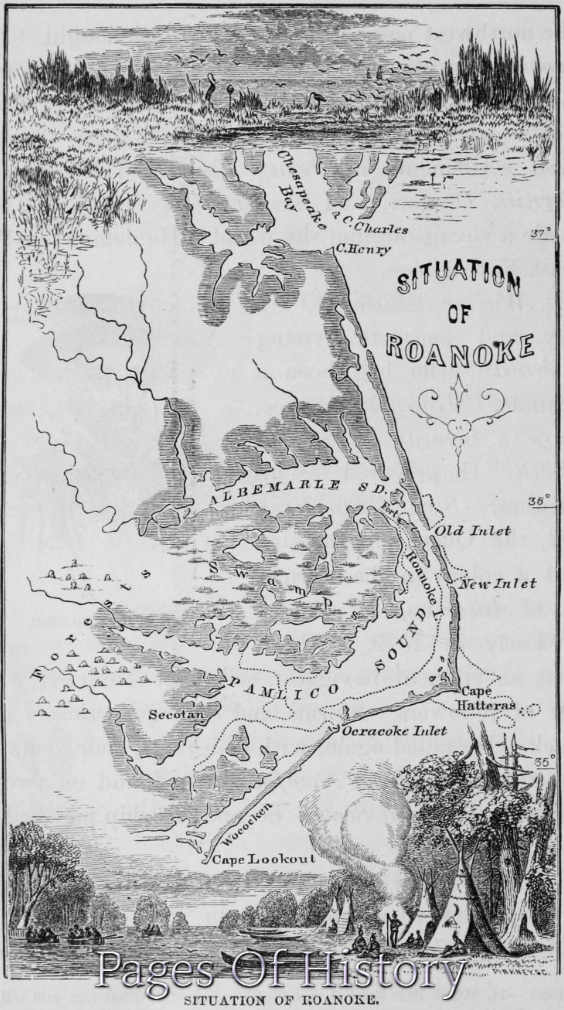
The initial colonizing expedition in 1585 was a military affair, a garrison of roughly 100 men led by Governor Ralph Lane. They built a small fort at the northern end of Roanoke Island, but their tenure was marked by poor diplomacy and outright hostility with local tribes, particularly the Secotan and their neighbors. Lane’s heavy-handed tactics, including the kidnapping of the Algonquian leader Wanchese, created a legacy of mistrust that would prove fatal for later settlers. By the summer of 1586, the colony was on the brink of collapse, and when Sir Francis Drake’s privateering fleet arrived unexpectedly, Lane and his men abandoned the outpost, returning to England with Drake. Ironically, a supply ship sent by Raleigh arrived mere weeks later, finding only empty fortifications.
The pivotal decision came in 1587, when Raleigh dispatched a new, more permanent expedition. This time, it was a civilian enterprise, comprising families, including women and children, with the explicit goal of establishing a self-sustaining agricultural community. The governor was John White, a gifted artist who had documented the flora, fauna, and people of the region on the previous voyage. His mandate was to pick up the Lane colonists (who had already left), and then to settle at the northern shore of the Chesapeake Bay, a location far more strategic and defensible. However, the expedition’s pilot, Simon Fernandez, a Portuguese captain with a reputation for arrogance, had other plans. He refused to carry the colonists to the Chesapeake, instead depositing them on Roanoke Island at the end of July 1587, against White’s explicit orders. This single act of insubordination, born of Fernandez’s desire to pursue privateering, stranded the settlers in a location already known to be dangerous and diplomatically poisoned.
Within a month, the precarious situation forced a fateful decision. The colony needed supplies, and White was the only man with the authority and connections to secure them. On August 27, 1587, just weeks after the birth of his granddaughter, Virginia Dare (the first English child born in the Americas), White left for England. He promised his distraught family and the other colonists that he would return by Easter of 1588 with reinforcements. He had no way of knowing that a geopolitical hurricane was about to engulf England, a storm that would delay his return for three agonizing years and seal the fate of the Roanoke settlement.
England’s Naval War and the Delayed Rescue
White’s arrival in England coincided with the zenith of the Anglo-Spanish conflict. King Philip II of Spain had spent years assembling the largest naval armada in history, the Gran Armada, with the explicit goal of invading England and overthrowing Queen Elizabeth. The English crown, in a desperate bid for survival, commandeered every available ship, including those fitted out for Raleigh’s relief expedition. In late 1587, Raleigh managed to prepare two pinnaces for Roanoke, but the captains, eager for profit, instead turned to privateering in the Atlantic, abandoning the colony’s fate. White was left stranded in England, powerless and furious.
The summer of 1588 brought the defeat of the Spanish Armada, a decisive English victory that reshaped the balance of power in the Atlantic. Yet, this triumph had dire consequences for Roanoke. The victory did not mean the end of the war; it merely shifted the theater of conflict. England continued to fear a second armada, and ships remained under crown control. White finally secured passage on a privateering expedition in early 1590, a voyage that was ostensibly a relief mission but was primarily designed to plunder Spanish shipping. The expedition was a disaster, plagued by storms and poor leadership. It was not until August 18, 1590, that White finally set foot on Roanoke Island, three years after his departure.
The island was a scene of haunting emptiness. The houses had been dismantled, not destroyed by fire or force, but carefully taken apart, suggesting an orderly departure. The fort’s palisade had been abandoned. The only clues were two carvings. On a palisade post was the word “CROATOAN”, carved in clear letters. On a nearby tree were the letters “CRO”. White immediately recognized the significance. Croatoan was the name of an island to the south (present-day Hatteras Island) and the tribe that lived there, a group that had remained on relatively amicable terms with the English. Critically, there was no carved cross, the sign that White had instructed the colonists to use if they were in distress or under duress. The absence of this symbol gave White a glimmer of hope. He wrote in his journal: “I greatly joyed that I had safely found a certain token of their safe being at Croatoan.”
Yet, a violent storm known as a “northeaster” blew up the very next day, and the relief party’s ships were forced to leave the coast. White, broken and defeated, sailed back to England, never to see his daughter or granddaughter again. The Roanoke Colony mystery was born, not from a single catastrophic event, but from a cascade of delays, political priorities, and maritime misfortunes.
Analyzing the “CROATOAN” Carving
The word “CROATOAN” was not a random inscription; it was a specific instruction. John White’s own orders had explicitly stated that if the colonists were forced to relocate, they should carve the name of their destination on a visible surface. The carving was a deliberate message, indicating that the settlers had not been massacred on Roanoke Island itself, but had relocated, presumably to the southern island. For decades, this was the primary, tangible clue. However, the mystery deepened because White’s subsequent attempts to reach Croatoan were thwarted by weather, and later English expeditions, including those led by the Jamestown colonists in the early 1600s, failed to find definitive evidence of the settlers, despite reports of structures and encounters with indigenous people who claimed knowledge of the English.
The failure of the Jamestown colonists to locate the survivors is a crucial, often overlooked detail. In 1607, Captain John Smith was explicitly ordered by the Virginia Company to search for the Roanoke survivors. He heard stories from the Powhatan Confederacy about a settlement of white men to the south, but he never located them. A later expedition in 1612 by William Strachey, who was shipwrecked in Bermuda, recorded a chilling account. He claimed that a Powhatan chief, Wahunsenacawh (Chief Powhatan), had confessed that the Roanoke colonists had been massacred by a confederation of tribes known as the “Mandoag” or “Powhatans,” specifically because they had allied with the Chesapeake tribe, which Powhatan had sworn to destroy. Strachey’s account, written years after the fact, is unreliable, but it introduced the compelling theory of a political massacre, not a random act of violence.
The “New Evidence” Rewriting the Roanoke Colony Mystery
For centuries, historians were limited to the sparse English records and the testimony of later colonists. The narrative was static. However, the 21st century has brought a paradigm shift, driven by a combination of archaeological science, re-examined archival documents, and a crucial shift in perspective: listening to the oral histories and traditions of the indigenous people of the Outer Banks. The new evidence does not point to a single massacre, but rather to a slow, gradual process of integration and cultural fusion.
One of the most significant breakthroughs came from the First Colony Foundation, a group of archaeologists and historians who have conducted extensive excavations on Hatteras Island at a site known as Cape Creek. Their work has unearthed a treasure trove of late 16th-century English artifacts, including tawed lace aglets (metal tips used on clothing laces), a pocket knife, and fragments of English pottery. These are not the kinds of items typically found at temporary trading posts; they are personal, domestic items, suggesting a sustained English presence. The presence of these items alongside indigenous Algonquian pottery, specifically Colington ware, in the same soil layers, provides a powerful, physical link between the cultures.
Perhaps the most compelling piece of physical evidence is a silex ball, a type of musket ammunition, which was found in a context that suggests it was used for hunting, not combat. This indicates that the English were adapting to the local environment, supplementing their dwindling European supplies with indigenous hunting techniques. The archaeological record at Cape Creek paints a picture of a community that was not living in a fortified enclave, but rather in an open, integrated settlement with the Croatoan people.
Further evidence has emerged from the study of a 16th-century map, the Virginea Pars map, which was drawn by John White himself. For decades, cartographers noticed a small, almost invisible patch over the western edge of the map. In 2012, the First Colony Foundation used spectral imaging to reveal that the patch was actually covering a four-pointed star or a fort-like symbol, located on the mainland, near the confluence of the Chowan and Roanoke rivers, at a site now known as Site X. This suggests that White, or someone in his party, knew of a planned inland relocation, possibly to the west, not just to Croatoan. This discovery has opened up a new geographic dimension to the mystery, suggesting the colonists may have split into groups, moving both south to Croatoan and west into the interior.
Reinterpreting Indigenous Oral History
The most profound shift in understanding the Roanoke Colony mystery has come from taking indigenous oral traditions seriously. For centuries, these accounts were dismissed by Western historians as myth or folklore. However, scholars are now recognizing that these are complex historical records, passed down through generations with remarkable accuracy. Several tribes in the region, including the Lumbee and the Hatteras, have long claimed descent from the Roanoke colonists.
The Lumbee tribe, located in present-day Robeson County, North Carolina, has a particularly strong oral tradition. They have long maintained that their ancestors intermarried with the English settlers. This claim is supported by the presence of European surnames (such as Locklear, Oxendine, and Chavis) among the Lumbee, which have been documented since the 18th century. Furthermore, the Lumbee language, a dialect of English, contains archaic words and grammatical structures that are not found in other regional dialects, suggesting a linguistic isolation that could date back to the late 16th century. While DNA testing of the Lumbee has been complicated by the historical trauma of the Dawes Rolls and other federal registration processes, the cultural and linguistic evidence is compelling.
Other oral histories from the Pamlico and Neuse River regions speak of a group of light-skinned people who lived among the tribes, teaching them new agricultural techniques and metalworking. These stories, often dismissed as fables, align perfectly with the archaeological evidence of European technology appearing in native settlements. The narrative that emerges is not one of a “lost” colony that vanished, but rather of a “found” colony that was absorbed. The settlers, having exhausted their European supplies and facing the constant threat of hostile tribes, made a rational choice: they abandoned the failing English model of a fortified, isolated settlement and integrated themselves into the sophisticated, established societies of the Algonquian peoples.
Key Dates and Artifacts in the Roanoke Investigation
To understand the complexity of the evidence, it helps to look at the timeline and the key physical objects that anchor the investigation. The table below summarizes the most critical pieces of the puzzle, showing how they contribute to the evolving narrative.
| Date/Period | Item/Event | Significance in the Investigation |
|---|---|---|
| 1587 | John White’s departure; Virginia Dare’s birth | Establishes the colony’s existence and the leadership vacuum. |
| 1590 | White discovers “CROATOAN” carving | Provides the primary textual clue indicating a planned relocation. |
| 1607-1612 | Jamestown searches and Strachey’s account | Shows the English failure to find survivors; introduces the massacre theory. |
| 1990s-Present | Excavations at Cape Creek (Hatteras Island) | Recovery of English domestic artifacts mixed with native pottery, proving sustained cohabitation. |
| 2012 | Spectral imaging of the Virginea Pars map | Reveals a hidden fort symbol at “Site X,” suggesting a westward expansion plan. |
| Ongoing | Lumbee oral tradition and linguistic studies | Provides a direct cultural link between the colonists and a modern, recognized tribe. |
The table reveals a crucial pattern: the evidence is cumulative. Each artifact or document, when viewed in isolation, is ambiguous. But when combined, they create a coherent and compelling narrative of survival through assimilation. The absence of a massacre site or a mass grave is not evidence of a supernatural disappearance; it is evidence of a successful, albeit culturally transformative, adaptation. The settlers did not “vanish” in the sense of ceasing to exist. They vanished from the English colonial record because they ceased to be English. They became part of the indigenous world, adopting its language, customs, and kinship networks.
The “Zuniga Map” and the Search for the Western Settlement
The discovery of the hidden symbol on the Virginea Pars map has spurred a new wave of archaeological investigation in the interior of North Carolina. The symbol is located on the western shore of the Chowan River, an area that was home to the Chowanoac tribe in the 1580s. The location is notable for its strategic value. It is upstream from the coast, offering protection from Spanish raiders, and it is near fertile lands and major trading routes.
Excavations at Site X, though still in their early stages, have yielded positive results. Researchers have discovered fragments of sgraffito pottery, a type of ceramic that is distinctly English and dated to the late 16th century. They have also found a small copper earring and a tobacco pipe of a style not typically associated with the coastal Algonquians. These artifacts suggest a non-native presence, but they do not yet prove a permanent settlement. The challenge is that the site is located on private land, and the archaeological layers are complex, having been disturbed by centuries of agriculture.
The theory that the colonists moved to Site X is not mutually exclusive with the Croatoan theory. It is possible that the colonists initially split. A smaller group, perhaps including the military leaders, may have sought a more secure, inland location to establish a base, while the majority, including the women and children, moved to the relative safety of Croatoan. The search for the colony is no longer a search for a single location, but for a network of settlements and relationships. The colonists were not static; they were mobile, moving as the political landscape of the region shifted. The Chesapeake massacre of 1607, which eliminated that tribe, could have been a direct consequence of the English alliance with them, as Strachey suggested, pushing the surviving colonists further south and inland.
The Role of Climate and Supply in the Colony’s Fate
Beyond the geopolitical and cultural factors, the survival of the Roanoke colonists hinged on a brutal, practical problem: food. The colonists had been dropped off in late July, too late to plant and harvest a full crop. They were entirely dependent on native trade for corn and other staples. However, the relationship with the tribes, particularly the Secotan, had been irreparably damaged by Ralph Lane’s earlier brutality. The 1587 colonists were inheriting a war.
Climate data obtained from tree rings in the region provides a new, grim context. A recent study by the National Oceanic and Atmospheric Administration (NOAA) and the University of Arkansas analyzed tree rings from ancient bald cypress trees in the area. The data reveals that the late 1580s coincided with the most severe drought in the region in 800 years. The period from 1587 to 1589 experienced a massive drop in precipitation, which would have devastated the native corn harvests. This environmental catastrophe would have had two major consequences. First, the native tribes would have been less willing, and less able, to share their limited food supplies with the English. Second, the English, facing starvation, would have been forced to make desperate moves, raiding native villages for food, which would have escalated conflicts.
This environmental evidence reframes the Roanoke Colony mystery. It was not just a story of bad luck or poor leadership; it was a story of ecological collapse. The colonists were not merely abandoned; they were thrust into a famine zone. The decision to move to Croatoan may have been driven less by a desire for friendship and more by a desperate search for sustenance. The Croatoan, being a coastal tribe, had a more diverse diet, relying on fishing and shellfish, which were less affected by the drought than inland corn agriculture. This would have made them a more attractive ally and a more viable place of refuge. The colonists didn’t just assimilate culturally; they assimilated biologically to survive a climate crisis.
Why Did the Roanoke Colony Mystery Persist?
If the evidence for assimilation is so strong, why has the mystery persisted for so long? The answer lies in the nature of historical inquiry and the power of national mythmaking. For the English, and later the Americans, the idea of a “lost colony” was a powerful narrative. It served as a cautionary tale about the dangers of the New World and the fragility of civilization. A story of successful integration into native society was less appealing to a colonial power that was actively displacing and often exterminating those same native peoples. The myth of the vanishing colony justified the narrative of a “virgin land” that was empty and waiting for European settlement.
Furthermore, the evidence is not conclusive in a legal sense. We do not have a document that says, “We, the settlers of Roanoke, hereby join the Croatoan.” We have artifacts and oral histories that strongly suggest this, but not proof. The lack of a definitive smoking gun—such as a mass grave or a direct written confession—leaves room for doubt. The mystery persists because it is a vacuum into which people project their own fears and fascinations. It is a story about the limits of knowledge and the seductive power of the unknown.
However, the new evidence has shifted the consensus. The old theory of a sudden massacre is now seen as the least likely scenario. The most probable scenario, supported by archaeology, climate science, and indigenous history, is that the colonists survived, integrated, and their descendants live on today. The “lost colonists” were not lost to history; they were lost to a historical record that was too narrow to see them. They were absorbed into the vibrant, complex world of the Carolina Algonquians, a world that was itself on the brink of destruction from European diseases and later colonization.
The Enduring Legacy and the Future of the Investigation
The Roanoke Colony mystery is far from closed. The investigation continues, with new technologies and new partnerships offering the promise of more definitive answers. The First Colony Foundation is currently working on a project to analyze the DNA of ancient remains found on Hatteras Island, hoping to find a genetic link to modern populations. There is also a growing effort to use ground-penetrating radar to map the subsurface at Site X and other potential settlement locations, looking for the outlines of structures that have been buried for centuries.
The future of the investigation lies in collaboration. Archaeologists are now working hand-in-hand with tribal historians from the Lumbee, the Hatteras, and the Meherrin nations. This partnership is essential, not just for gaining access to sacred lands, but for interpreting the evidence. The oral histories that were once dismissed are now being treated as primary sources. The story of Roanoke is being rewritten from a single, European perspective into a multi-vocal story of encounter and exchange.
The ultimate takeaway is a lesson in resilience and the unpredictable nature of history. The Roanoke colonists did not vanish because they were weak; they survived because they were adaptable. They chose life over the preservation of their English identity. They made a calculated decision to abandon the failed project of a colonial outpost and to embrace a new world, not as conquerors, but as refugees. The mystery of their fate is a mirror reflecting the complexities of early American history—a history defined not by simple victories and defeats, but by the messy, often painful, and sometimes beautiful fusion of cultures. The colony was not lost; it was transformed, and its legacy lives on, not in the crumbling palisades of a fort, but in the bloodlines and stories of the people who call the North Carolina coast home.